
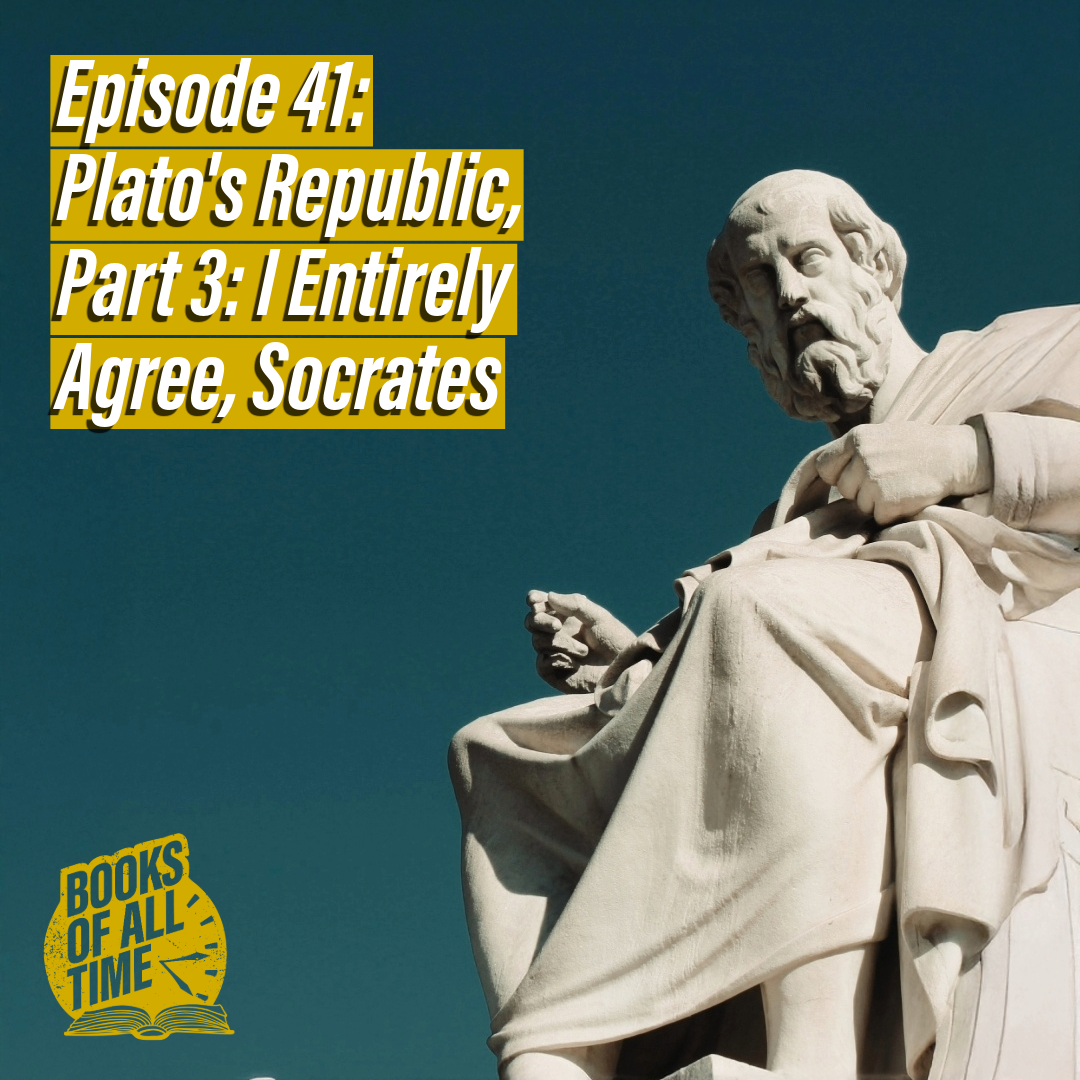
“‘Imagine someone returning to the human world and all its misery after contemplating the divine realm. Do you think it’s surprising if he seems awkward and ridiculous while he’s still not seeing well, before he’s had time to adjust to the darkness of his situation?”
(Plato, The Republic, trans. Robin Waterfield, 244)
The incense swirled. Voices chanted. Socrates stood beside his friend Chaerephon at the entrance to the adyton, the innermost chamber of the temple of Delphi. He shifted uneasily from foot to foot as he and his friend listened to the God speaking through the priestess inside the chamber. They could not hear words—just an eerie, inhuman voice, rising and falling. The flames of lamps shuddered around them, barely piercing the underground darkness. Socrates held his laurel branch steady as they waited for the priests to bring the reply, but inside he was trembling like the flames.
Chaerephon’s question seemed impious to him, even cheeky. He worried that his presence here would make it seem as if he endorsed that impiety. It didn’t help that the question was about him, either.
After they had undergone all the rituals—the bathing and the offerings—Chaerephon had consulted with the temple priests to frame his question. They settled on the wording, “Is any man wiser than Socrates?” And now they had brought it to the Pythia herself, so she could put the question to Apollo.
Inside the inner chamber, the priestess’s voice fell silent. The chanting stopped. They heard the shuffling of robes as the priests conferred. Socrates moved his gaze toward the ceiling. Above the door of the adyton were some words: Know Thyself.
The priests emerged. One of them held a wax tablet, and he read out the words of Apollo: “Of all men, Socrates is most wise.” They said more, but Socrates could not hear them above the sudden rushing in his ears and tumult in his mind. But I know almost nothing, he thought desperately. What on earth could the god mean by this answer? Was Socrates being charged with becoming wise? How could he do that? Where would he begin such a quest?
Chaerephon’s hand was on his arm. “My friend, are you all right?” Socrates could only look at him. “I thought you would rejoice at this news,” Chaerephon said. “But you look terrified.”
“I—” Socrates began. His eyes flicked toward the door again. Know thyself. He felt something settle within him, something like a falling ember, something that kindled and began to burn. “I was, Chaerephon,” he said, recovering his composure. “But I have decided to trust the god.”
I’m Rose Judson. Welcome to Books of All Time.
Introduction: Pre-Socratic Philosophy
Books of All Time is a podcast that’s tackling classic literature in chronological order. This is episode 10: Plato, The Republic, Part 3 – I Completely Agree, Socrates. As always, if you want to read the transcript of this episode or see the references I used to write it, you can visit our website, www.booksofalltime.co.uk. There’s a link in the show notes if you need it. Let’s begin.
We come, belatedly, to the end of our three-episode exploration of Plato’s Republic, the seminal work of political philosophy probably composed mostly around 380 BCE. It’s been a while since our last episode, so a quick reminder: Plato was a student of the hugely influential philosopher Socrates. Plato is also our primary source about the life of Socrates, who never wrote down any of his teachings. In this episode we’ll look at what’s known about the life of Socrates and engage with one of the trickier questions about this era, namely: how much of the thought and life of the actual Socrates is in Plato’s writings about him?
We’ll also wrap up with a look at one of the most embarrassing episodes in Plato’s life: his attempt, in the 360s BCE, to put some of the principles he laid out in Republic into practice in the Greek city-state of Syracuse, with incredibly disastrous results.
Before we jump into those two topics, however, let’s take a look at what pre-Socratic philosophy was like. Socrates was a very influential and original philosopher, but he didn’t come out of nowhere; he was building on a tradition of Greek thought that had developed over at least a few centuries prior to his birth. That tradition wasn’t concerned with politics and personal virtue like he was, though. It was a little more—esoteric.
One of the books I read for this episode was Neel Burton’s The Gang of Three: Socrates, Plato, and Aristotle. He does a very good job of laying out, in an orderly way, the development of pre-Socratic philosophy, which he describes as an evolutionary process that moved from mythical explanations of the world to proto-scientific ones to social and moral ones. This evolution took place from 600 BCE to 400 BCE, which means that some of these philosophers co-existed with Socrates. In spite of this, our evidence about the pre-Socratic philosophers is very fragmentary, and often transmitted to us by the writings of later authors with a specific slant on their work.
Pre-Socratic philosophers seemed to be concerned largely with explaining the natural world. They begin with a school of three thinkers from the Greek city of Miletus, which is in modern Turkey. Miletus was a busy trade city, with people passing through from Egypt, Lydia, Persia, and the Greek states, and along with trade in goods comes trade in ideas.
The first philosopher of the Milesian school was Thales, who lived roughly from 624 to 548 BCE. He was mostly concerned–as were the other pre-Socratic philosophers–with discovering whether there is a primary substance of which the universe is made. In his book The Gang of Three: Socrates, Plato, and Aristotle, Neel Burton describes Thales as a philosopher who, quote, “sought to explain the origin and nature of the world without resorting to myths and gods, which is why he is often regarded as the first genuine philosopher, as well as the first genuine scientist.” (Burton 8)
Thales, like many thinkers before and since, ignored worldly goods, choosing to wander around doing things like measuring the heights of the Pyramids of Egypt using their shadows, or calculating the distance of ships at sea using triangulation, or falling into wells while walking around at night observing the stars. (Burton 8-9)
Thales had a follower named Anaximander, who lived from around 610 to 546 BCE. He was also concerned with discovering a universal substance. While Thales had suggested water, Anaximander posited something called the aperion, which is something that moves and changes is recycled through all living things as they perish and are born. The world is cylindrical, and the celestial bodies move around it fixed on wheels full of fire. Interestingly, Anaximander also suggested that humans did not appear as they currently are, but developed out of aquatic animals or fish as the earth dried. (Burton 9)
The third member of the Milesian school was Anaximenes (586-526 BCE), who broke with his associate Anaximander in that he believed the world was flat and floated on a cushion of air, which to him was also the universal substance. He believed the movement of the stars and planets was the result of the flat earth tilting on its turbulent cushion of air.
After the Miletians, we have the first flourishing of philosophy in Athens and the Greek-speaking colonies of what is now Italy. The most important of these for our reading of Plato and Socrates is Pythagoras of Samos, who lived from about 570 to about 495 BCE. Neel Burton notes that Pythagoras’s life overlapped with Anaximander and Anaximenes, and that he may even have corresponded with Thales when Thales was in his old age. When he was about 40, Pythagoras founded a religious community that blended art, science, and mysticism in equal measure: making music, investigating geometry, performing rituals in honor of the god Apollo and preaching the reincarnation of the soul.
Pythagoras’s community also took an ascetic approach to life that included long periods spent in silence and a vegetarian diet—albeit one that did not include fava beans, which Pythagoras hated. According to Burton, Pythagoras’s teachings on the avoidance of meat were so influential on vegetarians that well into the 19th century, vegetarians referred to themselves as “Pythagoreans.” (Burton 16) Pythagoras also gave us the word “cosmos” (the orderly heavens), and the word philosopher: apparently he did not want to be called a sophos, a wise man; instead, he wanted to be called a lover of wisdom—a philosophos.
After these natural philosophers comes the final wave of pre-Socratic philosophers, the Sophists. The Sophists were contemporaries (and in some cases, rivals) of Socrates and Plato. In fact, our main source for the beliefs of the Sophists is Plato, who had a poor opinion of them.
While they didn’t have totally homogenous beliefs, the Sophists were generally agnostic about the existence of the gods, morally relativistic, and known mainly for their skill in public speaking, or for taking big fees to teach people to defend themselves in court–again, these are traits you may recall from our second episode on Aristophanes. He paints Socrates as this kind of philosopher, which apparently annoyed Socrates so much he was still angry about it 30 years later, when he was on trial for his life. But more about that in a bit.
Socrates and Plato may have largely left behind the mysticism of Pythagoras—and his anti-fava bean jihad—but they did cleave to many of Pythagoras’s ideas: mathematical understanding supports logic and reason; humility is necessary for the pursuit of wisdom, which can never be wholly completed; human beings have an immortal soul that continues after the death of the body, and reincarnates into new forms.
Socrates and Plato also took Greek philosophy’s gaze away from the heavens, refocusing it, like the Sophists did, on the inner lives of men and the ordering of society. But unlike the Sophists, Socrates and Plato took the view that there was a knowable, pure truth men could work to know. And while the Sophists brought philosophy down to earth to a degree—at least, into elite spaces like law courts and the homes of wealthy students—Socrates took it into the streets. So let’s talk about who this guy was.
Socrates’s Biography, Part 1
In A History of Western Philosophy, Bertrand Russell begins his chapter on Socrates by saying, quote:
“Socrates is a very difficult subject for the historian. There are many men concerning whom it is certain that very little is known, and other men concerning whom it is certain that a great deal is known; but in the case of Socrates the uncertainty is as to whether we know very little or a great deal.” (Russell 89)
I’m sure this uncertainty would please Socrates himself. It’s true that we don’t have a lot of information about Socrates outside of the works of Plato and of another Socrates devotee, Xenophon. Bertrand Russell is very funny about Xenophon. I’m going to risk an extended quote here:
“Let us begin with Xenophon, a military man, not very liberally endowed with brains. . . . There has been a tendency to think that everything Xenophon says must be true, because he had not the wits to think of anything untrue. This is a very invalid line of argument. A stupid man’s report of what a clever man says is never accurate, because [the stupid man] unconsciously translates what he hears into something that he can understand.” (Russell 89–90)
Xenophon, according to Russell, was unable to grasp Socrates’s arguments. He was also possibly so keen to protect Socrates from the accusations of atheism and corruption of the youth, that he winds up presenting the portrait of a man who has no dangerous ideas whatsoever. This can’t be correct: you would hardly have sentenced somebody like that to drink poison.
But we can cross-reference Xenophon and Socrates, as well as some fragments of other works, to get an incomplete picture. Neel Burton, thankfully, has done the legwork for me: Gang of Three gives a good summary of Socrates’s life. Socrates was born about 470 BCE, almost exactly at the midpoint between the end of the Persian Wars, which had ended 10 years earlier, and the start of the Peloponnesian Wars 10 years later.
His father Sophroniscus was a well-off sculptor or stonemason—well-off enough to provide his son with a decent, if not elite, education and to kit him out as a hoplite to serve in the war. Sophroniscus also seems to have mingled with some pretty high-up people, possibly including the great statesman Pericles. In one of Plato’s dialogues, Socrates actually claims he learned rhetoric from Pericles’s mistress Aspasia. (Burton 77-80)
Socrates’s mother was a midwife, and he enjoyed describing himself as a kind of midwife for men who are struggling to give birth, through conversation with him, to their own wisdom or virtue. Socrates himself began his journey into philosophy in his late teens, after a somewhat wayward youth. He became the lover of Archelaus, a follower of Anaxagoras, and he apparently became more enamored of Anaxagoras’s ideas than he was of Archelaus.
He was intrigued by Anaxagoras’s belief that nous, or mind, was the animating force of the world, but became disillusioned once Anaxagoras began to pull in things like winds and fire and other natural phenomena. (Burton 80-84) These kinds of investigations seemed superfluous to Socrates. Surely man’s time was better spent understanding himself first, and determining the best way to live, rather than worrying about what the primary substance of the universe might be?
His maturation as a philosopher was intertwined with his military career, which lasted a surprisingly long time. He participated in the siege of Potidæa, which lasted from 432 to 429; in the Battle of Delium in 424, and finally the Battle of Amphipolis in 422, when he was 48 years old. This decades-long military career helped Socrates build further connections to prominent families and people in Athens—most notably, Alcibiades.
Alcibiades was a general, a military hero, and later a politician. He had been a protégé of Pericles prior to meeting Socrates while on campaign. Socrates saved Alcibiades’s life at Potidæa, after which Alcibiades began sharing his tent (and very likely his blankets) with Socrates, who was considerably older than he was. “His feelings,” writes the Australian scholar Harold Tarrant in the introduction to The Last Days of Socrates, a Penguin Classics collection of Plato’s writings, “were perhaps tempered by his even greater thirst for knowledge.” (Tarrant xviii) Perhaps!
Socrates probably pulled his boys by being smart and funny. Nobody describes him as the kind of handsome, symmetrical man Greek culture prized. Instead, he was snub-nosed, paunchy, and balding on top. He went about barefoot, even in the winter, and wore shabby clothes. This sort of rumpled appearance seems to be a trope for philosophers right down to our time. I’m thinking here of the Slovene philosopher Slavoj Žižek, who in photographs always looks like he’s just been dragged away from his desk in a server room deep inside the basement of, say, an insurance company outside of Omaha, Nebraska.
I don’t know if Žižek also has Socrates’s legendary physical hardiness, though. According to Xenophon, Socrates, when a soldier, could endure long periods without food or water and march cheerfully for long distances in the cold without shoes. In spite of his physique, he was also not given to overindulgence in wine—he rarely drank. But when he did, he was also capable of drinking people under the table without seeming to be affected by it himself. And later, when he’d lost his trial, he was utterly indifferent to the fact that he’d been sentenced to death: he treated it like an awfully big adventure he is to go on. But more on that in a bit.
Socrates, for all his interest in logic and reason, was also a bit mystical. Both Plato and Xenophon seem to agree that the historical Socrates believed he heard a divine inner voice that guided him throughout his life. His word for this is daimon, which gets translated as “oracle” or “conscience,” and it’s present in the word eudaimonia—happiness or flourishing, which is how Socrates thinks people ought to live (unless they are guardians, in which case they must basically be brains in a hermetically sealed jar when they’re not required to have eugenically appropriate sex).
He is also described as stopping dead wherever he is and going into a kind of trance when thinking too hard about something, rather like Albert Einstein is reported to have done. In Plato’s Symposium, which recounts a dinner party convened specifically to meet with Socrates, the guest of honor shows up late because, en route to the dinner, he started thinking about something, stopped dead in his tracks, and wouldn’t respond to any attempt to get him to move. Alcibiades laughs this incident off, telling the other guests that this happens all the time—while they were on campaign together, he says, Socrates once stood in one place thinking about something for a day and a night while crowds gathered to watch him. (Russell 96)
It was not unusual for a man of Socrates’s time and place to pour most of his romantic feelings into his relationships with men. But he also did his duty and married—twice, actually. One of his wives was Myrto, daughter of a statesman named Aristedes. She is less well-attested in sources than the other wife, who was named Xanthippe.
Xanthippe was about 30 years younger than Socrates when she married him. She bore him three sons, and she would become his widow. She is described in Xenophon’s Symposium as a harsh, ill-natured shrew, and Socrates says he chose her for those qualities, because if he can learn to peaceably bear her awful, carping personality he will always be able to relate to other men.
You could also try getting a job, bud. Or maybe spend an evening at home and put the kids to bed once in a while, maybe?
That’s me projecting, obviously. It’s not really clear what Xanthippe’s deal was—a lot of what we think we “know” about her comes from later writers who seem to have been using her to make a point about how Socrates cheerfully endured all kinds of suffering. But it’s not hard to imagine that Socrates would have been an absentee father—he spent an awful lot of his time hanging around the agora of Athens.
The agora was the marketplace, and so much more. It was a place for public gatherings, possibly including law courts. It’s tempting to think of it as orderly, with people draped in clean white sheets walking about on a clean white marble plaza discussing deep subjects while some traders sell wares from clean white stalls. In reality it was probably loud, smelly, crowded, and full of all kinds of people.
Socrates would get into conversations with people in the agora—or in the homes of his wealthy friends, as both Plato and Xenophon relate—and start peppering them with questions, kicking, as I said in a previous episode, the tires of their views and his. Let’s talk go into a bit more detail about how that worked.
Philosophical Conversations: Elenchus and Dialectic
The “philosophy via conversation” approach was not an innovation that originated with Socrates. It’s not difficult to imagine that human beings have been drawing people out via questioning for quite a long time. In Greek philosophical circles, however, it seems to have become the vogue with Zeno, who was a generation or so older than Socrates and would have crossed paths with him, in part because Socrates sought out professional intellectuals for conversation when he was young. He couldn’t afford to study with them formally, so talking to them was an affordable way to learn. He soon developed a systematic method of asking questions, called the Socratic method. Philosophers describe two main features of this method: elenchus and dialectic.
Elenchus is a Greek word that literally means something close to “cross-examination.” It is, says Harold Tarrant, “a tool for the exposure of problems with beliefs, and inconsistencies in sets of belief, rather than for demonstrating what is true and what is false.” (Tarrant xv) In this process, person A makes a claim which Socrates doesn’t accept—think of old Cephalus, who says that morality or justice is being honest and giving people what they owe.
Socrates will then ask person A to help him understand their thinking. He’ll follow up with a series of questions about the assumptions underlying their claim. He makes propositions along with these questions, and Person A, in agreeing to these propositions, steps into a kind of rhetorical bear trap whereby their original claim is invalidated. They don’t have to agree with Socrates (though they usually do), they just have to realize their reasons for holding a view aren’t logically sound in some way.
Usually, one round of elenctic questioning leads to further, more refined rounds—and I do not think I have made clear, in recapping the Republic, just how repetitive reading that process can be. If you’re thinking about tackling Plato yourself, be warned: it really, really, really is repetitive.
If elenchus is about finding errors, dialectic is about providing “a thoroughly argued justification of [one’s] deep-rooted beliefs.” (Tarrant xv) Again, this is not about proving anything; it’s more about persuading someone that your beliefs rest on a reasonably sound logical foundation. This inconclusive conclusion is known as aporia, a sort of well-informed puzzlement: Socrates and his friends have narrowed down what it is they don’t know about the thing they wanted to know about. And this is enough, because Socratic philosophy is about the search for the basis of knowledge. The journey, not the destination. Maybe the real wisdom is the friends we annoyed along the way. (Tarrant 7)
Bertrand Russell notes that there’s a lot you cannot do with this kind of method. You can’t question your way to new facts, for instance. You can only question your way out of a tangled thought process: you need to have a pre-existing base of knowledge about whatever it is you are going to subject to this kind of question and answer. “But when our inquiry is concluded,” Russell says, “we have made only a linguistic discovery, not a discovery in ethics.” (Russell 98)
You may wonder: why bother with all this? Why couldn’t Socrates or Plato just write an op-ed and be done with it? One possible explanation may be that, by the time Socrates was loitering in the agora, Athenians were dead tired of oratory. They were even suspicious of it. Tarrant says, quote:
“After an age in which Sophists and orators had discovered the art arguing convincingly for all sorts of conclusions, and often for contradictory ones, it is possible that many of Plato’s readers viewed argument more as a tool of deception than as a source of truth.” (Tarrant xvii)
At any rate, this is what Socrates was up to in the marketplace and in the streets and homes of Athens: asking people what they thought about truth or beauty or justice and then walking them through how wrong they were about it. No wonder he irritated people. But they didn’t kill him just for being annoying, of course.
Socrates’s Biography, Part 2: Trial, Death, and Beliefs
We know, thanks to Aristophanes, that Socrates was a famous character in Athens by the 420s, when he was about 40 years old—famous enough to be spoofed in a play. And this clearly wasn’t because of any belief he held, but because of his being very visible and chatty in the city’s public places.
The portrait of Socrates’ beliefs in The Clouds is interesting: Aristophanes presents him mostly as a Presocratic philosopher, showing an interest in cosmology, biology, (Tarrant xxix) and a lot of Sophist doctrine, including Protagoras’ insistence that there are two arguments for every topic. Socrates, as presented by Plato, would complain about this inaccurate portrayal of him when he was put on trial in 399.
Both Plato and Xenophon agree that Socrates was not keen on democracy: after all, it had led Athens into the decades-long disaster of the Peloponnesian Wars. When Sparta won the war in 404 BCE, it imposed a council of 30 rulers on Athens—rulers that included associates of Socrates like Critias, Charmides, and some members of Plato’s family (Plato himself, in a possibly spurious letter, says that he declined a place on this council—he would have been 24 at the time). (Romm 18)
This was known as the period of the Thirty Tyrants, and while it collapsed just a year later, the pro-democracy faction in Athens noted who had supported the regime—or at least, who had not spoken out about it.
Socrates was in this latter category. He tried to stay out of politics as much as possible, preferring instead to lead through being an influential intellectual. He wasn’t in immediate danger, thanks to an amnesty that prevented prosecuting of sympathizers or collaborators with the Spartan-imposed regime. Half the city had obeyed them, and without the amnesty Athens would have been fallen into a doom loop of bloody reprisals. (Russell 91)
But his ongoing avoidance of civic life in a democracy where people were assigned offices by lottery, and his consistent criticism of the institutions of democracy, made Socrates suspect. This contributed to his eventual downfall just five years later.
Socrates was put on trial in 399 BCE. Thanks to Plato, we have some idea of how this trial went down: it’s the subject of Plato’s Apology of Socrates. While, as we’ve established previously, it’s not crystal clear in which order Plato’s works were written, the consensus seems to be that the Apology is among the earliest. As such, it’s probably the least embellished. (Russell 91)
Plato, then in his 20s, was present at the trial and makes a point of mentioning that fact—one of the few times he refers to himself in his writings. However, it’s doubtful he was taking notes throughout. But he was an eyewitness, so his account of it likely captures much of the actual tone of what was said.
So what was said? A case was brought against Socrates by three accusers: Anytus, a politician, a young poet called Meletus, and a rhetorician—a professional public speaker, or possibly a professional teacher of public speaking–named Lykon. Their charges against Socrates included: not worshipping the official gods and introducing new ones; investigating natural phenomena, and corrupting the youth by teaching them all of this, along with a skill for “making the worse cause appear better” through his silly questions. (Russell 90-91)
If this sounds familiar, again, it’s because it largely chimes with how Aristophanes had portrayed Socrates approximately 30 years before this trial kicked off in The Clouds.
Russell argues that these accusations were all cover for the true animus towards Socrates: that he was critical of democracy and that he hung around with aristocratic young men, like Plato and his brothers, who were in favor of an oligarchy. However, Socrates’s accusers couldn’t come right out and say this because of the amnesty. (Russell 91)
And Socrates barely addresses the charges in The Apology. Instead, he begins by recounting the story at the top of the show: he became a philosopher because the Oracle at Delphi said he was wise. He has never been anyone’s teacher; he just liked having conversations. Furthermore, he has never pretended to know all that much. Also—and this is as good as his defense gets—Socrates calls the court’s attention to the fact that many of his followers, their brothers, and their fathers are present, and that his accusers haven’t brought a single one of these men to testify against him.
From here it goes off the rails. He assails the moral authority of the court that is trying him, seems deliberately to try to anger the jury, and generally just comes off as a complete jagoff, honestly. For instance, here is how he addresses his main antagonist, Miletus:
“You are not at all convincing, Meletus, not even to yourself, I suspect. In my opinion, gentlemen, this man is quite unable to restrain his insolence, and it is simply this which makes him bring this action against me—a kind of insolence or lack of restraint or youthful aggression.” (Tarrant 52)
This is why you always get a lawyer. Socrates then launches into the main line of his argument for his innocence, which basically boils down to “actually, it’s good for Athens to have an annoying person like me living in it.” Seriously, I am only lightly paraphrasing. Quote, from Tarrant’s translation of The Apology:
“God has assigned me to this city, as if to a large thoroughbred horse which, because of its great size, is inclined to be lazy and needs the stimulation of some stinging fly.” (Tarrant 57)
In addition to declaring they are lucky to have him, Socrates argues that the court is not legitimate. And even if it is, perfection of the soul is more important than participating in civic life—again, an anti-social assertion in a democracy that has just shaken off an oligarchy imposed on it by foreigners. He then goes on to say he is as committed to carrying out his philosophical mission as he was to defending military positions when he was a soldier. He will keep doing what he’s been doing, because to do so would be to deny his calling from Apollo.
Tarrant says, quote:
“Socrates can be accused of convicting himself . . . looked at from Socrates’s point of view, there was little he could do without surrendering his principles, and there was no reason why they should be surrendered.” (Tarrant 38)
A bare majority of the court—which would have totaled about 500 people, probably—voted to convict Socrates. (Unlike a modern American court, juries in Athens did not have to issue a unanimous judgement.) When he’s found guilty, he has the opportunity to partake in some conventional groveling for mercy to reduce his sentence. But he refuses to play along. He won’t beg for his life; he won’t participate in the undignified spectacle of bringing his weeping sons and wife before the court to soften their hearts. When, by law, he is allowed to propose a lesser punishment than death—exile, say, or the payment of a crushing fine—he also refuses to play along with that.
Instead, Socrates actually argues that he deserves a reward, not a punishment. He modestly proposes that free meals for life would suit him. And this is how you know the Socrates of The Apology is different from the one Plato shows us in The Republic—that Socrates would specify that his meals couldn’t come with sauces or desserts.
He is condemned to death by a larger majority than that which voted to convict him. He takes this with perfect calmness. Indeed, he almost brags that it’s possible he’ll be better off. He will die after seventy years of life, which is a good run, and won’t live to become decrepit. Perhaps he’ll also get to talk with Homer and Hesiod in the afterlife. He looks forward to asking them lots of questions, without running the risk that his search for knowledge will get him punished.
Two of Plato’s other works, the Crito and the Phaedo, deal with Socrates in prison. His sentence—drinking a decoction of the toxic plant hemlock—cannot be carried out immediately because there is a religious festival happening, and executions are forbidden while it’s going on. In the Crito, Socrates is visited in his cell by a wealthy friend named—wait for it—Crito. He is there to propose to Socrates a plan to help him avoid death: he and some other rich friends of Socrates will bribe the guards and spirit Socrates away to someplace far from Athens where he can live in a peaceful retirement.
Socrates won’t agree. Crito tries to reason with him—you would make us all look like bad friends if you turn this opportunity down. A dialogue ensues in which Socrates concludes that he is as committed to his practice of philosophy as he was when sentenced to death for it. His principles haven’t changed; his sentence shouldn’t. Also, he owes a debt of gratitude to Athens for educating him, and a debt of honor. He has consented to live in Athens—indeed, he has bled for Athens—which means consenting to abide by its laws (this is the “by continuing to use our website, you accept our use of cookies” theory of citizenship, I guess).
The Phaedo is an account of Socrates’s last day alive. It’s presented from the point of view of his follower Phaedo—Plato again mentions himself, but only to say that he was not present at the time. He was so overcome by emotion that he pretended to be too sick to visit Socrates. Everyone else is there, though: upwards of 12 people cram into Socrates’s cell to be with him as he dies. He shoos Xanthippe and his children out the door and holds a discussion on the immortality of the soul—he is for it, not least because he will be able to continue having discussions with people in Hades. At the very last minute, just before the poison is brought in, Plato includes a very touching little moment: Socrates takes a bath, so as to save the women the trouble of washing his body when he is dead. Then he drinks the poison and passes peacefully away as his friends lie about the room weeping.
So passed Socrates. What were his actual beliefs, though? This is difficult to tease out. Part of the issue was that Socrates died under a cloud of suspicion and scandal, and as a result, all of his followers, not just Plato, wanted to present him in the best possible light. The other issue is with the vexed question of when Plato wrote what he wrote. Harold Tarrant explains that the only real consensus is that there is a point where, quote, “the character called Socrates becomes more of a mouthpiece for Plato’s own doctrines and less ‘Socratically’ characterised.” (Tarrant xviii)
The Republic, the writing of which occupied the back half of Plato’s life, is such a work. We are getting “Socrates, presented by Plato,” a Socrates who diverges from the flesh and blood Socrates. As the decades after Socrates’s death wore on, the disciple most responsible for preserving his legacy forgot the man himself. The master who believed he was driven by a daimon became Plato’s daimon; one who often agreed with him. And this was disastrous for Plato, as we will see.
Plato the Political Consultant, 388–360 BCE
In addition to the dialogues of Plato, we have some letters. 13 of them, to be precise, but 12 of these are considered to be forgeries. The one that might not be, the seventh letter of Plato, tells an incredible story about a troubled period of Plato’s life—one where he tried to take the ideas he laid out in The Republic and put them into practice. This period is also fleshed out for us by the Roman writer Plutarch, who may have had access to other sources lost to us.
The story of Plato’s doomed attempt at political consulting is wonderfully laid out by James Romm in his 2024 book Plato and the Tyrant: The Fall of Greece’s Greatest Dynasty and the Making of a Philosophic Masterpiece. It is, he says, “a tale of a political experiment gone horribly wrong, and of Plato’s efforts to put things right and to cover up his mistakes.” (Romm xv) Essentially, Plato was seduced by the idea that powerful men might want to put his ideas into practice.
In 388 or 387 BCE, according to Romm, Plato went to visit Sicily. Sicily at that time was divided into an eastern portion controlled by the Greeks from the city of Syracuse, and a western portion controlled by the Punic people, also known as the Carthaginians after their home city in northern Africa, Carthage. Plato’s destination was Syracuse. He was in the midst of composing what would become The Republic, and he was interested in examining a tyrannical form of government at first-hand. Syracuse was then ruled by a sterling example of the type.
He was called Dionysius—not to be confused with Dionysus, the god of wine. Dionysius had seized power during an outbreak of conflict with the Carthaginians, and he now ruled Syracuse with an autocrat’s iron fist. But like many autocrats, he made it possible for those in his court to enjoy the finer things in life frequently and in great quantities. He was notorious for offering lavish nightly feasts.
Dionysius, like Plato, also had pretensions to poetry—he had submitted plays to the Athenian festivals, including the Lenaia, and he’d even won the top prize once. Plato, in the Seventh Letter, professes to have been disgusted by the debauchery and gluttony he’d seen there. But he also found a kindred spirit at the fringes of the sybaritic scenes: one Dion, brother-in-law to the king.
Just twenty years old, Dion was a gentle, thoughtful person who recoiled from the constant partying. He was also developing into a skilled statesman and a valued aide to Dionysius. He immediately took to Plato’s teachings—and to Plato himself, by all accounts, though the philosopher was 20 years Dion’s senior. While Dion wasn’t then directly in the line of succession, he could wind up there, and Plato might be able to have his philosopher king at last. Or, Dion would continue to influence Dionysius, helping shape him into a more virtuous ruler along Platonic lines. (Romm 34-35)
“So began,” writes Romm, “what we might call Plato’s Syracuse project, an attempt to bend the arc of the world toward justice.” (Romm 35) It didn’t begin promisingly: Dion arranged for Plato to meet Dionysius to discuss his ideas with him and, depending on the source, was either curtly dismissed and ejected from the island, or actually sold into slavery. Whichever way it shook out, Plato was soon back in Athens, where he preoccupied himself with founding the Academy and continuing to work on Republic. But he continued to correspond with Dion.
About ten years passed. Dionysius sank into debauchery, cruelty, and a paranoia that bordered on madness. However, his end came after a triumph—when he heard a play of his had won the Lenaia, he drank himself to death while celebrating. His son, also named Dionysius, took over. Dion saw an opportunity to bring his friend back to Sicily, and in 367 BCE, Plato returned to Syracuse.
Dionysius the Younger was pushing 30 when Plato arrived. Plato hoped to be able to take advantage of his (relative) youth, writing in the Seventh Letter that, quote:
“If ever anyone could try to realize his ideas about laws and government, this was the time to make the effort . . . For by convincing only one man, I would have sufficiently accomplished all good things.” (Plato, quoted in Romm 83-84)
Working against this hope was the fact that Plato was Dion’s guest, and Dion was unpopular at court. In addition to being a wallflower at the endless banquets (which continued in the younger Dionysius’s regime), Dion was also suspected of plotting a coup to seize the throne for himself and his sons. Plus, Plato was from Athens, and the Athenian invasion of Syracuse in 415 BCE was still within living memory for some. Any kind of Athenian presence at court was unpleasant to many of the Syracusans—even if the Athenian was a renowned sage. Advisors around the young tyrant seized every opportunity to drip poison about his uncle—and his uncle’s foreign friend—into his ears.
Still, Dionysius seemed eager to learn. He had a go at geometry and disputation. He wrote some papers. He seemed to develop warm feelings toward Plato. But he baulked at the idea that he should give up his friends and his parties. He began to entertain the thought that the anti-Platonists at court were right: maybe Dion and Plato were trying to isolate him from his support to create the conditions for a coup. Then, Dion was caught trying to open a diplomatic backchannel to Carthage, and Dionysius lost it. He exiled his uncle from Syracuse—but tightened his grip on Plato.
James Romm notes that Plutarch believes Dionysius’s attachment to Plato was not, uh, platonic in nature—that he wanted Plato to love him more than he loved Dion. It’s possible that Plutarch had access to other source material. It’s also possible that Plutarch just liked smutty gossip. (Romm 92) It seems just as likely that Dionysius wanted to continue his lessons with Plato as a kind of status symbol to others, a signal of the enlightened nature he wished to project.
Regardless of the reason, Dionysius “invited” Plato to move into his palace, which was on an even smaller island just off the Syracusan coast. While he was treated with deference—and continued to teach lessons to Dionysius—he was very much not at his liberty. He couldn’t even approach the exits of the palace without being stopped by soldiers. (Romm 96) So he tried to make himself irritating to the young tyrant by making the case that Dion should be allowed to return from exile.
Dionysius argued that Plato would be better off making the opposite claim—that Dion’s exile was the right decision—and ideally doing so loudly, in public. This back-and-forth went on for months, until fresh fighting broke out between the Syracusans and the Carthaginians. Dionysius, probably needing the support of the anti-Plato faction at his court in order to prosecute his war, sent Plato back to Athens.
Amazingly, this wouldn’t be the end of Plato’s experiment. Over the next several years, he continued writing letters to Dionysius—at least, this is what Romm contends. (Romm 124-126) He believes the Thirteenth Letter is also genuine, and it is from Plato to Dionysius. In it, Plato lets the tyrant know he is sending him some philosophical treatises to study as well as a tutor personally screened by Plato.
In addition, Plato lists several items he has bought for Dionysius—some gifts from him, some, like sculptures, apparently purchased on Dionysius’ behalf. This all seems very odd and cosy until Plato also wedges in a paragraph speaking well of Dion. It seems the philosopher was trying to keep Dionysius sweet so he could continue to advocate for his friend. This devotion had a result—Dionysius agreed that if he ever called Plato back to Syracuse, he would also lift the sentence of exile on Dion—but it hurt Plato’s reputation in Athens. As James Romm writes, quote:
“The Greeks were by nature suspicious of anyone dealing with a wealthy ruler. It seemed to them (and they may have been right) that interactions with potentates would always involve self-interest. . . . The fact that Plato did what Socrates hadn’t—accepted a monarch’s invitation—weighed against him in the scale of public opinion.” (Romm 133)
Dion himself hadn’t been idle since being banished from Syracuse. He was wealthy, so he was able to travel from city-state to city-state racking up impressive new alliances and friendships. For example, he was made a citizen of Sparta. He may also have been shopping for mercenaries. This is probably why, when Dionysius’ war ended in 363 BCE, he invited Plato, but not Dion, to Syracuse. (Romm 157-158)
Plato hesitated on hearing that Dionysius had changed the terms of their agreement. Numerous friends of Plato, including Dion himself, urged him to accept the invitation anyway. They believed that Dionysius was genuinely eager to learn philosophy, and any improvement in the young man’s mindset would benefit the people of Syracuse. Plato swallowed his misgivings and went. (Romm 158)
On arrival, Plato laid out an incredibly rigorous curriculum to Dionysius. Probably there was a lot of maths involved, because Dionysius laughed the plan off. “He made out that he himself knew sufficiently much of this, and the most important parts, through hearing from others,” Plato wrote in the Seventh Letter. (Plato, quoted in Romm 161) So now Plato had nothing to do, and soon Dion became an issue between the two men again. Dion had been allowed to continue accessing funds from his estates in Syracuse, but not long after Plato returned to Syracuse, Dionysius turned off the money tap.
He again put Plato under house arrest, and in repeated confrontations with him about Dion’s status made a shifting series of promises: he would put Dion’s estate in trust and allow him to draw interest; he would sell half of Dion’s estate and secure it for Dion’s sons; he would, he would, he would. In the event what Dionysius did was to seize all of Dion’s estate, which alarmed both Plato and the other nobles in Syracuse: if they fell afoul of the tyrant, would their wealth be confiscated, too? (Romm 162-166)
Then it transpired that Dionysius had taken Dion’s estate not out of spite, but out of need: the recent war had drained his coffers, and he had not been able to pay his hired guards for some time, which is basically rule #1 of tyranny: keep the people with the weapons well fed. The guards revolted. Dionysius was able to settle it by offering restitution and a raise. He attempted to seize a man he believed to be the ringleader—a man who was also a friend of Dion’s—and after initially agreeing with Plato to spare this man’s life in front of witnesses, Dionysius backtracked. He declared he had never made any such assurances. Plato turned on his heel and walked out of the court. (Romm 167-168)
Amazingly, Dionysius didn’t have Plato imprisoned or executed. This was probably because he was looking vulnerable after his household guard had rebelled against him, and causing any harm to Plato would provoke outrage from the Athenians, who, even in their weakened, post-Peloponnesian War state, could cause problems for Syracuse. Instead, he allowed Plato to go home with his philosophical tail tucked firmly between his philosophical legs. Romm writes, quote:
“The man we should listen to,” [Plato] has Socrates say in Republic, “is the one who’s lived with a tyrant in the same house.” (Romm 100)
Plato had certainly lived in the tyrant’s house. He was lucky he didn’t die there, too. Probably Plato should have listened more closely to his fictional Socrates’s definition of morality: he should have known his place and stuck to it.
Wrap-Up
That’s it for this episode, and for our exploration of Plato’s Republic. You may have gathered that I found this to be a challenging work. By that I don’t mean that I found it hard to follow, particularly. I mean that I find it hard to understand why it’s so revered and so popular down to the present time. It is very clearly a work of proto-punditry: closely analyzing a current political situation and then proposing solutions that are unworkable on the ground, but fit with your own limited understanding of human nature.
Recent political history—actually, all of political history since my adult life began—has taught me to be deeply suspicious of politicians who make decisions based on thought experiments, and of pundits and political consultants. Plato attempted to be both of these last two things badly, at least to my mind. But I can also see, as Bertrand Russell says, that something of value remains of Plato even when you subtract all of that out.
The Socratic process of thinking aloud together as described Plato describes offers benefits—as long as one understands the limitations of what you can learn by that method. At best, a Socratic-Platonic dialogue helps you clarify your understanding of another person’s frame of reference. It allows you to untangle your thoughts about an issue, and better delineate the contours of what you know you do not know. Socrates, it seems, was able to live his life knowing he would never find answers, and he never pretended to have them for others. As the episode with Dionysius shows, Plato wasn’t always able to do the same.
Well. We are finally out of fifth-century Athens. It was an illuminating ride for me—I hope it was for you, too. I’m excited to move to a different time and place for our next episode. Oh, and I’m also excited to tell you that later this week, I’ll be taping an episode of the Omnibus Podcast with John Roderick.
If you don’t know Omnibus, it’s a long-running podcast hosted by John, headman of the band the Long Winters, and Ken Jennings, who set a world record for his winning streak on the American quiz show Jeopardy. Ken is now the presenter of Jeopardy, and has to reduce his time spent on Omnibus. They invited people to submit show ideas to co-present, and I’m one of the people whose idea was selected. I will be discussing our favourite scoundrel, E.A. Wallis Budge. I’ll keep you posted about when that episode will appear in feeds. Meanwhile, if you haven’t listened to Omnibus, do. It has eight years of episodes to catch up on. I recommend John’s episode on the Toyota Hilux or Ken’s episode on Ea-Nasir as good places to start.
Meanwhile, we’re heading back to India for some serious Game of Thrones-style action, the supersized Sanskrit epic, the Mahabharata.
Join me on Sunday, November 23 for Episode 42: The Mahabharata, Part 1 – Sacred and Marvellous Tales.
Books of All Time is written and produced by me, Rose Judson. The Disclaimer Voice of Doom is Ed Brown. Lluvia Arras designed our cover art and logo. Special thanks to Yelena Shapiro, Cathy Merli, Matt Brough, John Cole and everyone who contributed ideas for the opening this week, including the Books of All Time Advisory Council: Ed Brown, Beck Collins, Neil Dowling, Caitlin McMullin, Hugh Parker, and Jonathan Skipp. You can support the show by subscribing and leaving a rating or review at Apple Podcasts, Spotify, or wherever you get your podcasts. You can also follow us on social media: we’re on Bluesky, Instagram and Facebook. Thanks for listening! I’ll be back in two weeks.
References and Works Cited:
- Burton. Gang of Three: Socrates, Plato, Aristotle. Acheron Press, 2023.
- Plato. The Last Days of Socrates: Euthyphro, Apology, Crito, Phaedo. Edited by Harold Tarrant. Translated by Harold Tarrant and Hugh Tredennick, Penguin, 2003.
- Robin Waterfield, and Plato. Oxford World’s Classics: Plato: Republic. Oxford University Press, 2008.
- Romm, James S. Plato and the Tyrant: The Fall of Greece’s Greatest Dynasty and the Making of a Philosophic Masterpiece. W.W. Norton & Company, 2025.
- Russell, Bertrand. History of Western Philosophy. Taylor and Francis, 2012.
- “Socrates’ Two Wives.” SENTENTIAE ANTIQUAE, 20 Aug. 2024, sententiaeantiquae.com/2024/08/20/socrates-two-wives/.


 Books Of All Time
Leave a comment