
“Like a man
Climbing a height
And kicking away the ladder;
He leads them
Deep into the territory
Of the feudal lords
And releases the trigger.
He burns his boats,
He breaks his pots.”
Sun-Tzu, The Art of War, Chapter 11(Minford 2008, 81)
As book pitches go, this one was an all-timer. Henri Léonard Jean Baptiste Bertin, Secretary of State for the French East India Company, Agriculture, Mining, and about a dozen other things – a very capable servant of his majesty Louis XV, to be sure – received, in 1767, four manuscript notebooks from Beijing. The author of the manuscript, a Jean Joseph-Marie Amiot, had sent a covering letter, which began:
“A Frenchman, living in the capital of the Chinese Empire for fifteen years, pays homage to Your Excellency with some of his literary works. This tribute, due to your taste for everything related to the Sciences and the Arts, would perhaps not be unworthy of you, if it were offered to you by anyone other than a Jesuit.” (Parr 221)
Hmmm, Bertin most likely thought. A Jesuit! That order of priests was a suspicious bunch – industrious, to be sure, but with a reputation for cunning and interference. The Jesuits had been banned in France, in Portugal, and were likely to be disbanded by the pope any day now. Jesuits in China had a particularly bad odor – something to do with some crackpot belief that the Chinese were descended from Noah, or that the Chinese had received the gospels but misunderstood them.
Still, this Jesuit seemed to be quite chummy with people high up in the Chinese Emperor’s court, and China was an important potential trade partner, what with the British muscling in on French business in India. And the priest’s letter had been dispatched the previous September – it would be disrespectful not to give the manuscript which had travelled so far at least a glance. The priest’s letter went on:
“It is a note, a compilation, or a type of translation of what has been written . . . in this extremity of Asia, on the military art […]. China is a vast field in which you constantly encounter some new resource that is no less suitable for the political utility of an enlightened statesman than for the sterile curiosity of the idle philosopher.” (Parr 221)
We may imagine that Bertin smiled – of course the priest meant for Bertin to think of himself as the enlightened statesman. Amiot continued:
“If . . . [readers] should find some pleasure in conversing with these foreign heroes and in receiving some of their instructions, then I would take great satisfaction from this, and my efforts will have been repaid if, alongside pleasure, readers also find something of use. It is mainly for the latter purpose that I undertook this work, so different from my own tastes, so far from the subject of my profession.” (Parr 167)
We may imagine that Bertin smiled again, this time because he had suddenly remembered who this Father Amiot was – he was the priest who had, for years, been sending transcriptions of Chinese music to scholars across Europe. And now he had translated a book on Chinese military matters? Bertin set aside the letter and began to unwrap the manuscript. Certainly, this would be an amusing afternoon’s reading.
I’m Rose Judson. Welcome to Books of All Time.
Books of All Time is a podcast that’s tackling classic literature in chronological order. This is episode 32: Sun Tzu, The Art of War, Part 2 – An Ex-Jesuit in Beijing. As always, if you want to read the transcript of this episode or see the references I used to write it, you can visit our website, www.booksofalltime.co.uk. There’s a link in the show notes if you need it. Let’s begin.
This is the second of our episodes on Sun Tzu’s The Art of War. Last episode summarized the meat of the book and discussed the questions around when and by whom it was actually written. In this episode, I want to look at how Sun Tzu’s work first reached Western culture. As with some of our early meta-episodes on the history of archaeology and Egyptology, pulling on that thread gives us not just the opportunity to meet some very interesting and overlooked historical figures – it reveals how Western perceptions of China are still being shaped by interactions that took place hundreds of years ago.
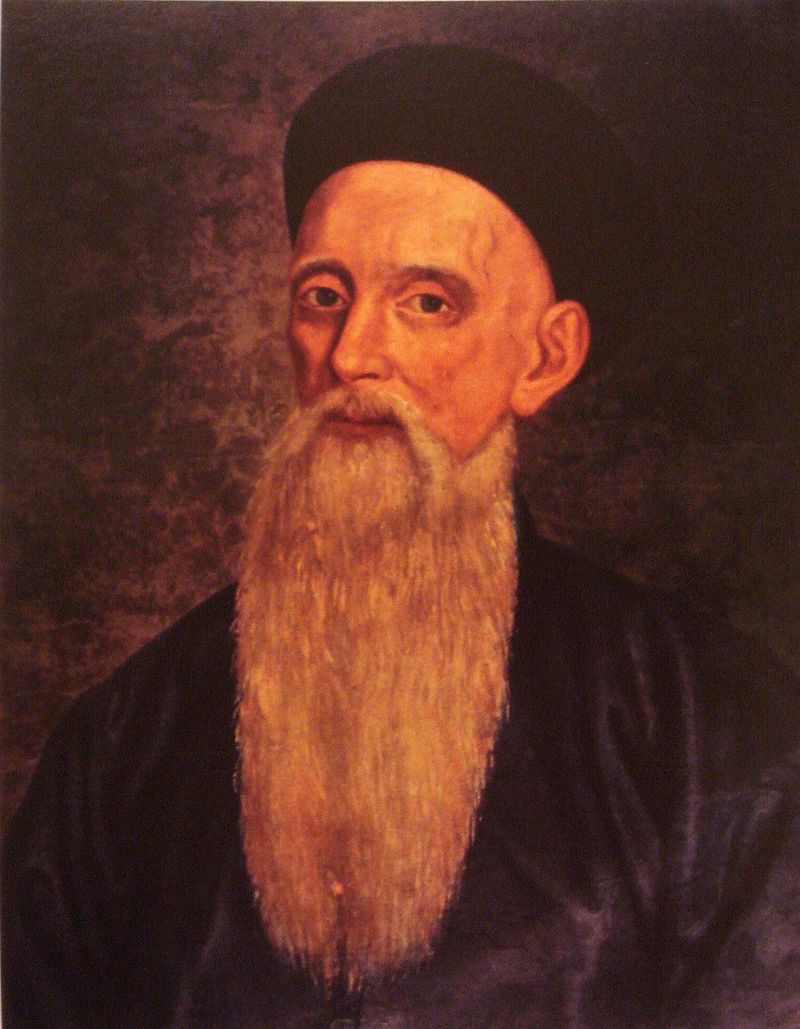
Father Jean Joseph Marie Amiot, our plucky translator from the opening of the show – born 1719, died 1793 – was a member of the last generation of Jesuit priests working out of a mission that had been established in 1577. Obviously, the Jesuits were not the first Europeans to visit China – Marco Polo, to name just one Silk Road merchant, beat them there by a good two hundred years.
However, the Jesuits were uniquely situated – and uniquely capable – of burrowing into Chinese society to try to understand it. Obviously that attempt at understanding had an ulterior motive – hey, let’s convert these guys to our religion – but it resulted in some genuine connections in spite of that. For two hundred years, the Jesuits acted as one of the primary conduits of cultural exchange between China and the West. As Benoît Vermander, a Professor of Religious Studies at Fudan University in Shanghai wrote in 2015, “The history of the relationship between the Jesuits and China is part of global cultural history, extending to scientific exchanges, cartography, astronomy, botany, painting, engraving, ethnomusicology, and even the art of gun making.” (Vermander 2015)
In this episode, we’re going to look at what’s known as the first Jesuit mission to China, which lasted from 1552 to 1773. We’re going to look at how the Jesuits’ publications and correspondence helped feed western perceptions of China and other East Asian countries more broadly. And, of course, we’ll get to know Father Amiot, a music-loving amateur scientist who wound up bringing Sun Tzu’s The Art of War to Europe for the first time.
First, of course, we need to talk about the origins of the Jesuits. Who are these guys? To get up to speed with the history of the Jesuits and the founding of their Chinese mission, I read Mission to China: Matteo Ricci and the Jesuit Encounter with the East by Mary Laven, Professor of Early Modern History at Cambridge University, and I’m relying on it as well as Professor Vermander’s 2015 book chapter for the Oxford University Press for this introduction and the next section.
Early in her book, Professor Laven explains why it’s important for us in the 21st century to think about this endeavour of the 16th century:
“As we stand at the beginning of what many believe will be remembered as China’s century, it is timely to consider how our European ancestors confronted and negotiated cultural difference. We may be surprised to discover that, in many respects, their approach was more honest and more open than our own. But we should not be shocked if it was shot through with anxieties and inconsistencies; the battle between domination and acceptance raged in the heart of every missionary.” (Laven 28)
So, the Jesuits. The Jesuits are an order of Roman Catholic priests officially known as the Society of Jesus. They were founded by students at the University of Paris in 1534. The leader of these students was a Basque called Ignatius, from Loyola in Northern Spain. Ignatius was the 13th child of a modestly wealthy noble family, and seemed to be cut out for a military life until his 20s, when he was severely wounded by a cannonball during a battle with the French near Pamplona.
Both of Ignatius’s legs were damaged. He would never fight again – at least, not in the traditional sense. He contracted an infection, recovered, then opted for surgery to re-set a badly healed fracture – a very dicey proposition in the 16th century. During this long convalescence period, cooped up in his family’s castle, he read and re-read the only books he could get his hands on: a life of Christ, and a book about saints which contained a prologue describing service to God as a sanctified form of chivalry. (Ryan 2025)
This was the point at which Ignatius of Loyola dedicated himself to his faith. He lived as a beggar in Spain for a time, praying and meditating in a cave. He kept a prayer journal which became the nucleus of his book The Spiritual Exercises, a 30-day regimen of prayer and meditation on life, death, and the nature of God. (Russell) He made a pilgrimage to Jerusalem, where he realized that if he really wanted to be effective, he needed to study, and study, and study. (Surely Confucius and Sun Tzu both would have approved.)
Loyola spent 12 years in study, first in Barcelona, then in Salamanca, where he was tried and imprisoned for heresy when authorities there became suspicious of the mystical bent of his teaching. After his release, he left for Paris, where he entered the university and met the co-founder of his order: Francis Xavier.
Xavier was also a Basque, and although leery of Ignatius’s intensive religious fervour at first, he soon gave way to the force of the older man’s zeal, and together with five other companions they took vows of poverty, chastity, celibacy and – this is important – a bonus fourth vow, promising obedience to the Pope in all things. They did this, uh, sort of freelance, as far as I can tell, before any of them were even officially priests.
The Jesuits were ordained in 1537, officially approved by Pope Paul III in 1540, (Ryan 2025) and within a few years there were more than a thousand of them, and they were spreading out all over the earth to teach, to preach, and to share knowledge. In a papal bull, the pope ordered the Jesuits to go out and minister to not just the rising tide of Protestant converts in Europe, but also to “‘the Turks or any other infidels, even those who live in the region called the Indies, or … any heretics whatever’.” (Laven 5)
Loyola was too sickly to be a missionary – he would eventually die in Rome in 1556. Instead, it was Xavier’s calling to take the faith to “any heretics whatever”. Leaving Rome in 1542, he established churches and schools in India and Malaysia, living among poor pearl divers, contacting remote tribal societies on small islands, baptising thousands.
In 1549, Xavier moved on to Japan. He admired the culture he found there, but struggled to make headway with conversions. First, he was naturally drawn to try to start Christian communities from the ground up, living in poverty as Ignatius of Loyola – and, indeed, Jesus Christ – had done. He soon realized that the Japanese elites exerted even greater control over common people than they did in Europe, and that it would be necessary to convert them first. That required him to adopt a more sophisticated appearance and lifestyle. But having cleared that first hurdle, Francis Xavier was surprised, as Vermander puts it, to “[meet] with an unexpected objection: what could be the value of a message that the Chinese sages had never heard about?” (Vermander 2015)
Recognizing the hold that Chinese culture – in particular, Confucianism – had over Japan, Francis Xavier set out to establish a mission there. Specifically, he set out to convert the Emperor of China himself.
However, China tightly controlled access to its mainland. While foreigners could visit trading posts and specific ports, they had to apply for permission to travel within the country. Xavier recognized how difficult this could be, writing to a correspondent in November 1552 that, “[If] I go to China I believe you will find me in one of two places: I shall either be a prisoner in the jail in Canton, or in Peking, where the king is said to be in permanent residence.” (Xavier, quoted in Vermander 2015)
Francis Xavier settled on Shangchuan, an island nine miles off the Chinese coast. He died of an infection there in December 1552 while waiting for his permission to travel. It would take the Jesuits another 30 years to establish a true foothold in China – one that would bring them into the Emperor’s orbit.
[music]
To succeed as a Jesuit missionary in those early days, you had to not just be willing to go anywhere and live among anyone – you also had to be willing to write about it. Constantly. Within a few years of the pope approving the Jesuits, they had a special office in Rome dedicated to handling their correspondence to and from missionaries in the field. (Laven 10)
Mary Laven describes this writing as both an accountability practice for the priests – here’s what we’ve been up to in the name of God – and “as a kind of group therapy” (Laven 10). Jesuits, unlike other religious orders, didn’t live in monasteries together, so the constant correspondence was a way of bonding with their brothers. And, of course, Jesuits’ writings were used as press materials to attract wealthy European patrons for their work. That’s a basic principle of managing a nonprofit: have a story to tell your donors.
First and foremost, however, the information Jesuits recorded was intelligence designed to support their goal of converting as many people as possible. Laven writes that:
“Missionaries, like potential invaders, needed to know the lie of the land, and to gather information about roads and rivers, climate, demography and food supplies in order that they could plan their assault. . .. Only by research of this kind could the Jesuits target their mission effectively.” (Laven 11)
But this intelligence-gathering was not the sort of detached and devious spy-work that Sun Tzu says generals should treasure more than anything. It had a genuine spirit of interest and engagement about it: indeed, Laven says that “Rather than seeking to eliminate local culture, missionaries were encouraged first to study and then to participate in it.” (Laven 18) And one of the men who embraced this challenge to the full was an Italian Jesuit called Matteo Ricci.
Matteo Ricci was born in 1552, just a few months before Francis Xavier died, frustrated, on Shangchuan. Ricci showed intellectual aptitude early, and while studying law in Rome, he fell in with some Jesuits. Their scholarly approach to the holy life appealed to him, and he began his long probationary period. He was 26 years old when he was sent to China, where he settled on the island of Macao, which the Portuguese controlled as a trading port. While there, Ricci immersed himself in the study of the Chinese language – not just studying it, in fact, but helping to write a Chinese – Portuguese lexicon in partnership with another Jesuit.
After about a year of this, Ricci was granted permission to move to the city of Zhaoqing, near the trading post of Canton near the Pearl River. Over the next several years, grappling with what Laven calls “the interplay of curiosity and hostility” Ricci and his Jesuit colleagues gradually, slowly began building a community of converts and goodwill with local authorities. But this was not achieved, in the first instance, by simply holding masses or knocking on doors to ask Chinese people whether they had heard about our Lord and Savior.
Instead, Ricci and his companions had to win the Chinese over. The Chinese elite at that time – even in fairly out-of-the-way places like Zhaoqing – regarded foreigners as barbaric people whose civilizations had nothing to offer them. So the Jesuits had to find a more indirect method: they had to first show that they were from an enlightened culture – one whose religion was worth getting to know. Gentle listeners, he blinded them with science. He hit them with technology.
Clocks, prisms, exceptional mirrors, musical instruments – these were the curiosities that acted like catnip for members of a culture that, as we learned in our episodes on Confucius, considers the pursuit of knowledge a core value. And Ricci wasn’t merely opening up a cabinet of curiosities, showing off trinkets like a traveling salesman. He himself was an expert in mathematics and astronomy, and at that point in history, the West had many new findings to share with the Chinese.
“‘They know nothing,” Ricci wrote in a letter, “They think that the earth is flat and square; that the sky is made of a single liquid, that is air, and many other absurd things.” In another he declared that “If we can teach them our sciences … it will be easy to persuade them to our holy law.’” (Laven 94-95)
Always keeping Francis Xavier’s goal of converting the Emperor in mind, Ricci and his colleagues in Zhaoqing cultivated relationships with ever-higher levels of the local elite: officials, scholars, and eventually members of the nobility. They adopted the traditional clothes of Confucian scholars. Ricci cheerily informed a friend in Europe that, “I have become a Chinaman. Already you will be aware that in clothing … in ceremonies, and in all exterior matters, we are now Chinese.’” (Laven 45)
These efforts to integrate into the culture bore fruit not just in baptisms, but also in literary output. Ricci worked with Chinese scholars to produce two Chinese-language books about Christian doctrine. These books adopted Confucian, Taoist, and Buddhist terminology and logic to make Christianity more appealing to his audience – an approach that, as Mary Laven notes, got Ricci into “deep water,” because of some rather insensitive misapprehensions of these three faiths – and, one assumes, because of the not-so-ulterior motive involved. (Lavin 149-150)
Less controversially, Ricci also collaborated on secular works, producing a Chinese edition of the ancient Greek scholar Euclid’s books on geometry and mathematics, as well as a short work about friendship that quoted from Cicero, Aristotle, and others. He also apparently translated several “Chinese classics” into Latin, intending to circulate them in Europe, but these were lost. (Vermander 2015) I was unable to find out if anyone knows which classics these were – surely the Analects of Confucius would be among them, but it is tantalizing to consider that perhaps Ricci also read Sun-Tzu, and that The Art of War could have been introduced to Europe nearly two hundred years earlier than it eventually would be.
However, Ricci’s most popular production during his time in China was his mappa mundi – his map of the world. First produced in 1584, it was labelled with Chinese characters and, contrary to Western cartographic conventions even to this day – it put Asia at the center of the map.
Mary Laven notes that despite this accommodating gesture, the map also had the potential to offend the Chinese, because his map “radically [diminished] the size of the ‘Middle Kingdom’. As Ricci later commented, to persuade the Chinese that their country ‘occupied anything less than three-quarters of the world’ was a tough call.” (Laven 23) However, prints of the map were soon in demand. Ricci’s excellence in cartography became his calling card throughout educated Chinese circles – the map would go into several editions throughout his lifetime. (Vermander 2015)
China also influenced Ricci. While certain aspects of Chinese culture did not appeal to him – he was particularly horrified by the practice of creating eunuchs, and by their influence over imperial life – he was fascinated by the Chinese dedication to learning. The intense preparation for the civil service examinations – preparations we discussed in our episodes on Confucius – reminded Ricci, says Mary Laven, of the emerging Jesuit model of long and rigorous study, which also culminated in an exam, albeit an oral one.
“If it is not possible to say of this realm that the philosophers are kings,” Ricci wrote admiringly, “At least one can say with truth that the kings are governed by philosophers.” (Laven 134) And he determined that Jesuits should be among those philosophers. While he was never able to achieve the ultimate goal of converting the Emperor, Ricci was able to gain access to Beijing towards the end of his life, positioning himself and his brother missionaries as scientific advisors to the imperial court – a relationship that would take root and continue for generations, even after the pope had supressed the Jesuit order.
Ricci also came to admire Confucianism itself. His study of the Confucian classics, intended initially as a form of “knowing your enemy” to better target his conversion efforts, led to a deep interest in how various Confucian ethical principles overlapped with those of Christianity. Here again he found himself in deep water. While his own faith held that conversion was the end goal – adopting Christianity as one’s only faith – the Chinese outlook was one of plurality: the Jesuits’ new interesting devotional practices were something that many Chinese people believed could enhance spiritual life without displacing other traditions. (Laven 63-65)
Over the course of his mission, Ricci began to adapt Christian doctrine – or at least, to selectively present it – to appeal even more to the Chinese. This included instructions to other Jesuits who had joined the Chinese mission that, while Taoism and Buddhism were pagan religions that couldn’t coexist with Christianity, the Confucian rites of ancestor veneration were not really religious in nature, and could continue to be practiced by Chinese converts to Catholicism. Ricci died in 1610, but he had planted seeds of controversy, and they were swift to sprout.
[music]
Sun-Tzu says that when you invade another territory, you must break your pots and burn your boats. That is what the Jesuit mission to China did under Matteo Ricci: they went all-in on an integrative, assimilative approach, and it yielded good results: the Catholic Church in China began expanding, reaching a possible population of about 150,000 by 1650, just 40 years after Ricci’s death. (Vermander 2015) However, Ricci’s experience of China – being invited deeper and deeper into the circles of the elite – was not the universal Jesuit experience. Many Jesuits were subject to persecution and imprisonment. Ricci’s attitude toward China – one of openness and relative toleration – was also not universal. His insistence that “the teachings of [Confucius], save in some few instances, are so far from being contrary to Christian principles, that such an institution could derive great benefit from Christianity and might be developed and perfected by it,” (Vishnevskaya 2020) did not sit well with many of his successors in the Jesuit mission.
There was a fear that the Jesuits were putting the souls of their new converts at risk – and even that they themselves were being converted rather than converting. There may be some truth to this: the scholar John Lagerway wrote that “[t]he Chinese elite . . . had its own project, namely, to transform Chinese society by ridding it of the rituals of shamans, Buddhists, and Taoists, and putting Confucian rituals in their place.” (Lagerway 2010, quoted in Vermander 2015) The Jesuits may have been an unwitting accomplice in that agenda.
This debate over the real nature of Confucianism was the nucleus of the Chinese Rites controversy: an admittedly very convoluted affair that lasted a century. However, many people in the West today still get stuck on its central question: is Confucianism actually a religion as we would understand it, or isn’t it? Is it more civic or spiritual? You will still hear westerners calling Confucianism more of a “philosophy” than a belief system. That perception is tied to this debate in the Catholic Church in the 1600s and 1700s.
At first, the official approach of the Jesuits was to continue Ricci’s practice of toleration, in spite of the shock and horror it inspired in priests from other Catholic orders, such as the Dominicans, who began arriving in the early 17th century. In 1692, the K’angshi Emperor gave the toleration faction a boost when he issued an official decree declaring the Jesuits under his protection: “they do no harm to anyone, they commit no crimes, and their doctrine has nothing in common with that of the false sects.” (Halsall 1997)
However, the new arrivals soon began to raise alarms back in Rome. Jesuits based in the Vatican were obliged to try to defend the practice of toleration, but in 1715 Pope Clement XI called time on that: he banned Chinese converts to Catholicism from performing their traditional rites – down to attending an ancestor worship ceremony as a bystander or visiting memorials to ancestors within family temples. (Vermander 2015)
This decision prompted a reaction from Chinese elites: a 1721 decree, also by the K’angshi Emperor, banned Christian missions in China. (Halsall 1997) He had fantastically spicy words for the pope:
“I have concluded that the Westerners are petty indeed. It is impossible to reason with them because they do not understand larger issues as we understand them in China . . . To judge from this proclamation, their religion is no different from other small, bigoted sects of Buddhism or Taoism. I have never seen a document which contains so much nonsense. From now on, Westerners should not be allowed to preach in China, to avoid further trouble.” (Halsall 1997)
In spite of this ban which threatened to swamp the grassroots Catholic missions within China, there was always a group of Jesuits that managed to stay active near the imperial court thanks to their facility with science. This persisted even during times of upheaval in the Chinese ruling class. For example, in the 1640s, the Manchus invaded Beijing and overthrew the reigning Ming dynasty. The then-Jesuit head of mission, Adam Schall, managed to impress the new imperial overlords by correctly predicting a solar eclipse and reforming the imperial calendar – no small change in a society that made decisions based on astrology and seasonal changes.
In the early 1700s, the Jesuits in China dealt another blow to the credibility of their order when some of them got a little too into the I Ching and decided, as Westerners will when confronted with a good idea from another culture, that it had to connect to the Bible somehow. This is a fallacy many people continue to stumble over today: obviously, if Christianity is the true faith; if it’s the final answer to any question about human purpose in the world, it follows that anything which seems good or admirable or profound from another culture must tie back to it somehow.
This search for a connection between Chinese classics and the Bible was called Figurism, and it led to a flourishing of what basically amounted to scholarly-sounding fan fiction by Jesuits who really ought to have known better. A Jesuit called Joachim Bouvet claimed that the hexagrams of the I Ching were the last remnants of a writing system that had been used before the Flood – Noah’s or Utnapishtim’s, depending on your culture – and that characters from Chinese legends were actually identifiable with characters from the Hebrew Bible. (Vermander 2015) Bouvet wrote that he found it to be, quote,
“…a secret pleasure to recognize among all the fantastic stories of the religion of this country certain traces of our religion…obscured by the course of time due to the ignorance of these peoples.” (Lackner 133)
Figurism gave fuel to both the European opponents of the Jesuits and those based in China. For the former it was heresy; for the latter, it was an intolerable arrogance. But the mission near the imperial court limped on into the 17th century. It was into this somewhat doomed atmosphere that our hero, Jean Joseph-Marie Amiot, came in 1750.
[music]
Amiot was born in 1718 in Toulon. It is amazing that Amiot made it out of childhood, let alone to China. When he was a toddler, in 1720, a plague epidemic wiped out nearly half the population of his town. (Hermans 229) The oldest son of a prosperous notary public, Amiot was given a good education at a college run by – you guessed it – the Jesuits. True to Jesuit form, this education encompassed the humanities, philosophy, and theology. In 1737, when he was 17, Amiot decided on a holy life. This seems unusual: as the oldest son he’d probably have stood to inherit a lot of his father’s estate. Amiot would later write that he never availed himself of assistance from his family:
“I entered the community of Jesuits after finishing my studies, and I entered naked, so to speak, having only myself to give . . . I never received the slightest help from my family in obtaining any small comforts.” (Hermans 231)
Remember that Jesuits had a very long probationary period before ordination – one that mirrored the long study of their founder, Ignatius of Loyola. While preparing for holy orders, Amiot taught humanities and rhetoric at various Jesuit colleges, and seems to have used his time as a teacher to spread his artistic wings: there are records of him composing poems and songs for his students to perform. He was finally ordained in 1746, and he immediately asked to be sent abroad as a missionary.
His superiors assigned him to the mission in Beijing, where French Jesuits were still serving at the Imperial court, and still churning out correspondence and publications at a terrific rate in spite of having been officially banned 25 years before. In fact, one source I consulted claimed that more than 80% of the work turned out by Jesuits between 1687 and 1773 came from the French Jesuits in Beijing. (Hermans 235)
Like other Jesuits before him, Amiot was obliged to take his journey in stages: first staying in Macao for a year, then making an 83-day journey to Beijing, where he would remain, though he could not have known it, for the rest of his life.
Like his many predecessors, Amiot immediately adopted Chinese clothing and a Chinese name. He hired a young Chinese man, Yang Ya-Ko-Pe, as his assistant. Amiot then applied himself to a very uncontroversial and rather underappreciated branch of research: music. Even if Amiot had never crossed paths with Sun-Tzu, scholars today would remember him as an early pioneer of the field of ethnomusicology.
Throughout the 1750s, Amiot recorded Chinese songs using western musical notation. He drew detailed pictures of Chinese musical instruments and Chinese performers. He sent copies of these works to various scholars and scholarly societies throughout Europe – 10 such songs he transcribed are still in the archives of the Royal Society of London to this day. (Hermans 237) Those songs were quickly circulated throughout Europe, where composers did what composers do and stole them. Pieces of one of the melodies Amiot introduced into Europe, for instance, wound up in the opera Turandot by Carl Maria Von Weber. “Whether or not [these melodies] deserve this esteem is questionable,” Amiot wrote in his notes on the collection, “I found them extremely tedious.” (Hermans 239)
The feeling was mutual: Amiot, making use of the Jesuit mission’s harpsichord, tried to introduce Chinese officials to the wonders of baroque music. In a scene that gives strong “awkward exchange student” vibes, he played some Chinese visitors a selection of greatest hits by French composers like Michel Blavet and Jean-Philippe Rameau. They didn’t connect with it. “On their faces, I see only a cold and distracted expression that tells me they are totally unmoved,” he wrote in a letter. “They [explained], in their most polite way, that our melodies were not designed for their ears, nor their ears for our melodies.” (Hermans 239)
While science had been the keystone of the cultural exchange between the Jesuits and the Chinese for nearly two hundred years, Amiot does not seem like he was terribly enthusiastic about contributing to that tradition – at least not at first. In the 1750s and 60s he’s recorded as participating in various scientific experiments, such as observations of various stars or planetary conjunctions. He turned in a paper about Chinese units of measurement, did some experiments with magnetism, and made weather observations. These works were enough to bring him into contact with scholars in France, England, and Russia – contacts that would prove fruitful soon enough.
By the mid-1760s, Amiot had become the senior-most member of the mission at Beijing. It was a tense time: governments throughout Europe were expelling the Jesuits from their countries; in China, they were officially barred from trying to expand their church. “This unsettling time,” writes the scholar Michel Hermans, “would coincide with Amiot’s most fruitful period as a writer.” It was also the period in which he encountered The Art of War. (Hermans 254)
Amiot knew that his mission’s survival depended on its ability to act as a conduit between China and Europe. He tried to expand his network of contacts in both regions: potential patrons who could provide the Jesuits with material and political support if they needed it. For China, he would procure the Western technology and scientific knowledge they wanted; for Europe, he would send information about the cultures and languages of the East. His 1766 letter to Henri Bertin – and the four notebooks that went with it, one of which contained Sun-Tzu, was part of this strategy.
With Bertin, Amiot hit gold: right up until the outbreak of the French Revolution in 1789, Bertin was able to supply the Jesuit mission with funds, technological curiosities and other supplies that kept them in good standing with the Chinese elites. He also welcomed any diplomatic intelligence Amiot could send him along with cultural and scientific writings.
On the Chinese side, Amiot was lucky enough to make friends with a minor prince called Hongwu, a cousin of the Emperor. Hongwu was a painter and poet, and he was fascinated with Western technology. He and Amiot eagerly devoured the scientific books and periodicals coming out of France – books by William Herschel and Benjamin Franklin, for example – (Statman 105) and conducted experiments together. While Hongwu was not a great power at his cousin’s court, he was respected as an artist, and wherever he could, he used his modest influence to benefit of Amiot and the Jesuits.
Now, two things I have been unable to work out in reading about Amiot are: when did he decide to translate Sun-Tzu, and why? Was it just that he was trying to fill a market need for information about Chinese military strategy, or was he drawn in some way to the personality revealed in that enigmatic work? He himself was an expert in music, not military matters, and he didn’t even run in military circles. He wrote at one point that his translation of Sun-Tzu (which was part of a collection of other Chinese works on military strategy) was “so different from my own tastes, so far from the subject of my profession.” (Parr 172) But he laboured at it, going so far as to make illustrations for it.
One source I consulted seems to suggest that Amiot was interested in sharing with Bertin a model not just of clever military strategy, but of overall good governance. China has lasted for four thousand years, and this approach to military strategy is part of why, therefore it should be disseminated in younger nations so they might learn from it. This is not to say that he approved of everything he read there: in a footnote to chapter 13, the one about using spies, he writes:
“I need hardly say here that I disapprove of everything the author has written about trickery and ruses. This approach, which is bad in itself, ought to have no place among well-disciplined troops.” (Amiot, quoted in Parr 193)
Bertin had Amiot’s Art Militaire published in 1770, and it attracted interested notice but wasn’t a runaway bestseller. Most people seemed struck by the lengths to which Sun-Tzu went to avoid fighting in the first place. In 1772, an anonymous reviewer for the English Monthly Review noted that:
“We find here some good general rules for the management of an army; but caution and care are so recommended and inforced [sic] . . . that we may venture to pronounce, that an army guided by such rules, would never make a brilliant figure.” (Parr 171)
And perhaps it was not the time for military commanders to be considering new strategies: the Seven Years War between France and England was just then winding down; the American Revolutionary War would soon follow, and after that, the French Revolution. Amiot followed all these conflicts from Beijing, worrying about the fates of his siblings still in France and of his patron Henri Bertin. The former were stripped of their property. The latter made a narrow escape from the Terror by fleeing France in 1791. Amiot fell into a deep depression.
Once Louis XVI was deposed, new men and funding stopped flowing to the French Mission in Beijing. Amiot, aging, lonely, spent time visiting the tombs of his friends and colleagues in the Jesuit cemetery. On October 8, 1793, Amiot received news that Louis XVI had been executed the previous January. Amiot, by then 75 years old, had been in poor health for some time, but this new, grievous news was the final blow. He mustered up the strength to celebrate a mass for the soul of the King. Later that night, he died.
In 1774, after the dissolution of the Society of Jesus by the Pope, Amiot had written an epitaph to be placed in the cemetery for his colleagues. It reads, in part:
“That which was unshaken for so long now at last, overcome by so many storms, has succumbed. Stand, traveller, and read, and for a little time reckon in your mind the inconstancy of human affairs. Oh, sighing silently to the last days of our lives, we have set up this monument to fraternal devotion among these wild woods. Go, traveller, congratulate the dead, mourn for the living, pray for all, marvel, and be silent.” (Hermans 251-252)
[music]
That’s it for this episode, but I imagine that you probably have one burning question before we turn the page on Sun-Tzu. You’re probably wondering: did a young Napoleon Bonaparte ever get his hands on a copy of Amiot’s translation of The Art of War? We genuinely have no way of knowing: there’s no evidence that he did, and no evidence that he didn’t.
Well, except maybe this: if Napoleon did read Sun-Tzu, he clearly ignored all the advice about considering terrain and climate. Otherwise he would never have invaded Russia in the winter.
I hope you’ve enjoyed this brief sojourn back into China, because we now embark on our Big Fat Greek Summer of Drama: three straight months of Athenian plays, with meta-episode forays into Sigmund Freud, the lives of women in Ancient Greece, and changing perceptions of what makes something funny.
First on deck is Sophocles, who was the coming man on the Greek drama scene just as our old friend Aeschylus was leaving it. It is time to get entirely too familiar with our mothers. Join me on Thursday, May 29th for Episode 33: “Oedipus Rex, Part 1: The Future Will Come of Itself.”
Books of All Time is written and produced by me, Rose Judson. The Disclaimer Voice of Doom is Ed Brown. Lluvia Arras designed our cover art and logo. Special thanks to Yelena Shapiro, Cathy Merli, Matt Brough, John Cole and the Books of All Time Advisory Council: Ed Brown, Beck Collins, Neil Dowling, Caitlin McMullin, Hugh Parker, and Jonathan Skipp. You can support the show by subscribing and leaving a rating or review at Apple Podcasts, Spotify, or wherever you get your podcasts. You can also follow us on social media: we’re on Bluesky, Instagram and Facebook. Thanks for listening! I’ll be back in two weeks.
References and Works Cited:
Bachmann. “Jean Joseph Marie Amiot Introduces ‘The Art of War’ to the West.” The Shelf: Preserving Harvard’s Library Collections, Harvard University, 28 Jan. 2014, www.archive.blogs.harvard.edu/preserving/2014/01/28/jean-joseph-marie-amiot-introduces-the-art-of-war-to-the-west/
“Chinese Rites Controversy.” Encyclopædia Britannica, Encyclopædia Britannica, inc., www.britannica.com/event/Chinese-Rites-Controversy.
“The Early Modern Jesuit Mission to China: A Marriage of Faith and Culture.” Association for Asian Studies, 18 July 2023, www.asianstudies.org/publications/eaa/archives/the-early-modern-jesuit-mission-to-china-a-marriage-of-faith-and-culture/.
Halsall, Paul. Internet History Sourcebooks: Modern History, Fordham University, 1997, www.origin.web.fordham.edu/halsall/mod/1715chineserites.asp.
Lackner, Michael. “Jesuit Figurism.” China and Europe: Images and Influences in Sixteenth to Eighteenth Centuries, edited by Hongqi Li, Chinese University Press, Hong Kong, 1991, pp. 129–150.
Laven, Mary. Mission to China: Matteo Ricci and the Jesuit Encounter with the East. Faber and Faber, 2012.
“The Life of St. Ignatius of Loyola.” Jesuits.Org, 30 July 2024, www.jesuits.org/stories/the-life-of-st-ignatius-of-loyola/
Parr, Adam, et al. The Mandate of Heaven Strategy, Revolution, and the First European Translation of Sunzi’s Art of War (1772) Adam Parr. Brill, 2020.
Russell, Stephanie. “What Are the Spiritual Exercises of St. Ignatius?” What Are the Spiritual Exercises of St. Ignatius?, Marquette University, www.marquette.edu/mission-ministry/explore/spiritual-exercises.php
Ryan, Edward A. “St. Ignatius of Loyola.” Encyclopædia Britannica, Encyclopædia Britannica, inc., 10 Apr. 2025, www.britannica.com/biography/St-Ignatius-of-Loyola
Statman, Alexander. “How a French Missionary and a Manchu Prince Studied Electricity and Ballooning in Late Eighteenth Century Beijing.” East Asian Science, Technology, and Medicine, no. 46, 2017, pp. 89–118, https://www.jstor.org/stable/90020958
Sun-Tzu. The Art of War. Translated by John Minford, Penguin Books, 2002.
Sun-Tzu. The Art of War: Penguin Great Ideas Series. Translated by John Minford, Penguin, 2008.
Vermander, Benoît. Jesuits and China: Oxford Handbook Topics in Religion. Oxford Academic, www.academic.oup.com/edited-volume/41330/chapter/352332934


 Books Of All Time
Leave a comment