
“Perses, lay this down in your heart, and may the Strife who exults in misfortune not keep your heart from work, a spectator of disputes, a listener at the debate.” Hesiod, Works and Days (West 37-38)
Therapists often recommend that when you’re angry with someone close to you and you can’t have a face-to-face confrontation for whatever reason – say you’ve stopped speaking, or there’s a real risk that a conversation could turn physically violent – that you should write the person a letter you never intend to send to them.
I’ve done that before. More than once. Fine, many times – I’m bad at confrontation, okay? But I was able to burn or delete all my letters. Imagine a different scenario. Imagine that you’d written one of these letters to your brother, and as you were writing it, Apollo suddenly blessed you with the gift of foresight, and you knew that your letter would survive after you and be read by strangers.
More than that: your vision shows you that for thousands of years, your letter is read and commented upon in public by some of the leading minds of each era. These commentators are not just content to mull about your personal beef with your brother (though they have certainly done that). They’re also eager to sift what you’ve written for clues about your civilization and your religious beliefs.
But wait, there’s more: Apollo shows you dozens of earnest graduate students writing dissertations about your view of the opposite sex, and wondering whether your romantic life was in fact satisfactory. You are also treated to a supercut of virtually every scholar, or critic, or average person who encounters your letter agreeing that your writing, while it has a certain charm, is simply not not as good as the other guy from your culture and time period. And how could it be, when “the other guy” is, you know, Homer.
Knowing all this, would you still write that letter?
If you’re Hesiod, there’s only one answer: hell yeah, I’m writing that letter.
I’m Rose Judson. Welcome to Books of All Time.
Books of All Time is a podcast that’s tackling classic literature in chronological order. This is episode 15: Theogony and Works and Days, Part 1: Ask an Ancient Greek Farmer. As always, if you want to read the transcript of this episode or see the references I used to write it, you can visit our website, www.booksofalltime.co.uk. There’s a link in the show notes if you need it. Let’s begin.
This week we’re back in Ancient Greece to look at two short works by the poet Hesiod. Hesiod – and I’ve also heard it pronounced HEH-see-ud, but over here HEE-see-ud seems more common – as it turns out, lived at about the same time Homer is supposed to have lived (if he indeed existed at all). That is, somewhere between 750 to 650 BCE. This means I’m out of step slightly on my chronology – these episodes should probably have been put before the Genesis/Exodus episodes. My bad. I’ll cancel the lavish quarterly bonus I pay myself. Though I suppose, if you squint, the actual chronology is a little murkier, a little soupier – Genesis and Exodus, as we’ve discussed, were largely works of editing, and the bulk of their texts may have been composed far before the Babylonian Exile in the 580s BCE.
The point of this digression is that the “classic lit in chronological order” is a goal, not an iron-clad promise, and as long as this show is run entirely by me, these hiccups will happen. Anyway, there it is: I goofed on the order of the reading list. 95% of you won’t care, but I’m pretty sure Hesiod would have.
So who was Hesiod? We have a much better idea about him as an actual person compared to Homer, although most of that idea comes, it has to be said, from what Hesiod says about himself. It isn’t clear to me from what I’ve read that we have evidence for Hesiod outside his poetry, so in theory, it’s entirely possible that he was a character invented by some anonymous writer.
But we’ll take him at his word. By his own account, Hesiod was the owner of a modest but prosperous farm near a town called Ascra on the slopes of Mount Helicon. This is an identifiable place in the real world: Helicon is roughly 90 miles northeast of Athens, close to the Bay of Corinth. I’ve never had the pleasure of visiting, but photos suggest a rugged landscape with an austere beauty – mountains sweeping down close to the sea.
Hesiod hated it. This is the other thing we know about him – again, from his own writings. Hesiod was a curmudgeon. A crank. The OG hater. He said that his hometown of Ascra was “miserable,” that its climate was “dreadful,” calling it, quote, “vile in winter, painful in summer, never good.”
As someone who spent five years living in the wonderful city of Chicago, Illinois, I can only say: what a baby. When I first moved to Chicago it was August, with daytime highs above 100 degrees Fahrenheit and so humid it was like having someone’s armpit clamped over your face. That winter it was positively Arctic – I remember standing on the red line El at Loyola before the sun had come up, rammed into the little warming cabin with 30 other people, grateful to snatch a few seconds out of the wind, which rasped over any exposed skin like an emery board going 95 miles an hour. Sorry to hear about your Greek rainstorms, Hesiod.
Anyway. As I said, Hesiod was a farmer near the Bay of Corinth. We also know something about his family – about the men in it, anyway: his father had migrated to the area in search of a better life, and eventually found a career as a sea-going merchant. He married . . . some lady Hesiod never mentions, and the result was Hesiod and his brother, Perses.
After Hesiod’s father died, Hesiod and Perses fell out over the division of the inheritance. We know this because Hesiod brings it up repeatedly in Works and Days, one of the two pieces of literature we have of his. Works and Days is technically termed “wisdom” literature by the scholars. In my experience, it’s part self-help book, part how-to manual, and part rant. The other, Theogony, is the oldest source we have for some of the key Greek myths – the name actually translates as “Birth of the Gods”, or “Origins of the Gods”. From what we can tell, many later Greek writers would refer to Hesiod when creating new works.
Let’s take a look at Theogony first. Theogony is pretty short – just 1,020 lines of Ionian hexameter, the same type of verse used in The Iliad and The Odyssey. Scholars down the centuries, from Aristotle to Emily Wilson, the translator of the edition of The Iliad I covered a few months back all agree that as a writer, Hesiod is, eh, not up to Homer’s standards. For this episode, I read the Oxford World’s Classics edition of Hesiod, and M.L. West, the translator, throws shade on Hesiod, too. “If I have sometimes made Hesiod sound a little quaint and stilted,” West says in the introduction, “That is not unintentional: he is.”
Burn.
That’s style. Let’s talk substance. Like The Iliad and The Odyssey, Theogony opens with an appeal to the muses. Unlike The Iliad and The Odyssey, which jump into the action within a few lines, Theogony’s invocation of the muses goes on for a full 120 lines or so – 10% of the whole poem. Some of this is lovely, as with the very first lines:
“From the Muses of Helicon let us begin our singing, that haunt Helicon’s great and holy mountain, and dance on their soft feet around the violet-dark spring and the altar of the mighty son of Kronos.” (West 6)
Some of the invocation is self-serving. For example, Hesiod explains that the Muses taught him to sing while he was out tending his sheep. And lest you wonder why the Muses chose this particular shepherd for their vessel, well, it’s because he is special. They told him so. No, really:
“Shepherds that camp in the wild, disgraces, merest bellies: we know to tell many lies that sound like truth. But we know to sing reality, when we will.” (West 3)
Translation: “other shepherds are dolts, and we lie to them for our amusement. You, Hesiod, are however worthy of our gifts.” Hesiod goes on to say that the muses breathed into him “wondrous voice, and then gave him a staff from a bay-tree to signify his poetic gifts – a bay-tree, if you’re not aware, is a laurel, which is what the Greeks used to make wreaths to crown the heads of the very greatest poets, athletes, and warriors.
Hesiod then prattles on about the origins of the Muses: how Zeus seduced their mother for nine nights running; how the poor woman then gave birth to nine daughters, how those daughters now dwell in Olympus, singing for the gods and empowering mortals to sing, too. And then, finally, his poetic throat-clearing finished at last, he says, “Tell me from the beginning, Muses who dwell in Olympus, and say what thing among them came first.” (West 6)
The things that come first are primeval entities: Chaos, Earth, Tartarus (the underworld, or rather the underworld of the underworld). Then comes Eros, or sexual passion, followed by Night and Day and Heaven – it’s not quite clear to me whether these entities are embodied in a human way, or what – Hesiod seems to go back and forth on that depending on the needs of the narrative or the overall poetic vibe of whatever he’s talking about at the time. Maybe I’m just picking nits – I am, after all, a person who has taken too many screenwriting classes. The Muses have certainly never given me a staff of laurel, so what do I know?
However, once Earth (called Gaia) has brought forth the mountains and the undraining sea, she has a series of very embodied children with Heaven, or Ouranos. Ouranos is, of course, Gaia’s son as well as her lover. The family trees throughout Theogony, I should warn you, are revolting. Anyway, the kids are:
“Koios and Kreios and Hyperion and Iapetos
Thea and Rhea and Themis and Memory
Phoebe of gold diadem, and lovely Tethys . . .
crooked-schemer Kronos, most fearsome of children,
who loathed his lusty father.” (West 7)
These are the Titans, forbears of the Olympian gods. And as you can tell from Hesiod’s description of Kronos, they are also the initiators of what we might call a cosmic cycle of abusive parenting, or cosmic daddy issues, if you like.
After the Titans, Gaia’s next litter of children are the Cyclopes – the one-eyed monsters Odysseus tangles with in The Odyssey. Finally, poor Gaia bears three final children, the Hecatonchieres, or Hundred-Handed Giants. These are monsters with, as the name suggests, a hundred arms each. They are so loathsome and rambunctious that Ouranos decides to pen them deep in a cavern within his mother-wife. Gaia finds this painful – I myself recall being thumped in the kidney by my own child a few weeks prior to delivery – for Gaia, three hundred hands pummeling her from the inside could not have been pleasant.
Gaia does not opt to set her hideous children free, however. Instead, she plans a particularly grisly revenge on her son-husband. She creates a sickle of adamant, the hardest substance in the world (not an 80s glam rocker), and implores her other kids for help.
“Children of mine, and of an evil father, I wonder whether you would like to do as I say? We could get redress for your father’s cruelty. After all, he began it by his ugly behavior.” (West 9)
Kronos volunteers to help out. He lies in wait with the sickle. The next time Ouranos approaches Gaia seeking nookie, Kronos leaps out and slices off his father’s genitals, flinging them over his shoulder (Hesiod points this out specifically). As the severed wedding-tackle soars across the landscape, each drop of blood (or other fluids) bears fruit: giants, nymphs, monsters, fairies – all emerge from the earth. When Ouranos’s bits finally splash down in the sea, a white foam (ahem) swirls up around them, and from this foam steps Aphrodite, goddess of love. She makes landfall on Cyprus, grass and flowers springing up around her pretty bare feet.
This is all a bit more dramatic than “the spirit of God moved upon the face of the waters,” eh?
Back to Ouranos – he curses his terrible children, dubbing them “Titans”, which Hesiod explains using a very tortured pun (or maybe it’s just tortured when rendered in English). You see, by “straining tight in wickedness, they had done a serious thing, and that he had a title to avenge for it later.” (West 9)
Okay, Ouranos.
After this we get a long section describing the children of other gods – those of Night, the Sea, Thea, Kreios, and so on. This quite frankly becomes a blur of names and attributes. For instance, we get a list of no fewer than fifty daughters of Nereus, Old Man of the Sea (West 12). But some famous names do leap out from the thicket. According to Hesiod, Cerberus, the three-headed dog who guards the underworld is brother to the Hydra, a many-headed monster doomed to have a fatal run-in with Hercules, and also to the Sphinx, famous for its riddles. Their mother was a monster amusingly called Echidna, who bears no relation to the spiny anteater that is her modern namesake. No, she’s 50% nymph, 50% serpent.
However, the most important children are those of Kronos and Rhea. These are fated to become the chief Olympians: Hestia, Demeter, Hera and Hades. Unfortunately for these four, their father, Kronos, is consumed by paranoia that his children will supplant him as he did his own father. So he’s decided to consume them first. Literally – he swallows them up shortly after they’re born.
This is understandably upsetting to Rhea, who “suffered terrible grief” when she next fell pregnant. (West 17) She comes up with a plan to hide the newborn with her mother, Gaia, in a cave (though not the same one the Hundred-Handers are trapped in). This last baby is, of course, Zeus.
Incidentally, if this is starting to sound familiar to you, it’s because the people who wrote the Rig Veda in India several centuries before Theogony told a similar story about the god Indra – see episode 7 for details.
Anyway, Rhea hides Zeus in one of her mother’s caves, then gives Kronos a rock wrapped up in swaddling clothes, which he immediately swallows whole. He must have just been popping babies in his mouth like candy – very different to what the Spanish painter Francisco Goya depicted in his grim mural, “Saturn Devouring His Son”, painted during what was obviously a very bad week sometime in the early 1820s. The cover image for this week’s episode is actually a parody of that painting I saw floating around the web. (Saturn is the Latin or Roman name for Kronos, by the way.)
So Kronos swallows the rock, and Rhea bides her time while her little boy gets busy growing up:
“Rapidly then the lord’s courage and resplendent limbs grew, and when the due time came round, the great crooked-schemer Kronos, defeated by his son’s strength and stratagem, brought his brood back up.” (West 17)
That’s right: Kronos barfs all his kids out (this incident is actually mentioned, in passing, by Zeus in The Iliad – he uses it to remind Hera why she should be more grateful toward him). Zeus then liberates other victims of Kronos: Zeus’s uncles, the Cyclopes, are so grateful to him that they forge him his thunderbolt. He begins delegating tasks to other Titans, such as his cousin Atlas, a strong fellow assigned to hold up the earth and sky on his back forever. Atlas has a brother, Prometheus, who seems jealous of Zeus’s growing authority.
In Hesiod’s telling, Prometheus seems to be kind of a low-tier trickster who’s not strong enough to face Zeus head-on. Hesiod uses the same tag for Prometheus that he used for Kronos: “crooked-schemer”. Prometheus finds small, petty ways to mess with Zeus. The trouble starts when there’s a meeting between gods and mortals where they are apparently “settling accounts” about something. As part of this deal, the mortal men sacrifice an ox to Zeus. Prometheus helps them portion out the meat. First he puts a selection of prime beef cuts into the ox’s stomach. Then he takes two of the long thighbones, packs organs around them, and wraps the whole deal in shining white fat to make it resemble a choice cut of meat.
Then Prometheus asks Zeus to choose which portion he wants. Zeus, who I guess was distracted by a passing nymph while Prometheus was handling the holy barbecue, chooses the pile of organs disguised as a beef joint. He’s predictably furious when he realizes it’s just a bunch of lungs and things, not the steak he was hoping for.
He seems to blame mankind for this particular trick instead of Prometheus, however, and he takes away man’s ability to use fire to punish them. Prometheus then steals the fire back, smuggling some embers to the mortals in, as Hesiod tells us, “the tube of a fennel.” (West 20) It’s this second treachery that gets Prometheus sentenced to his famous punishment: eternally chained to a rock, where an eagle rips out his liver, flies off, then comes back and eats the regenerated liver the following day. (Hesiod does reassure us that Prometheus will eventually be delivered from this punishment by Hercules.)
Having settled Prometheus’s hash, Zeus turns back to those pesky mortal men. As retribution for accepting Prometheus’s gift of fire, Zeus decides to make them a gift of his own. He gets other gods to pitch in – kind of a collective art project – and they produce WOMAN.
Hesiod hates women, you guys. Hates us. Here he is describing the reaction to the first woman:
“Both immortal gods and mortal men were seized with wonder when they saw that precipitous trap, more than mankind can manage. For from her is descended the female sex, a great affliction to mortals as they dwell with their husbands – no fit partners for accursed Poverty, but only for Plenty.” (West 20)
And he goes on, comparing humans to bees and women to the drones that lounge around the hive, eating what other bees bring them. He wraps up with “so as a bane for mortal men has high-thundering Zeus created women, conspirators in causing difficulty.” (West 21)
Please excuse me while I go change my social media bios to say “precipitous trap.”
I’m going to say this a lot on this show: I don’t expect feminism from a writer who died 3,000 years ago. Even so, this just feels a little extra to me. Some lady must have yawned during one of Hesiod’s poetry readings; that’s my theory.
At any rate, after describing the terrible mistake that was the creation of women, Hesiod gets back to the war between the Kronos generation of gods and the Zeus generation. The war, which lasts 10 years, just like the Trojan War, is deadlocked until Rhea suggests to Zeus that he free the Hundred-Handers, from their prison inside his grandmother/aunt Gaia.
This he does, taking the time to get his rowdy uncles all amped up with nectar and ambrosia, food of the gods. After a pep talk, the Hundred-Handers rush their fellow Titans – bombarding them with hundreds of boulders, ripping off the sides of cliffs to swing like clubs.
As Kronos and his allies struggle under the onslaught, Zeus is able to deliver the decisive blow:
“The bolts flew thick and fast from his stalwart hand amid thunder and lightning, trailing supernatural flames. All around, the life-bearing earth rumbled as it burned, and the vast woodlands crackled loudly on every side. The whole land was seething.” (West 23)
Kronos and the Titans are defeated. Zeus has them imprisoned way down in Tartarus, which lies below even the realm of the dead. He hires the Hundred-Handers to act as their jailers. So begins, according to Hesiod, the reign of the Olympians under Zeus. The remainder of Theogony is part cosmology and part genealogy.
In the cosmological bit, Hesiod describes how the universe is arranged. You’ve got Chaos, which is the void or the chasm, not, like, anarchy and disorder. On one side of Chaos is Tartarus, and on the other are the regular underworld, where Hades reigns, as well as the dwellings of night and day, the stars, and of course our Earth, held up by poor old Atlas.
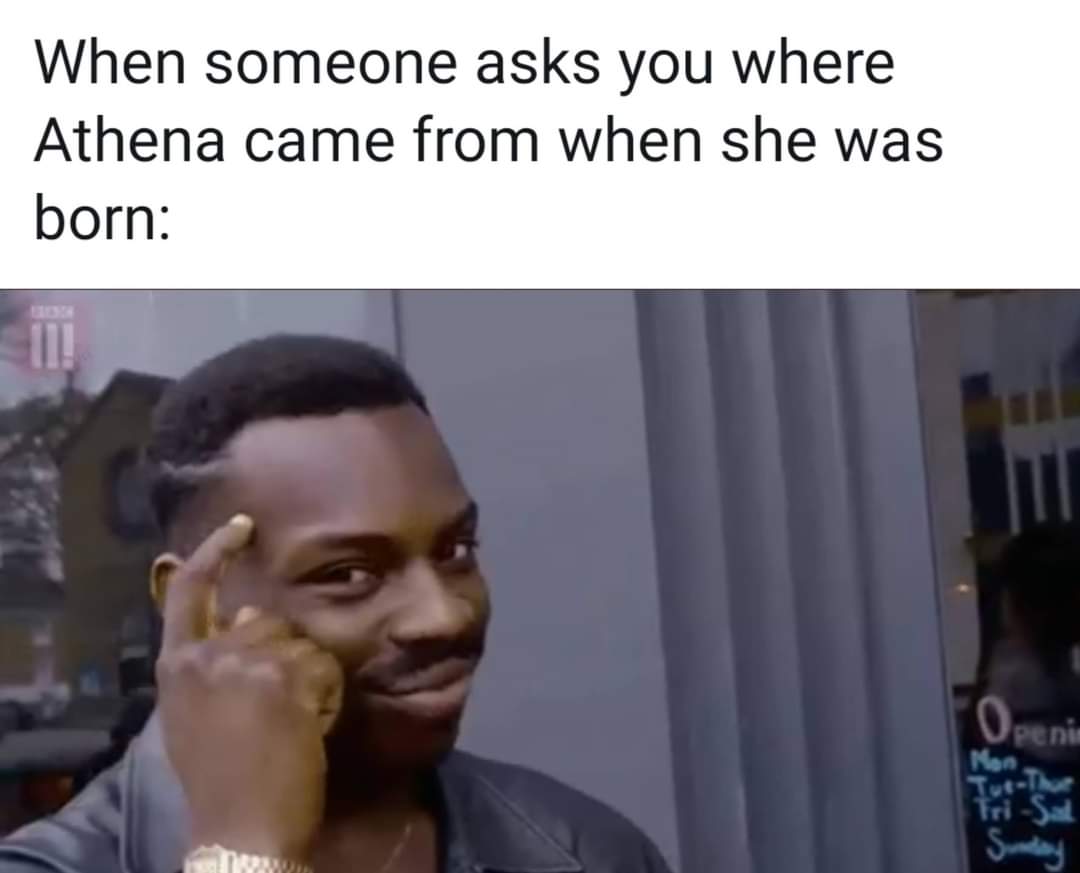
The genealogy bit is another long section explaining which nymphs and demi-goddesses Zeus impregnated to bring forth which gods and goddesses – the exception, of course, being Athena, who sprang fully formed (and fully kitted out in armor) from her father’s head. Theogony peters out after this, sputtering to a halt after a final litany of marriages and births that culminates with the children of Circe and Odysseus – apparently Hesiod’s way of bringing us up to the present time.
So far, so Homeric, right? An epic creation story, very little of the writer’s voice inserted into it aside from that long introduction (and the breathtaking hatred toward women).
Works and Days is not at all like that. Now we’re getting something different to anything we’ve covered so far for this show. We’re getting a personality. A cranky fusspot of a personality, mind you, but still: this is no disembodied voice, like Homer. Hesiod is a real guy, and like many thousands of real guys with DIY advice channels on YouTube, he is here to tell you what grinds his gears and also how best to manage your spring plowing.
So, Works and Days begins with another invocation to the Muses, but in greatly abbreviated form compared to Theogony. It ends like this:
“O hearken as thou seest and hearest, and make judgement straight with righteousness, Lord, while I should like to tell Perses words of truth.” (West 37)
Aha, Perses! Who is Perses, you ask? Don’t worry. Hesiod will tell you. He will tell you good and hard.
Hesiod explains that, contrary to belief (and to what he’s set out in Theogony), there are two kinds of strife in the world. There’s the bad kind, which leads to murder and war. But there’s also a good kind, which inspires a competitive spirit that drives men to better themselves so that they may overtake their neighbors or rivals. This Strife, says Hesiod, “rouses even the shiftless one to work.” (West 37)
He goes on, giving us the passage I quoted at the top of the show, in which he basically says “by shiftless one I mean you, Perses, sitting around watching other people dispute.” He goes on from there to conclude, quote:
“Little business has a man with disputes and debates who has not food for the year laid up at home in its ripeness, produce of the earth, Demeter’s grain.” (West 38)
Basically, stop talking crap and get back to work is what he’s saying here. If we, in the 21st century, listened to this advice, half the internet would go dark immediately. Doesn’t that sound wonderful?
Hesiod continues, revealing that Perses is his brother, and that they’re currently on the outs because of a dispute over their late father’s estate. When they split the inheritance, says Hesiod, “you kept grabbing and taking much more, paying great tribute to the lords, those bribe-swallowers, who see fit to make this their judgement.” (West 38)
Got that? Perses isn’t just work-shy, he’s also not above bribing local magistrates to rule his way in court. Hesiod reminds Perses that Zeus doomed man to work for his living. He swiftly recaps the Prometheus story to explain why this is so. Then he brings back the story of the woman Zeus made to bedevil mankind. He’s even more venomous here than he was in Theogony – he says she has nothing in her heart except “lies and wily pretenses and a knavish nature.” (West 39) He calls her “a calamity for men who live by bread” (West 39), and then, this time, he gives her a name: Pandora, All-Gift.
Pandora is given as a bride to the Titan Epimetheus, Prometheus’s brother. Somehow Pandora gets hold of a sealed jar in her new home – not a box, you’ll notice, a jar. The box was an 18th-century translator’s error. Upon taking the lid off this jar, she of course releases disease and toil and fear and disasters into the world. When she hastily claps the lid back on, the only thing left in the jar is hope.
Hesiod says this is a story to explain how it’s impossible to avoid the will of Zeus, but, mmm, I think it’s possibly just another opportunity to complain about women.
Hesiod’s next line of argument is to describe how mortals have changed over the years. First, the Olympians created mortals out of gold – call this a golden generation, or the Golden Age. These men lived in perfect contentment, rather like Tolkien’s elves: always feasting, always healthy, aging slowly as can be. When they finally died, the Olympians created the next generation of silver. These were long-lived men, too, but inferior: prone to criminality toward one another and neglectful of their duties to the Gods.
After the silver men came the bronze – terrible and fierce, warlike and grim, and even worse than the silver. Once the Bronze Age ended, Zeus realizes he needs to try harder. His fourth generation of men is a heroic one. They don’t get a metal assigned to them, but they hardly need one: this is the age of Achilles and Ajax and Odysseus. Yes, admits Hesiod, the Heroic Age ended because they destroyed one another with pointless wars. But weren’t they grand? Wouldn’t you rather be them, he insists, and not us?
“Would that I were not then among the fifth men, but either dead earlier or born later! For now it is a race of iron, and they will never cease from toil and misery by day or night.” (West 42)
Ah, yes, Hesiod. I’m sure you would have loved to be among us, the mortals of the Microplastics Age. He bewails “fist-law” men, children who disrespect their parents, and oath-breakers. He predicts that things will get even worse, then suddenly swerves to address “the lords,” the magistrates who decided in favor of his brother in the estate dispute. He compares the lords to a hawk that is squeezing a nightingale to death and laughing at its victim’s misery as it does so – Hesiod is the nightingale in this allegory, you see, because he too sings beautifully.
He tells Perses that by going to court against Hesiod he has become a promoter of violence as well as a participant in corruption, and warns him that Zeus punishes those who foster violence in any form (any form not explicitly sanctioned by Zeus, obviously). He repeats this point several times, using various analogies to really drive his meaning home. After a while it does have the vibe of being at a community planning meeting where that one guy who never stops talking has the mic, and you’ve got to sit there keeping a straight face while he goes on and on and on, not trying to make a point; not trying to persuade anyone.
Hesiod is definitely not interested in persuasion: he keeps saying things like, “I will speak to you as a friend, foolish Perses.” (West 45) He pours out a heap of trite moral observations on his brother’s head – ancient Greek versions of those insipid inspirational quotes you see on scatter cushions or coffee mugs, or in the worst kind of social media posts – you know, the ones that are always misattributed to Albert Einstein or Marilyn Monroe.
Actually, there’s a thought. I might make some memes with photos of Marilyn Monroe next to Hesiod quotes. Maybe “Good is he who takes good advice,” (West 45), or “Whatever your fortune, work is preferable,” (West 46), or maybe even “Make sacrifice according to your means, and burn gleaming thighbones.” (West 47) I wonder how many people would share that last one in earnest. More than you’d think, I’m sure.
Basically the point of the first half of Works and Days is that Perses, by increasing his fortune through a lawsuit at the expense of his brother, hasn’t merely caused offense to a close family member. He has gone against the cosmic order. He has defied the gods. Since the gods have decreed that men work for a living, a fortune founded on bribery and disputes is obviously going to bring down the gods’ wrath. He winds up this section of the poem with another one of his pithy observations about the ladies.
“Trust and mistrust alike have ruined men. No arse-rigged woman must deceive your wits with her wily twitterings when she pokes into your granary; who believes a woman, believes cheaters.” (West 48)
Please excuse me while I go change my social media bios to just say “arse-rigged woman.” Seriously, though, I wrote “good lord” in the margin of my book when I read that. I stand by that observation. Again, I don’t expect feminism here. I realize that Hesiod is writing from a vastly different societal context re the social status of women, to say nothing of their rights, but wow, bro. Who hurt you?
Fortunately, this is where Works and Days takes a turn toward something more endearing, even if the writing can be quite clunky at times. Hesiod now begins to give practical advice about increasing one’s wealth through farming, and it tells a lot about how people in his part of Greece ordered their days. Right away he reveals how closely he observes natural signals you and I are largely disconnected from:
“When the Pleiades born of Atlas rise before the sun, begin the reaping; the plowing, when they set.” (West 48)
If you haven’t heard of the Pleiades, they’re a very famous cluster of stars in the constellation of Taurus, the bull. They’re generally visible to us here in the northern hemisphere during the early autumn – right about now, actually, as I’m recording this in the first days of September. He goes on to say “for 40 days and nights they are hidden, and again as the year goes round, they make their first appearance at the time of iron-sharpening. This is the rule of the land.” (West 48)
Isn’t that charming? I find it charming, but then, I grew up in a household where there was usually a copy of The Old Farmer’s Almanac lying around. This is like The Ancient Farmer’s Almanac, with an extra dose of magic and misogyny. Hesiod also refers to the stars to determine when to cut wood, saying that “when the star Sirius goes but briefly by day above the heads of men who are born to die,” you’ll find fewer worms in your trees. Sirius is the Dog Star, in the constellation Canis Major. It’s the brightest star visible in the night sky, and it’s above the horizon from July until early September – it’s the origin of the phrase “the dog days of summer.”
Hesiod also has advice about how to judge and select your wood – again, shades of Midwestern dads on YouTube. He recommends elm for poles and oak for a plow. He says that you should start plowing when you hear the cranes returning at the start of spring, though, at a push, you can leave it as late as the arrival of the cuckoos. (West 49-50)
He recommends using nine-year-old male oxen to pull your plow because, quote, “they are not likely to quarrel in the furrow,” and break the plow. Nothing worse than having oxen quarreling in the furrow, I say. He also advises hiring older men to do the plow-driving and seed-sowing, because “a young man is a-flutter after his fellows.” (West 50)
He also has advice for how to dress properly when it’s cold. The month he calls “Lenaion” – late January into early February, according to the translator’s note – is nothing but “bad days, ox-flayers all.” (West 53) Hesiod describes how the north wind comes howling over Thrace, churning up the sea and blasting through the forests, bringing mists and snow and misery. To keep yourself warm, he recommends a long wool tunic under a cloak lined with waterproof ox-gut. He also insists that you wear, quote “a proper hat” to keep your head warm and ears dry – I can imagine my father nodding in agreement. (West 53)
He is also one of those tiresome type-A people who insists that you have to get up and start work in the dark every morning, because:
“The morning accounts for a third of the work;
Morning forwards the journey, forwards the job,
Morning, whose appearance puts many a man on the road,
And sets the yoke on many an ox.” (West 54)
Rise and grind, Perses!
Having covered the agricultural year, Hesiod turns to seafaring. He’s pretty open about the fact that he hates sailing, even though his father was a merchant sailor. In fact, he admits he’s only been to sea once, to travel to a poetry competition, which, by the way, he won. “That is all my experience of ships,” he says, “but even so I will tell the design of Zeus the aegis-bearer, since the muses have taught me to make song without limit.” (West 56)
Sure, Hesiod. Back in 2019 I won a script-writing prize at the Austin Film Festival. You don’t see me giving Austin’s mayor advice about how to improve downtown traffic flow or whatever. Stay in your lane.
His unsolicited advice about sailing is brief – my favorite bit was when he says that if you want to sail in spring, you should wait until the fig leaves are as big as a crow’s foot, but even then, maybe you shouldn’t, because boats are awful. After that he turns to advice about marriage. It’s not clear, as far as I can tell, whether Hesiod was married or not, but as we’ve just established, having no experience of a thing has never stopped this guy telling you how you should do it.
Get married when you’re thirty, give or take, he says. The woman should be a virgin, obviously – you can teach them proper behavior – and they should be five years past the onset of menstruation. That puts the age of a wife in a rough window from 14 to 20, which isn’t great, but is frankly less horrible than I thought it would be. He can’t resist one final jab at us, of course:
“A man acquires nothing better than the good wife, and nothing worse than the bad one, the foodskulk, who singes a man without a brand . . . and consigns him to premature old age.” (West 58)
Please excuse me while I go change my social media bios to just say “the bad one, the foodskulk.”
Works and Days, like Theogony, sort of sputters to a halt. The last hundred-and-fiftyish lines of the poem are a hodgepodge of random scraps of advice, followed by a sort of superstitious calendar describing which days in the month are best for various activities.
The advice covers correct religious practices – don’t pour libations to Zeus in the morning, for instance. Some of it is about hygiene – did you know that “godly men of sound sense” (West 58) squat to urinate? This Ancient Greek farmer said so! Some advice combines the two: at a holy sacrifice, it is bad form to cut your fingernails during the ceremony. Though Hesiod phrases this as “do not from the fivebranched . . . cut the sere from the green with gleaming iron.” (West 59) I was very grateful, in that instance, for ML West’s notes.
The days are a little more interesting – again, it’s all very Old Farmer’s Almanac. Apparently the first, fourth, and seventh are holy days of every month. The 21st is also good, but only in the daytime. The fifth day of the month is right out: bad for everything from marriage to managing your vineyard. The sixth? It depends: it’s great for castrating farm animals, but a bad day for a boy to be born. According to Hesiod, boys born on the sixth day of the month will be men with “a weakness for impudent abuse, wily pretenses, and secret philandering.” (West 60)
I wonder where Hesiod gets these ideas. Maybe he is a conduit, transmitting age-old folk wisdom to his readers. Or maybe his brother Perses was born on the sixth. Could go either way.
And there we are: Hesiod, one of the first named writers in European literature. The “first personality” as the blurb on the back of my Oxford World’s Classics edition puts it. Am I terrible if I say it’s disappointing that our first personality is a middle-aged man with detailed grievances and lots of random advice to dispense? We have plenty of those now.
Yes, Hesiod is important because he offers us the earliest versions of many stories that went on to influence generations of other creators. And he matters because of the glimpses he offers of ancient Greek lives and beliefs. I had an idea of that going in. What I didn’t realize was that he was also the spiritual forebear of every busybody neighbor, fringe philosopher, small-city op-ed columnist and internet reply guy in the millennia to come. Truly, dudes with an axe to grind and a platform to grind it on have been with us, always.
And in case you’re wondering: no, my opinion of Hesiod is not a sly, coded commentary on current political events. Really. Not even a little.
So. Should you read Hesiod? If you like Greek myths and want to learn more about them, absolutely read Theogony. He’s not as pleasurable a stylist as Homer, and he jumps around a lot, but the stories are still worth it when he gets into full flow. Works and Days, eh. Maybe not as essential, even if many of the superstitious bits of advice are funny. Whatever you decide, rest assured that Hesiod does not require a major time commitment – the spine of my edition isn’t even as thick as my little finger. I read both works on a 90-minute train journey, even with flipping back and forth from the text to the notes, and even with occasionally putting the book down to check my phone.
I should also note that I finished writing this episode at the end of August, just as Netflix’s new series KAOS came out – it’s based on Greek myths and features Jeff Goldblum as Zeus – and having Hesiod’s Theogony fresh in my mind really helped me appreciate how they mined the stories for their plot and characters. If you like this show, you’ll like that show. Unless you’re a monster who hates Jeff Goldblum for whatever reason.
Anyway, that’s the episode. Next week, I want to do something I’ve been meaning to do for a while: take all the pantheons we’ve crossed path with so far – Mesopotamian, Egyptian, Vedic Indian, Greek, even Canaanite – and compare them. Who’s got the goriest fight scenes? Which stories seem to be common across cultures? Whose god of the dead is creepiest? Actually, that one’s easy – it’s Ereshkigal, queen of dust. But that’s all ahead on Thursday, September 26th, in Episode 16: “Hesiod, Part 2: Immortals Who Are Forever.”
Books of All Time is written and produced by me, Rose Judson. The Disclaimer Voice of Doom is Ed Brown. Lluvia Arras designed our cover art and logo. Special thanks to Yelena Shapiro, Cathy Merli, Matt Brough and the Books of All Time Advisory Council: Ed Brown, Beck Collins, Neil Dowling, Caitlin McMullin, Hugh Parker, and Jonathan Skipp. You can support the show by subscribing and leaving a rating or review at Apple Podcasts, Spotify, or wherever you get your podcasts. You can also follow us on social media: we’re on Bluesky, Instagram, Facebook, and also on X, formerly known as Twitter. Thanks for listening! I’ll be back in two weeks.
References and Works Cited:
Hesiod, and Martin Litchfield West. Theogony and Works and Days. Oxford University Press, 1988.


 Books Of All Time
Leave a comment