
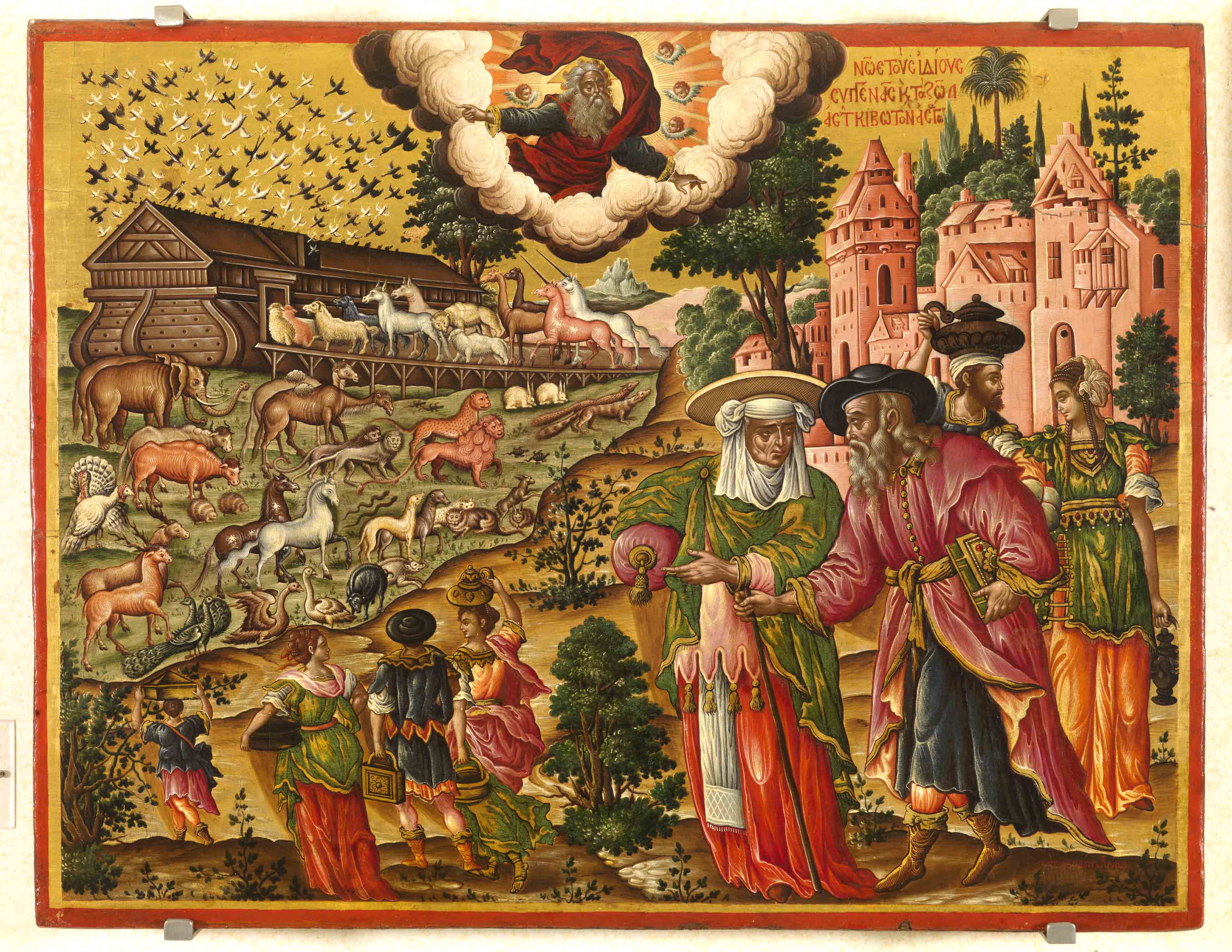
“The LORD said in his heart, I will not again curse the ground any more for man’s sake; for the imagination of man’s heart is evil from his youth; neither will I again smite any more every thing living, as I have done. While the earth remaineth, seedtime and harvest, and cold and heat, and summer and winter, and day and night shall not cease.” Genesis 8:21-22
He had lost his eyes, but he still could see. There were the pale, tender pinks of the sunrise that had revealed the hosts of Babylon camped below the hills of the city. There were the innumerable spears, tipped with dull but deadly bronze, ranked row on row like pines in a forest. There was the vivid red and blue of fine curtains, embroidered with shining sheaves of wheat and pomegranates, clutched in the filthy fist of a soldier – one of dozens of soldiers he had watched streaming through the temple doors, carrying away bronze stands, gold offering bowls, silver candlesticks, and anything they could pry or chisel off.
There was his last glimpse of Jerusalem, seen as he bumped along the road to Riblah in a wagon: the holes in the city walls that seemed too large to be the work of men. The long stream of refugees following him, heads bowed as they walked or slumped on the backs of their animals. There were his own filthy hands, swollen and throbbing from the too-tight shackles they had placed on his wrists.
And there were his young sons, stacked one on top of the other like a brace of rabbits that had fallen to the hunter, spilling out their lifeblood on the ground while the executioner studiously wiped his blade. He wished they had taken his eyes before that. His memories would not leave him, even though he was defeated and in exile.
Outside his chamber, where he sat forever wrapped in his own permanent night, Zedekiah, sometime King of Judah, heard the old priests who had been brought into Babylon with him begin to chant prayers in hushed voices. Despite all his sins and failures, despite his brokenness, he could not help but feel something kindled in him – something that reminded him of light. His city had been taken. His royal line had failed. His people had been scattered, but they survived. Their ancestors had been strangers in a strange land before and found liberation. If this generation of exiles remembered the ways of the Lord, they might yet be free. If they remembered.
I’m Rose Judson. Welcome to Books of All Time.
Books of All Time is a podcast that’s tackling classic literature in chronological order. This is episode 13: Genesis and Exodus, Part 1: The Gold of That Land Was Good. As always, if you want to read the transcript of this episode or see the references I used to write it, you can visit our website, www.booksofalltime.co.uk. There’s a link in the show notes if you need it. Let’s begin.
We come now to some of the most important writing in the history of the world: the books of Genesis and Exodus from the Hebrew Bible. These are holy works; holy scripture which form the foundation of Judaism and Christianity, and also play an important role in Islam. I want to say at the outset that I have no intention of treating these works flippantly, or of making a case as to whether or not anyone ought to believe them. I am not an atheist.
But I also hope – and this is mainly addressed to certain Christians who may be listening – that others will respect my right not to take these scriptures literally, to point out fairly obvious contradictions in the histories they attempt to tell (they’re mostly presented as histories), and to make the occasional joke. I did my time in religious education – I was raised Catholic, and attended Catholic schools. I’ve made my peace with divinity in my own way, and I’m not really open for conversion attempts at this time.
What I will try to do is place these two very important books – the opening chapters of a monumentally important and influential work – within the context of what we’ve been reading so far. The Kingdoms of Judea and of Israel, from which Genesis, Exodus, and the other nine books which follow them are derived, connect intimately with the Babylonians and Assyrians, the Egyptians and the Greeks.
We have had continuous access to the Hebrew scriptures down the centuries. That’s not the case with most of the other works we’ve looked at so far –the works of the Egyptians, Greeks, and Sumerians/Babylonians/Assyrians. As a result, the Hebrew accounts of these other cultures often acted as leads for early historians as they tried to understand the Bronze and Iron Age cultures of the near east. You’ll remember that way back in episode two, our friend George Smith, the enterprising printer’s apprentice who became an expert at reading cuneiform tablets, first began hanging around the British Museum because he was interested in Biblical history. He wasn’t alone!
I’ll be reading the King James Version of the Bible – also known as the Authorized Version, which was commissioned in 1604 by King James I of England (James VI of Scotland), who was the successor of Elizabeth I. Published in 1611, the King James Version became the Word of the Lord for Christians not just in protestant Britain, but around the world as the British Empire flourished and overspread the globe. It is also a landmark in the development of the English language – even if you weren’t raised religiously, the cadences of the King James Bible echo in our speech today, particularly in the speech of those trying to assert their authority. It is what we think of as the prophetic voice.
The Hebrew Bible, however – the original scriptures – begin as a voice in the wilderness. The voice of a people in exile. In his 2001 book Surpassing Wonder: The Invention of the Bible and the Talmuds, the scholar and author Donald Harman Akenson offers insight into how the Bible came to be. Like the works of Homer, the Hebrew Bible seems to draw on stories and ideas that originate in the later Bronze Age – about 1000 BCE – and then become crystallized into something close to their current form around 580 BCE, after the people of Judah and Israel were conquered by the Babylonians. (Akenson 19)
As mentioned in the opening of the show, the King of Judah at that time was Zedekiah. If the Book of Jeremiah is correct, Zedekiah had come to his throne at the age of 21, after his father was defeated by the Babylonians. Zedekiah was reduced to being a client king of the Babylonian empire, and this chafed, so he rebelled. This did not go well: in 586 BCE the city of Jerusalem was sacked, its defensive walls were leveled, and the Temple of Solomon was looted, burned, and destroyed. (Jeremiah, ch. 52)
Many of the elites and priests of Judah – and its neighbor Israel, to the north – were sent into exile in Babylon. According to Akenson, “the very top men in the conquered societies were brought to the capital and were treated well, while they were indoctrinated in Babylonian learning.” (Akenson 20) The Hebrew Bible may be the result of an effort to resist that indoctrination: to put down in writing the exiles’ unique cultural practices and beliefs; their ideas about creation, their foundational story, the names of their leaders. But mostly, it is about how they were chosen by the one true God and bound up in a covenant with Him. (Akenson 9)
We don’t know exactly who collected, selected, and wrote these scriptures down. For a long time, tradition had it that the prophet Moses was the author of the first five books of the Hebrew Bible, including Genesis and Exodus – ignoring that he’d have to have written the eyewitness account of his own death, which comes at the end of the book of Deuteronomy, himself. We’ll probably never know for sure who was responsible , but as Akenson says:
“Whether the Almighty was the author of these great inventions, or whether they are merely the greatest of human creations, or both, is a matter of your own faith. To appreciate the architectural integrity and the extraordinary creativity of these great inventions, one does not have to be a believer of any sort. One can, after all, appreciate Bach without believing in the Mass.” (Akenson 9)
This is a summary episode, so let us start summarizing. Genesis, the first book of the Bible, takes us from the creation of the world to the settlement of the Children of Israel in the kingdom of Egypt. It’s presented as a historical account, and in several places it is indeed just a list of names and ages. But in others it encompasses myths, legends, romances, and a sort of multi-generational family drama taking place along the eastern edge of the Mediterranean Sea.
Genesis begins with a voice that, to me, has always had the quality of a rising wind:
“In the beginning God created the heaven and the earth. And the earth was without form, and void, and darkness was upon the face of the deep. And the Spirit of God moved upon the face of the waters.” (Genesis 1:1-2)
God creates the sky, the land, and the sea, and the lights of the sun, moon, and stars. Plants and trees spring forth. He creates animals: first in the water, then in the sky, and finally on the land. (Aside: the KJV refers to birds as “fowls”, and when I first read that as a youngster, I pictured chickens flapping about in the permanent golden hour of God’s creation.) He brings forth fruits and seeds, and then He says:
“Let us make man in our image, after our likeness: and let them have dominion over the fish of the sea, and over the fowl of the air, and over the cattle, and over all the earth, and over every creeping thing that creepeth upon the earth.” (Genesis 1:26)
So we have “man” created, and God rests, and it’s the seventh day. That’s the first chapter. The second chapter seems to repeat the creation story – we get the mention of God shaping a man from the dust of the earth and breathing life into him, then planting a garden, called Eden. We also get some explicit geographical clues – there are four rivers flowing through Eden (Gen. 2:10-14), one of which “compasseth the whole land of Ethiopia”.
It’s clear the writer had a specific place in mind, and for centuries scholars have exercised themselves trying to pin down the location of Eden. Consensus seems to broadly agree that two of these rivers are the Tigris and Euphrates, which likely puts Eden somewhere in modern-day Iraq. Regardless of where it was supposed to be located, we do know what was in the middle of it: the Tree of the Knowledge of Good and Evil. Adam (for that is his name), watches as God creates the beasts and birds and brings them to him to give them names.
Having created the world for (apparently) the second time, God realizes Adam is lonely. He does what any loving parent would do: puts him into a deep sleep, conducts a little surgery, and creates a woman to keep him company. This is Eve. Adam and Eve are naked and happy, with the garden and the animals and their innocence. The only thing they are not to do is eat from that one specific tree.
Enter the serpent, who is “more subtle than any beast of the field which the LORD God had made.” (Gen. 3:1). I would like to dispute this: I co-parent a serpent with my kid, a male corn snake named Cornflake, and he is about as subtle and conniving as an avocado. His main interests are lying under the heat lamp and hugging mice to death. He sometimes rouses himself to hiss at the cat when it comes too close to his vivarium, but there is nothing about him to suggest he is interested in thwarting the plans of the Almighty and bringing about original sin. Maybe I’ve just got a duff one, though. Maybe the others are more ambitious.
At any rate, the serpent of Eden tempts Eve to eat of the forbidden tree; she shares some with Adam, and God gives them some leather coats, and casts them angrily out of Eden. “In the sweat of thy face shalt thou eat bread,” God declares, “till thou return unto the ground; for out of it was thou taken: for dust thou art, and unto dust shalt thou return.” (Gen. 3:19)
So begins the story of the human race. Adam and Eve have sons named Cain and Abel; Cain kills Abel when God prefers Abel’s sacrifice of a lamb over Cain’s offering of fruits and vegetables. Cain is sent even further into exile – the land of Nod, east of Eden. He somehow finds a wife (perhaps from the people God created in Genesis 1?), and we launch into a long litany of names as the authors of Genesis describe the generations after Cain.
Throughout Genesis chapters 4 and 5 we read the names of various men, the sons they fathered, and the ages they were at death—fantastically long-lived men, most of them. Adam lives 930 years; his grandson Enos 905, and his (by my count) great-great-great-great grandson Methuselah lives to 969, making him the longest-lived person recorded in the Bible. (Gen. 5:3-27)
Adam’s great-great-great-great-great-great grandson (that’s six times great) is Noah. We have met another version of Noah in this show: the sage Utnapishtim from The Epic of Gilgamesh. While there may have been a pre-existing flood narrative within Judean culture, it’s also possible that the Judean exiles in Babylon picked up this tale, or at least certain key details about it, from their captors.
You may remember that in Gilgamesh, Utnapishtim was commanded to build an ark by the gods because they were tired of the racket human beings were making. The God of the Bible is determined to wipe out humanity because they are sunk in sin. Sunk in sin, that is, except for Noah. God tells Noah He will make a covenant with him, to protect him and his sons from the destruction that is coming. He commands Noah to make an ark, giving detailed measurements (in cubits, roughly one and a half feet, or 46 cm) and instructions on how to build it.
In his book The Ark Before Noah, the Assyriologist Irving Finkel discusses in great specificity how an ark would have been built in ancient Mesopotamia. They would normally have been round, with a wooden frame covered in skin or woven reed-mats. This covering, in turn, would have been smeared with layers of bitumen or pitch, the sticky form of petroleum that can be found in some parts of the world bubbling up from the ground – we mix it with gravel to pave our roads, and call it asphalt or tarmac, depending on where you live. (Finkel, Chapter 8)
Noah’s Ark, as described in Genesis, is oblong, with multiple decks and chambers inside. That was for the animals, of course: Noah gathered them in two by two, except in chapter 7, verse 2, where God says: “Of every clean beast thou shalt take to thee by sevens, the male and his female, and of beasts that are not clean by two.” (Gen. 7:2) Regardless of how many animals he actually takes, Noah seals the ark and the rain comes, lasting forty days and forty nights. The flooding does not begin to recede for 150 days.
When it does, Noah and his companions are stranded on the top of Mount Ararat, where Noah sends out ravens and doves to see if there is any dry land. The dove comes back with the olive branch clutched in her claws, and Noah and his family make sacrifices to God in gratitude. While the gods in Gilgamesh were consumed with grief and guilt, Biblical God is seized by a sense of his own magnanimity: he sets his bow (the rainbow) in the heavens as a promise never to flood the earth again.
We get another set of genealogies for each of Noah’s three sons, because “of them was the whole earth overspread” (Gen. 9:19), and then, in chapter 11, in the midst of these lists, we get the story of the tower of Babel almost as an aside: all the people speak one language, and God, alarmed at their industriousness in attempting to build a tower that reached to heaven, suddenly makes them unable to understand each other. (Gen. 11:1-9)
This second round of genealogies ends when we come to Abram, a descendant of Noah’s son Shem. Abram lives in the city of Ur with his wife Sarai, but sadly, they have no children. They move to a place called Haran with some relatives, including Abram’s nephew Lot. God speaks to Abram, commanding him to go to the land of Canaan. “I will make of thee a great nation, and I will bless thee, and make thy name great,” God explains. (Gen. 12:2) After a brief sojourn in Egypt to wait out a famine, Abram and Lot arrive in Canaan, where they begin to have difficulties getting along. They agree to separate – Abram will stay in Hebron in the land of Canaan, while Lot goes to Jordan.
Some time later, Jordan is overrun by the Elamites, who sack its principal cities, Sodom and Gomorrah. Abram takes up arms and marches out with his men to rescue his nephew Lot, who has been taken hostage along with all his property. Abram’s men rout the Elamites, and the king of Sodom shows gratitude to Abram by giving him gifts and tithes.
Abram is grateful to God, but he has one great complaint: he has no children. God chides him for his faithlessness, then reassures him: “Look now toward heaven, and tell the stars, if thou be able to number them . . . So shall thy seed be.” (Gen. 15:5)
Meanwhile, Abram’s wife Sarai is also consumed by the problem of the lack of children. She convinces Abram to sleep with her servant Hagar. When Hagar becomes pregnant, she immediately becomes jealous of her mistress’s position. (Gen. 16:4-5) Nevertheless, she bears Abram a son, Ishmael. The happy father is a sprightly 86 years old.
When Abram is 99, God renews his covenant with him, and renames him Abraham. He commands that Abraham and all the men among him adopt the practice of circumcision – surgical removal of the foreskin on the penis. All men of Abraham’s family must be circumcised; all newborns must be circumcised eight days after birth, and any enslaved men or boys must also submit to the procedure.
God also tells Abraham that his wife Sarai is now Sarah, and that she will be a mother of nations. Abraham very sensibly asks how this is possible, given that she is 90 years old, but God again tells him to have faith. Abraham carries out God’s order of circumcision, and it’s interesting to note that Ishmael was 13 years old when this happened – the age at which Jewish children today celebrate their bat mitzvah or bar mitzvah.
God later reveals to Abraham that he means to destroy Sodom and Gomorrah. Abraham is alarmed: his nephew lives there. He haggles with the Lord, eventually striking a bargain with him: if ten righteous men can be found in the two cities, God will not carry out his plan. But unfortunately, no: two of God’s angels go to visit Abraham’s nephew Lot in Sodom. Lot invites them into his house as guests, and the locals arrive, demanding that he hand the men over to them. (The implication is that the mob wants to murder or rape these men.) Lot tries to put them off – he even offers to send out his young daughters instead.
The angels strike the mob blind, and tell Lot he needs to take his people and go. They issue one very specific command: do not, on any account, look back at what is happening to the cities as you escape. But Lot’s wife does look back as the destruction begins – fire and brimstone raining down on the two cities. (Brimstone, if you’re wondering, is sulfur, a pungent-smelling substance used to make matches, among other things. Lightning strikes create sulfur oxide gas.)
Lot’s poor wife is turned into a pillar of salt for disobeying the angels’ orders. Lot and his daughters flee into a cave in the mountains. Worried that they will never have husbands, the girls ply their father with drink on two consecutive nights and have sex with him. The children they bear are boys: the forbears of the Moabites and the Ammonites respectively. I’m sure this seemed like a grave insult to any Moabites or Ammonites who were aware of this passage: apparently, the Judeans thought their neighbours were the result of a particularly lurid type of incest. (Gen. 19:30-38)
Abraham and his household, meanwhile, welcome the son God has promised: Isaac, born when his father is 100 years old and his mother 91. At Sarah’s bidding, Abraham sends Hagar and Ishmael away into the wilderness, where they quickly fall into difficulties with hunger and thirst. But then God intervenes, telling Hagar not to worry: her son will become a great nation, too. He leads her to a well, and she and her son are saved. We’re told that Ishmael grows up to become an archer, and later marries a woman from Egypt. Ishmael, by tradition, is the father of the Arabs. (Gen. 21:9-21)
God decides to test Abraham: go up into the mountains and offer me your son Isaac as a sacrifice, he says. Abraham takes the boy into the mountains along with wood for a fire. There is a heart-rending scene: Isaac asks where the lamb is for the sacrifice. Abraham says that God will provide one. He ties his son to the altar and raises his knife to kill the boy, when God commands him to stop.
God praises Abraham for his complete submission to God’s will. He helpfully manifests a ram caught in a thicket for Abraham – presumably a very, very relieved man – to sacrifice with Isaac. (Gen. 22:12-13)
After this test, Abraham continues to prosper. Issac grows up, and Abraham sends a servant of his to find his son a wife. There’s a very odd scene in chapter 24 where Abraham makes this servant swear to only look in a certain region for his son’s wife, saying “put, I pray thee, thy hand under my thigh, and I will make thee swear by the Lord, the God of Heaven, and the God of the Earth.” (Gen. 24:25)
One cannot help but raise an eyebrow when people are doing thigh-touching, even in scripture, and a little sleuthing reveals that “under my thigh” may be a euphemism for placing a hand on or near the genitals. Various sources suggest that this was, for several of the Semitic cultures in this region, the preferred method for taking an oath about any matters that touched on posterity. (Steiner 74) I’m sure everyone was relieved when oaths began to be taken on scrolls, or relics, or, well, Bibles.
The servant brings back a lovely girl named Rebekah, and she gives Isaac twin sons. Esau, the elder son, is described as “hairy” right out of the womb. (Gen 25:22) He grows up to be a skillful hunter. Jacob, the second son, is smooth-skinned, and follows his father and grandfather into the herdsman business. Esau is his father’s favorite; Jacob his mother’s. The twins have a tense relationship, especially as they grow into young men.
Jacob, who seems to have an eye for the main chance, takes advantage of Esau’s hunger after a hunt one day. He convinces his older brother to trade away his birthright – his inheritance – for a bowl of lentil stew. Esau agrees to this readily – perhaps he thought his brother was joking. But Jacob is determined to have precedence over his twin, and his mother encourages his ambitions.
Isaac, getting up there in years, loses his eyesight. He summons Esau to him, asking him to go out, catch a deer, and prepare a particular venison meal Isaac loves. In return for this delicacy, he offers to give Esau a blessing. Rebekah and Jacob, overhearing this, waste no time. Once Esau has gone out to hunt, they kill some goats, make a passable version of the venison stew Isaac wants, and then use the goat skins to make Jacob’s hands, arms, and neck seem as hairy as his brother’s.
Thus disguised, Jacob tricks his elderly, blind father into giving him the blessing he intended for Esau. As Isaac embraces his deceiver, he says:
“See, the smell of my son is as the smell of a field which the LORD hath blessed: Therefore god give thee of the dew of heaven, and the fatness of the earth, and plenty of corn and wine: Let people serve thee, and nations bow down to thee. Be lord over thy brethren, and let thy mother’s sons bow down to thee: cursed be everyone that curseth thee, and blessed be he that blesseth thee.” (Gen 27:27-29)
Poor Isaac. In his lifetime he’s been deceived by his father, who was prepared to cut his throat, and now by his wife and son, who can’t bear the love he has for his firstborn child.
When Esau returns, he is distraught that his father has been tricked by Jacob and Rebekah. But he quickly becomes furious. Rebekah tells Jacob to run away until his brother’s rage subsides. She recommends he go to her brother Laban, miles away in another land called Padan-aram.
Jacob sets off without supplies or companions. He treks through the wilderness, sleeping on the ground with rocks for pillows. One night as he’s roughing it, he has a strange dream.
“And he dreamed, and behold a ladder set up on the earth, and the top of it reached to heaven: and behold the angels of God ascending and descending on it.” (Gen. 28:12)
God appears at the top of this ladder and repeats to Jacob the promise he made to Abraham: your descendants shall be as the dust on the ground or the stars in the sky if you have faith in me.
Jacob comes to the land where his uncle Laban lives and offers to work for him. He is keen to stay because he immediately falls in love with his cousin, Laban’s younger daughter Rachel. Laban says he will let Jacob marry her if he works for Laban for seven years. Jacob does this gladly: the years “seemed unto him but a few days, for the love he had to her.” (Gen. 29:20) That’s very sweet. But on the wedding night, Laban swaps in his older daughter Leah for Rachel (Jacob must get his shiftiness from his mother’s side of the family). Jacob is understandably incensed but Laban lets him have Rachel, too, as long as he’ll also agree to work for another seven years.
So now we have a kind of Bronze Age soap opera happening: Jacob settles with his uncle-slash-father-in-law and his two wives, who are sisters, who now hate each other. It does not help that Leah is fertile while Rachel is not. Leah quickly produces a line of healthy sons: Reuben, Simeon, Levi, Judah, Isaachar and Zebulun. Rachel, desperate, pulls a Sarah: she asks Jacob to sleep with her slave girl, so Rachel can adopt any children they have and raise them. These sons are Dan and Naphthali. Leah, not to be outdone, has Jacob sleep with her slave girl, who produces Gad and Asher. Then Rachel herself at last conceives, and her son is called Joseph.
Naturally, with his rapidly expanding family, Jacob is keen to move off Laban’s land to a place of his own. They strike a bargain – after another few years of minding Laban’s flocks, Jacob can take all the livestock which are speckled or “ringstraked” – that is, having circular stripes – and depart with his brood. Jacob quickly sets about ensuring that the speckled and ringstraked animals do the most breeding (there’s a lot of competitive birthing in this part of the Bible, I have to say). When he eventually leaves at the end of his contract, he has a bigger herd than Laban’s.
Jacob decides to return to Hebron, sending messengers to his brother Esau asking permission to meet with him. The messengers come back with an ambiguous, but alarming, report: Esau has set out to meet Jacob accompanied by 400 men. Jacob immediately puts the worst spin on this news. Afraid for his life, he chooses the best animals from his flocks and tells his servants to take them as gifts for his brother. The servants drive the animals away.
Deep in the night, as Jacob is sleeping, a man comes into his tent in the dark and begins to wrestle with him. Jacob and the stranger grapple for hours, until at last, as dawn is breaking, the stranger “touched the hollow of his thigh.” (Gen. 32:35) This is not the same as putting a hand under his thigh, mind you – it’s generally taken to mean that the stranger dislocates Jacob’s hip. Jacob continues clinging to the man anyway. He demands that the stranger bless him and call the fight a draw.
The stranger goes beyond this: he renames Jacob, who will now be known as Israel. The stranger repeats a very familiar blessing to Jacob: your descendants, dust of the earth, stars in the sky, etc., and Jacob/Israel realizes that he has been wrestling all night with God: that he has seen him face-to-face.
The next day, his brother Esau arrives. But he isn’t there to murder him. He is there to reconcile with him. Jacob/Israel – let’s just go with Israel from now on, shall we? – is welcomed back into the land of his fathers. It cannot have come at a better time: Jacob quickly loses his favorite wife Rachel, who dies giving birth to his 12th son, Benjamin, and then his father, Issac.
Now Israel is the patriarch of the covenant, and we come to the fate of his 12 sons – the leaders of the 12 tribes of Israel. The golden boy of the bunch is Rachel’s eldest son, Joseph. By the age of 17, Joseph is a bright, industrious young man, but with slightly too much self-esteem. He is constantly having dreams that seem to foretell future greatness for him: 11 sheaves of wheat bowing to him; 11 stars genuflecting, that kind of thing. Israel dotes on Joseph – has a special coat of many colors made for him – but none of his brothers appreciate the dreams and the priggishness.
Joseph’s elder brothers, as elder brothers are wont to do, gang up on him while they’re out herding goats and tip him into a pit by the side of the road. The brothers take his coat of many colors back to their father, having slashed it up and dipped it in goat blood, and say that they suspect Joseph has been killed by a wild animal. Israel mourns his son: Joseph, it seems, is dead.
But he’s not, of course. His brothers were planning to sell him, but when they return to the pit, he has vanished. It turns out some passing merchants had already found him, and Joseph now becomes a slave, changing hands a few times until ultimately he winds up in Egypt, working for Potiphar, the captain of Pharoah’s guard.
Joseph is a hard worker with a talent for organization. He very quickly becomes Potiphar’s chief servant. He is popular with the household – rather too popular with Potiphar’s wife, as it turns out. She tries to seduce Joseph; he turns her down; she cries rape, and Joseph winds up in prison.
While in the pokey, Joseph is joined by the pharaoh’s chief butler and chief baker. These men are distraught at having lost their good positions. Each of them have strange dreams, which they report to Joseph, who does love a dream. He tells the butler that his dream is a good omen: he’ll be freed and restored to his job within three days. The baker’s dream, not so much: he’ll be executed in three days instead. And three days later, on pharaoh’s birthday, that is exactly what comes to pass.
The butler promises to put in a good word for Joseph, but it slips his mind for two years. That’s when Pharoah wakes up from a pair of disturbing dreams and isn’t satisfied with the interpretations of his priests and advisers. The butler suggests he consult the nice Hebrew fellow he met in prison. So Joseph is freed and brought before Pharoah.
Pharoah describes his dreams to Joseph: in the first, seven fat cows are eaten by seven lean and sickly ones. In the second, seven ripe and healthy ears of corn are eaten by seven dry and withered ones. Joseph explains that these dreams are the same: God will give Egypt seven years of plentiful harvests followed by seven years of famine. He recommends making the most of the years of plenty by impounding some of the nation’s grain and storing so they have a reserve during the years of famine.
Pharaoh, impressed by Joseph’s dream-interpreting skills and his agricultural management proposals, immediately puts Joseph in charge of the grain-saving operation. Joseph, with his usual industry, makes a success of it. The seven years of plenty pass. The first year of the famine begins. Egyptians have enough to eat thanks to Joseph’s grain-storing policy. People from outside the region come to Egypt to see if they can buy some of the surplus grain. This includes Joseph’s brothers – all of them except his youngest brother, Benjamin, make the trek, and are brought before Joseph to pay for their goods. They don’t recognize him, but he recognizes them.
Joseph decides not to reveal his identity, even going so far as to speak to them through an interpreter. He’s harsh with them – accuses them of being spies, interrogates them about their family. Finally, he says that he wants them to bring their youngest brother back to him, and that he’ll be taking Simeon as a hostage in the meantime. He also gives them the grain they asked for, however – this is a very muddled attempt at seeming like a hard man, from my perspective, but it works on the sons of Israel.
Joseph’s brothers return to their father and explain the situation. They ask him to let Benjamin come back with them to Egypt. He resists giving up the boy – he has already lost one of his sons by Rachel, and he doesn’t want to lose the other, too. But eventually he relents, and the brothers return to Joseph.
Joseph again pretends not to know them, keeping up the act through a meal and another sale of grain. He slips a silver cup into Benjamin’s sack of grain, and when it is discovered by customs agents as the brothers are leaving Egypt, they’re arrested and brought back before Joseph. He makes a show of trying to take Benjamin hostage, but when his brother Judah pleads to be taken instead, Joseph breaks down. He reveals himself to his brothers and tells them he forgives them. He insists that they bring their father and their families to Egypt so that they can all wait out the famine together.
I have no idea why all this pretense and to-ing and fro-ing was necessary: just tell your brothers who you are from the outset, Joseph, for heaven’s sake. But the Lord moves in mysterious ways, I suppose. Regardless of the convoluted family dynamics, the Israelites come and settle in Goshen, a province of Egypt, where they become successful keepers of flocks and herds. The Book of Genesis ends here by noting that Joseph died in Egypt, old and full of days.
Now for Exodus. It picks up several generations later. The Israelites have flourished in Goshen – flourished to a degree that unsettles the native Egyptians. A xenophobic new pharaoh takes power. The writer tells us:
“Now there arose up a new king over Egypt, which knew not Joseph. And he said unto his people, Behold, the people of the Children of Israel are more and mightier than we: come on, let us deal wisely with them; lest they multiply and it come to pass that when there falleth out any war, they join also unto our enemies.” (Ex. 1:8-10)
Thus begins a regime of systematic oppression. The Egyptians confiscate Israelite property and enslave them. Men are put to work building pharaoh’s monuments, while women and children make bricks for the monuments. The women, meanwhile, see their newborn sons cast into the river to drown by decree of pharaoh.
One of these mothers, an unnamed woman of the house of Levi, gives birth to a baby boy and manages to hide him for a time. But when he is three months old, she can’t conceal him anymore. She has to send him away. She builds a little ark for him – even smears it with pitch to waterproof it, as Noah did – and sets it floating on the river.
Think, for a minute, of a three-month-old infant. He can’t see very well: he is just beginning to track his parents when they enter the room or move around. He is just beginning to smile at people he loves. If you set him down on his tummy, he may be able to hold up his head without support. To set him adrift on a river must have cost his mother so much. She sends her sister along to watch the craft from a distance, to see what happens to him.
Pharoah’s daughter finds him. She realizes this is a child of the Hebrews, and must by rights be drowned, but she decides to adopt him. She names him Moses. Moses’s aunt helpfully offers to find a wet nurse for the boy, and so Moses’s mother is able to nurse him, even though the Egyptian princess claims him as her son.
Moses grows up knowing he’s a Hebrew, and the oppression of his people seems to gnaw at him. On one occasion, while visiting a building site, Moses sees an Egyptian beating one of the Israelite slaves. This enrages him. He kills the Egyptian and hides the body in the sand. He soon realizes that there are witnesses to his crime, so he flees Egypt.
He comes to a place called Midian. While resting near the well, he ingratiates himself to the daughters of Jethro, the local priest, by helping them water their camels. The ladies take him home, and Jethro invites Moses to live with him and help care for his flocks. Moses marries Jethro’s daughter Zipporah and settles down to the shepherd life.
He is tending his flocks in the mountains when God comes to him. A bush bursts into flame:
“And he looked, and behold, the bush burned with fire, and the bush was not consumed . . . God called unto him out of the midst of the bush, and said Moses, Moses . . . I am the God of thy father, the God of Abraham, the God of Isaac, and the God of Jacob.” (Ex. 3:2-6)
God tells Moses that he has heard the cries of the Israelites in their suffering, and that he means to deliver them from the Egyptians. One must ask, however: why did God deliver them to the Egyptians in the first place? Why not just protect them from famine in Canaan? But Old-Testament God seems to enjoy doing things the hard way. He further announces that he wants Moses to be his instrument of liberation: Moses must go to Pharoah and demand freedom for his people.
Moses has so many questions. The first, sensibly, is: who are you?
“Behold, when I come unto the children of Israel, and shall say unto them, the God of your fathers hath sent me unto you, and they shall say to me, What is his name? What shall I say to them? And God said unto Moses: I AM THAT I AM: and he said, Thus shalt thou say unto the children of Israel, I AM hath sent me unto you.” (Ex. 3:13-14)
This is all very impressive as far as it goes, but Moses, a true introvert, is uncomfortable with authority. He insists that nobody will believe him if he suddenly arrives preaching liberation. God tells Moses to throw his shepherd’s rod onto the ground. It becomes a snake, and returns to being a rod when he picks it up again. Then God commands Moses to put his hand inside his cloak, and when he withdraws it, it is covered in white, scaly leprous sores. He puts it back in the cloak, and it is healed. God also informs Moses that he has the power to turn river water into blood if he thinks it will help him make a point.
Impressive as these new powers are, Moses is still not convinced. He lacks public speaking skills, he explains, and that makes God annoyed. If you’re that nervous, God says, essentially, you can take your brother Aaron with you as a spokesman.
So goes down Moses, way down to Egypt land. He meets his brother (one wonders why Aaron wasn’t drowned at birth), and they present themselves to the elders of Israel. They tell the elders what God has said, and what he plans to do. Aaron is clearly an effective communicator, because the elders are convinced.
Pharoah, not so much. Moses and Aaron go to him with a lowball ask – not full liberation, just permission for the Israelites to go out into the wilderness and worship their God. Pharoah is enraged at their insolence – “get you unto your burdens”, he thunders. (Ex. 5:4) He punishes the entire community for Moses and Aaron’s presumption, refusing to supply them with the straw they need to make their bricks, but not lowering their daily quotas one bit. The Israelites blame Moses for their new predicament. Moses pleads with God for help, and the Lord insists that he will free them: Pharoah’s obstinacy is part of his plan.
Moses and Aaron go back to Pharoah. They do the trick with turning the rod into a snake. Pharoah is unimpressed: he has his own magicians perform the same trick, then kicks the brothers out.
Moses and Aaron return some days later, this time stretching their rods out over the Nile, turning it to blood. Pharoah kicks them out. (Why aren’t Pharoah’s assistants keeping these two from gaining access to him? Management standards seem to have fallen off since Joseph’s time.)
On we go, with the remaining plagues: swarms of frogs rising from the rivers and lakes. Clouds of blood-sucking lice raised out of the dust. Flies in thick swarms, crawling over buildings, food, faces, bodies. A sickness among the livestock. Boils. Hail. Locusts. All these plagues affect the Egyptians, but not the Israelites. None of it works.
“And Pharoah’s servants said unto him, How long shall this man be a snare unto us? Let the men go, so that they may serve the LORD their God.” (Ex. 10:7)
Pharoah is unrelenting, until at last God sends the final plague. Moses commands the Israelites to prepare. Each household is to kill a lamb and paint its blood along the top and sides of the front door to their home. They will roast the lamb, eat it with bitter herbs and unleavened bread – bread that hasn’t been yeasted and allowed to rise.
“And thus shall ye eat it; with your loins girded, your shoes on your feet, and your staff in your hand: ye shall eat in haste; it is the Lord’s Passover.” (Ex. 12:11)
The Israelites obey Moses. On the appointed night, God passes through Egypt, killing all the firstborn Egyptians, even firstborn animals. He deals death to the enslavers of his chosen people, leaving “not a house where there was not one dead.” (Ex. 12:30)
Before the night is over, Pharoah calls Moses and Aaron to him. He tells them to take their people and go.
So the Israelites walk out of Egypt, heading toward Canaan. They are a mass of men, women, and children, at least 600,000 strong. (Ex. 12:38) They take their flocks and possessions, including the bones of Joseph and many gifts – or maybe bribes – given to them by the Egyptians, who are desperate for them to leave. At the head of the host is God himself, appearing as a pillar of cloud by day and a pillar of fire by night.
Pharoah soon comes to regret his decision. Not long after the Israelites have left, he commands his charioteers to hunt them down. The Egyptian forces track the Israelites down and find them encamped on the shores of the Red Sea. Moses raises his staff, and an east wind begins to blow, which parts the water like a comb. The whole mass of refugees crosses on this miraculous road, with water to the right and left and God as the pillar of fire at the back, guarding their retreat.
It takes all night for the host to pass through, and that is when the Egyptians try to follow them. But Moses, naturally, drops the sea onto his pursuers, drowning man, chariot, and horse alike.
Now that the Israelites are free from Egypt, they must survive in the wilderness. For several chapters, we see Moses struggling to lead the people as they grumble about food and water. He performs numerous miracles – turning bitter water sweet, summoning convenient flocks of quails in the evening, and condensing the morning dew into, quote, “a small round thing, as small as the hoar frost on the ground.” (Ex. 16:15) It is manna, which I’ve often heard described as “bread” from heaven, but this description sounds a bit more like a sweet snack: “It was like coriander seed, white; and the taste of it was like wafers made with honey.” (Ex. 16:31)
As the Israelites wander, they begin to establish new cultural practices. They keep the Sabbath. They establish rudimentary law courts. And, at the foot of Mount Sinai, they receive the ten commandments from Moses, written by God’s finger on tablets of stone. These are:
- I am the Lord your God, you will have no other gods before me
- You will make no graven images to worship
- Don’t take my name in vain
- Keep the sabbath day holy
- Honor your father and mother
- Do not kill
- Do not commit adultery
- Do not steal
- Do not lie
- Do not covet
They also receive many, many more commandments, with very specific instructions about how to deal with various types of manslaughter, damage to vineyards, sexual assault, abuse of slaves, and so on. God is also very clear that he does not want his altars to have steps leading up to them, “that thy nakedness be not discovered thereon.” (Ex. 20:26) In other words, he does not want any upskirt shots.
There are sacrifices and prayers, and then Moses goes up to the mountain alone to commune with God for 40 days and 40 nights. Chapters 25 through 31 of Exodus record God’s instructions for building the Ark of the Covenant – a wooden chest covered with gold decorations in which Moses will keep the tablets of the law—and the portable tabernacle, like a mobile church, that will house it. Everything about the ark, how it is to be displayed, how to set up and dismantle the tabernacle, and how the priests who maintain the ark are to be dressed, is covered in the minutest detail. Here’s a taste:
“And thou shalt make the breastplate of judgment with cunning work; after the work of the ephod thou shalt make it; of gold, of blue, and of purple, and of scarlet, and of fine twined linen, shalt thou make it. Foursquare it shall be being doubled; a span shall be the length thereof, and a span shall be the breadth thereof. And thou shalt set in it settings of stones, even four rows of stones: the first row shall be a sardius, a topaz, and a carbuncle: this shall be the first row.” (Ex. 28:16-17)
If you are trying to read the Bible without the historical context, it seems like all this specificity is unnecessary. How does knowing about priestly breastplates help you become closer to God? But now that I’m beginning to explore the historical context the Bible came out of, I appreciate the spirit behind it more: these were the writings of a people in exile, a people whose place of worship had been, as far as they knew, permanently destroyed. They wanted to record everything they possibly could about what their ceremonies looked like, so that their heirs could continue practicing them.
Still, it’s a lot to wade through. And for the Israelites, it was a long wait for Moses to return. Some of them become restless, and in spite of the fact that God has brought them out of Egypt, they become faithless, too. They decide that Moses must have died on Sinai. They demand that Aaron help them make a god to worship. He gathers jewelry and ornaments of gold from people, melts them all down, and makes a golden calf, which the people immediately begin making burnt offerings to.
God is instantly aware of this. “Behold, it is a stiffnecked people,” he says (Ex. 32:9), and announces his intention to destroy them.
Moses replies,
“Lord, why doth thy wrath wax hot against thy people, which thou has brought forth out of the land of Egypt with great power, and with a mighty hand? Wherefore should the Egyptians speak, and say, For mischief did he bring them out , to slay them in the mountains, and then to consume them from the face of the earth? Turn from thy fierce wrath, and repent of this evil against thy people.” (Ex. 32:11-12)
He reminds God about the promises he made to Abraham, Isaac, and Israel, and God agrees not to destroy them.
Moses, having turned away the wrath of God, gives in to his own anger. Coming down from the mountain, he smashes the tablets of the law, seizes the golden calf, has it ground into powder, and mixes it with water and makes people drink it. (Ex. 32:20) He orders the people of his own tribe, the tribe of Levi, to kill the ringleaders of the idol-worshipers, and they do. The remaining people of Israel are frightened – God is determined to find a way to punish them, even if he will not destroy them. But after further consultation with Moses – consultation that results in Moses having a transfigured, shining face, which he must hide with a veil for the rest of his life (Ex. 34:29-33) – God renews his covenant with the Israelites.
The Israelites agree to keep God’s commandments and his feast days. The final chapters of Exodus tell how the Israelite craftsmen build the Ark and the tabernacle to God’s specifications, and how the people of Israel journey forth with the Lord God in their midst.
There you have it. Those are the first two books of the Hebrew Bible; the first two books of the single most influential piece of literature of the last two thousand years. Reading them closely, even through the filter of the King James Bible’s stately 17th-century English, brings out how very similar they are to the other works we’ve covered so far on this show.
There is, of course, the direct comparison of the Flood stories in Gilgamesh and Genesis. Apparently there are other parallels with Sumerian literature: the idea of a garden of the gods seems to have originated with them. (Kramer 293) There is also the way that God intervenes in the lives of his favoured men the way the Greek gods intervened with the likes of Odysseus and Achilles in Homer: never directly solving a problem, always prone to showy displays of power or sudden outbursts of murderous rage. There is even some of the national or cultural pride we see from the authors of the Rig Veda: both they and the Hebrews say, “here is how we sacrifice to our God (or gods), here are the practices that make us who we are.”
But there is also this emphasis on genealogy, on being able to count back from one’s own forefathers. On knowing the names of those who have gone before, to ensure the line will never be unbroken. Because, as we’ll see in our next episode on the history of the Israelites and Judaism, they will face destruction again and again. Join me on Thursday, August 29th for Episode 14, “Genesis and Exodus, Part 2 – A Posterity in the Earth.”
Books of All Time is written and produced by me, Rose Judson. The Disclaimer Voice of Doom is Ed Brown. Lluvia Arras designed our cover art and logo. Special thanks to Yelena Shapiro, Cathy Merli, Matt Brough and the Books of All Time Advisory Council: Ed Brown, Beck Collins, Neil Dowling, Caitlin McMullin, Hugh Parker, and Jonathan Skipp. You can support the show by subscribing and leaving a rating or review at Apple Podcasts, Spotify, or wherever you get your podcasts. You can also follow us on social media: we’re on Bluesky, Instagram, Facebook, and Spaceman Lonnie’s Electric Hate Machine, formerly known as Twitter. Thanks for listening! I’ll be back in two weeks.
References and Works Cited:
Akenson, Donald Harman. Surpassing Wonder: The Invention of the Bible and the Talmuds. McGill-Queen’s University Press, 2014.
The King James Bible. Project Gutenberg, 2004.
Kramer, Samuel Noah. The Sumerians: Their History, Culture, and Character. University of Chicago Press, 2008.
Steiner, Franz. “102. Enslavement and the Early Hebrew Lineage System: An Explanation of Genesis 47: 29-31, 48: 1-16.” Man, vol. 54, 1954, pp. 73–75, https://doi.org/10.2307/2793761.


 Books Of All Time
Leave a comment