
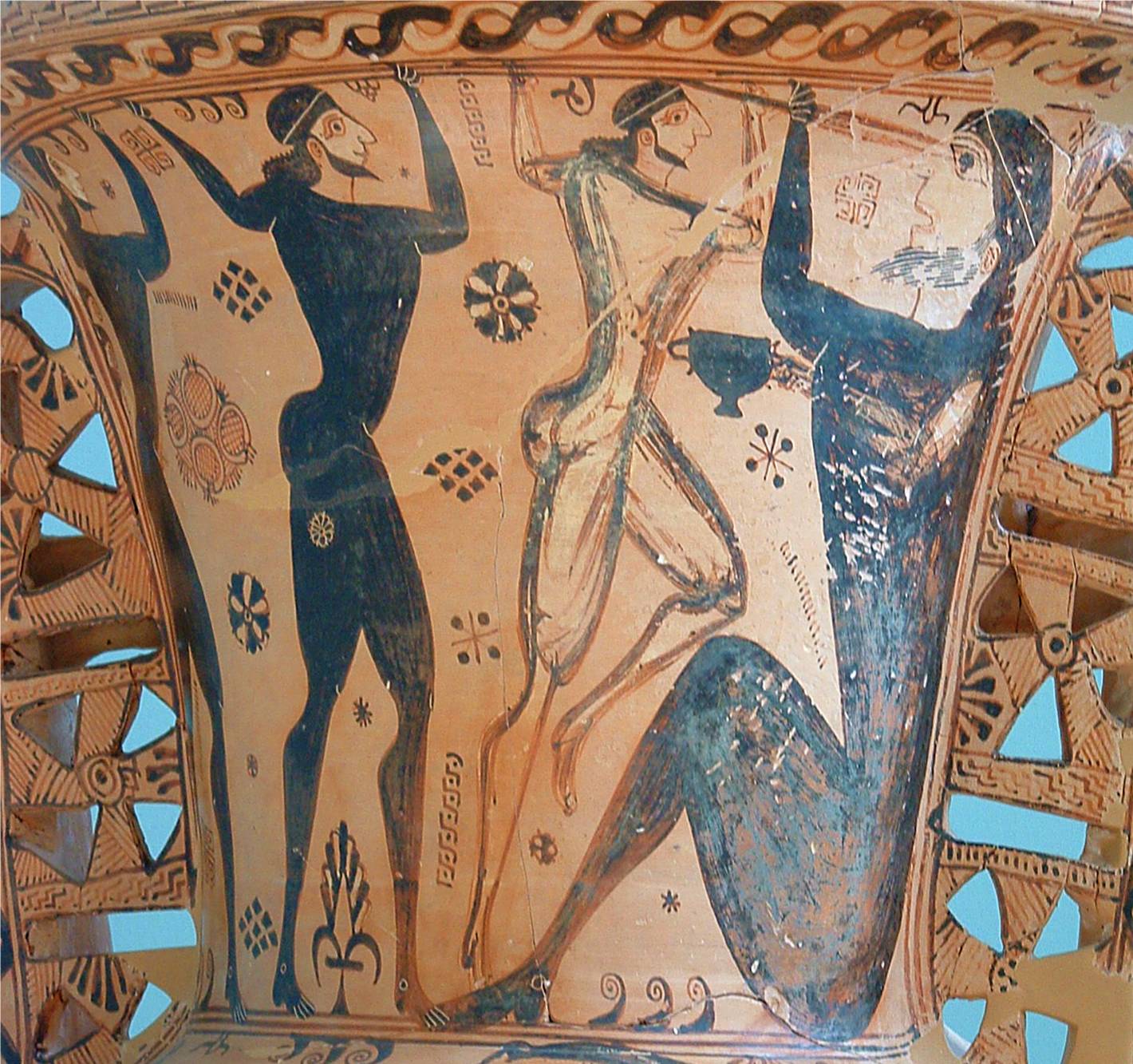
“My Lord Odysseus, you seek a happy way home. But a god is going to make your journey hard. For I cannot think that you will escape the attention of the Earthshaker, who still nurses resentment against you in his heart.” (Rieu et. al. 142)
In March of 1893 an English novelist and literary critic delivered a lecture to the men of his club. This was nothing particularly noteworthy in and of itself – as this show has repeatedly made clear, bookish men often lectured at one another over brandy in the late Victorian period . The club was also not terribly noteworthy: it was the Somerville Club in Bristol, rather than one of the fancy London clubs, and it had only recently opened. The lecturer was Samuel Butler, known at the time for his utopian novel Erewhon, which is mainly remembered today for its prescient angst about the possibility of machines that would become intelligent and threaten humanity. (If you’ve read Frank Herbert’s Dune, the Butlerian Jihad, in which humanity revolts against intelligent machines, is widely believed to be a reference to this guy – Samuel Butler).
His topic was Homer. Or rather, not Homer. Butler’s lecture was called The Authoress of the Odyssey, and in it he presented his argument that the writer of Homer’s second great poem was actually a woman. Specifically, he argued that “Homer” was a woman from Sicily who was “young, fearless, self-willed, and exceedingly jealous for the honour of her sex.” (Butler 201) He presented no actual material evidence for this conclusion – just vibes. Exhaustively catalogued vibes, based on his interpretation of the text. Here are a few of Butler’s points in favor of his argument, taken from chapter seven of the book-length version of his lecture:
The writer often lets women speak first in a scene, or lets them contradict men, or demonstrate common sense men don’t have.
The writer does not like the smell of fish.
The writer is bad at, or perhaps just uninterested in, describing sports.
The writer’s descriptions of people caring for one another – washing clothes, bathing feet, and so on – are delightfully expressed, and only a woman would be so familiar with such practices.
The writer chooses dull or unsuitable names for dogs.
The writer, with a fight scene in full flow, pauses the action to lament the spoiling of good wine and meat that were on a table upended by the brawl, thus betraying her “instinctive house-wifely thrift”. (Butler 154)
The writer constantly puts speeches in the mouths of characters that praise the love of home and parents above all, which strikes Butler as a sign of immaturity. He finds this type of talk especially suspect when Odysseus does it. “Middle-aged people, whether men or women, are too much spotted with the world to be able to say such things. They think as Aristophanes and Euripides do.” (Butler 147) (Do we, tho?)
You get the drift. Samuel Butler was known as a satirist, so I’m a little wary that The Authoress of the Odyssey may have been a very long-winded wind-up, or at least have had its tongue firmly in its cheek in places. But he does hit on something: The Odyssey is alive with feminine energy in a way The Iliad isn’t. Women, mortal or divine, drive the action – imprisoning the hero or merely vexing him; swooping down from Mount Olympus to bestow inspiration or overcoming their shyness to clothe him after a shipwreck; outwitting the men trying to despoil his lands and fortune or aiding his son as he searches for him. Most of all, it’s a woman who is waiting, waiting, waiting, and waiting for him to return.
I’m Rose Judson. Welcome to Books of All Time.
Books of All Time is a podcast that’s tackling classic literature in chronological order. This is episode 11: The Odyssey, Part 1: Nobody Was His Name. As always, if you want to read the transcript of this episode or see the references I used to write it, you can visit our website, www.booksofalltime.co.uk. There’s a link in the show notes if you need it. Let’s begin.
So here we are again: Homer, part II, Achaean Boogaloo. The Odyssey is a very different story from The Iliad, even though they are interlinked by themes, events, and characters. The Iliad was a series of interlocking tragedies in which many of the characters were driven by a need for glory or for revenge. The Odyssey is a picaresque adventure with romance, or at least familial devotion, at its heart – R.V. Rieu, who produced the translation of The Odyssey I read for today’s show, calls it the first novel. (Rieu, 1946 Introduction, xlvii) Both the stories are roughly the same size and shape, consisting of 24 “books” or chapters, though The Odyssey is slightly shorter. Both are written in the same poetic meter and use similar repetitive tags – the Homeric epithets, such as “godlike Achilles”, “rosy-fingered dawn”, and, of course, “the wine-dark sea”.
But honestly, if you ask me, The Odyssey is way more fun than The Iliad. It’s got monsters and witches and a visit to the underworld, plus all those women and significantly less explicit gore. It also has its moments of heart-wringing emotion: it is, after all, the story of a man returning home from war long after the glory of victory has faded – long after he can really remember what it was like to be at home.
As mentioned, I read R.V. Rieu’s translation of The Odyssey for this show, a revised and updated edition of his historic 1946 translation for Penguin Classics. It was the very first Penguin Classics title, and we’ll go into how that came about, and under what conditions, in episode 12. For now, I want to share this quote from one of the introductions to my edition. It’s by the late American classicist Howard Clarke. He said:
“The Odyssey is . . . an epic poem, not in the Iliad’s way, with men and nations massed . . . but epic in its comprehension of all conditions of men – good and bad, young and old, dead and alive – and all qualities of life – sublimely human and superhuman, perilous and prosperous, familiar and fabulous.” (Rieu et. al. xlv)
He was using “fabulous” in the sense of supernatural or legendary, but I agree: The Odyssey is pretty darn fabulous. So let’s sing, o muse, of that resourceful man. Odysseus, the hero of our story, is the king of Ithaca and its surrounding islands – modestly sized, rocky bits of land mainly populated by shepherds, fishermen, and farmers. He has been trying to get home from the Trojan War, some of the main events of which were covered by The Iliad. Odysseus was on the winning team – the Greek team – and you may remember that he was generally known as Mr. Strategy, organizing a late-night raid on the Thracian camp, devising a plan to create a defensive wall for the Greek ships, working (with little success) to negotiate a truce between King Agamemnon, the leader of the Greek forces, and Achilles, the semi-divine warrior who was their best fighter. He was also the originator of the Trojan Horse scheme, although The Iliad doesn’t get to that part.
You may also remember that the Trojan War lasted 10 years. As The Odyssey opens, it has been almost 10 years since the war ended, and Odysseus still isn’t home yet – he is the last of the Greek survivors who has yet to return. We learn this not from Odysseus himself, nor from his long-suffering family, but from those squabbling supernaturals, the gods of Olympus. They’re having a little meeting, discussing the fates of the Trojan War survivors. This basically acts as a “previously on…” montage for the benefit of the audience.
First, they talk about Agamemnon – you remember him, pissing off a priest of Apollo and Achilles in the same half-hour, which set off a chain of events that almost lost him the war? Anyway, he’s dead. Murdered, in fact, by his wife’s lover shortly after returning home to Mycenae. The gods also mention that Agamemnon’s son Orestes has already avenged him by murdering his murderer. (An aside: we will be getting all of this story in December, with Aeschylus’s Oresteia.)
Zeus is a little disturbed by patricide, but his daughter Athena, the goddess of war as well as wisdom, declares that Agamemnon got what was coming to him. But what about Odysseus, Daddy? She asks. He’s being held captive on an island ruled by a very sexy minor goddess, Calypso. “Odysseus,” Athena says, “who would give anything for the mere sight of the smoke rising up from his own land, can only yearn for death.” (Rieu et. al. p. 5)
“Oh, it’s not me who’s keeping Odysseus trapped, my little owlet,” says Zeus, more or less. “It’s your uncle Poseidon. Odysseus maimed one of Poseidon’s children, and so for the last eight years, Poseidon has been batting him around the Aegean and Mediterranean Seas, torturing him like a cat. But now that you mention it, the situation is a bit unfair.”
Poseidon is not at this little nectar-klatsch – he’s off on business in Ethiopia – so the gods come up with a plan to help Odysseus get home. It’s decided that Hermes, the messenger god, will leave Olympus and tell Calypso it’s time to give up her pet. Athena, meanwhile, will head to Ithaca and inspire Odysseus’s son and heir, Telemachus.
We are whisked away to Ithaca with Athena, who quickly disguises herself as Mentor, an old family friend, and seeks an audience at the palace with the young man of the house. Telemachus is presented as being just out of his teens, or possibly still in them. I’m not sure how that would work given the timeline, unless Penelope fell pregnant right before Odysseus left for Troy. Certainly he seems young; he seems rather out of his depth in the situation he and his mother, Penelope, find themselves in.
It’s a situation our beleaguered Telemachus explains to Athena-as-Mentor. About three years ago, after his father had categorically failed to come back for the war, various younger men and widowers from noble houses began loitering around Odysseus’s palace. They’re all trying to convince his wife – or his widow, as they suppose her to be – to remarry herself to one of them. She has a rich father, and they’re hoping to get a dowry from him as well as a big slice of Odysseus’s property and power.
Penelope is bound, by ancient customs of hospitality, to entertain these men with wine and feasting whenever they turn up. (As an aside: there are many, many scenes of feasting and ritualistic giving of gifts by hosts in The Odyssey; I will skip over describing pretty much all of them. Just assume that whenever someone arrives somewhere, they get given a bath, a massage, new clothes, and a big cup of wine, all before the host asks who they are and what they want.)
Penelope is stuck with these guys, but she’s also determined not to marry any of them. She tells them that she must weave a funeral shroud for her father-in-law, Laertes, first. This is a clever little ruse for two reasons: first, Laertes isn’t dead. He’s just retired to his farm elsewhere on Ithaca, grieving his late wife and his lost son. (Apparently, it’s possible to resign your kingship in this culture.) Second, she weaves by day and unravels by night, when all the suitors are sleeping. I have many crafty friends who make many things out of fabrics, and they always have one eternal project. I doubt it’s by design, as Penelope is doing.
Anyway, here are Penelope and Telemachus, plagued by these loud and loutish locusts, unable to tell them to get lost, watching in dismay as the family wealth is squandered. “I wish my father were here,” Telemachus groans, “but he’s probably dead.”
“Oh, I don’t think so,” Athena-as-Mentor says. “I’ve got a feeling he’s still out there. In fact, I’ve heard rumors he’s not dead. You’re getting a bit too old to wait at home, Telemachus – why don’t you go out and look for him? In fact, why not go visit his comrades-in-arms, Nestor and Menelaus? They might give you a lead on where he could be.”
Telemachus thinks this is a capital idea. Then Athena goes poof through an opening in the roof, and Telemachus realizes he’s been speaking to a god or goddess. He runs off to the main hall to find his mother to tell her he’s got to leave her. But he finds her in the midst of the suitors, berating the family minstrel for playing a song about the Trojan War and its lost heroes. Telemachus sends his mother upstairs and then, for the first time, bangs on the table and demands the attention of the suitors.
“I’ve had enough of this,” he says. “This is last call. Tomorrow I’ll call an assembly of the kingdom’s elders and I’ll demand their assistance getting rid of you layabouts.” (You can imagine his voice breaking as he says this.)
“Ha, good luck!” the suitors cry. “Pass the wine around, would you?”
“All right,” Telemachus says, “but I really mean it! Last time!”
Telemachus makes his case to the assembly the following day. The elder men admit that he shouldn’t have to put up with these suitors – many of whom are their sons – and their freeloading ways. “The easy solution, of course,” says one of these elders, “Is for your mother to admit she’s a widow now. She can go back to her father, and then the suitors can go bother him about marrying her. You can take over your father’s property and enjoy whatever’s left of it.”
“I’m not kicking my mother out of her house,” Telemachus says. “And as for my father being dead, I’ve just heard he may be alive. I want to go visit Nestor and Menelaus to find out, but my father took the family ship to Troy. I need someone to lend me a boat and a crew.”
“Request denied,” say the elders.
One of the lead suitors, a clown named Leocritus, has a good laugh at Telemachus’s expense. “Good luck to your dad if he does come back, nerd,” he says. “He’ll have to fight all of us. Pass the wine round, will you?”
Telemachus leaves, bitterly disappointed by his father’s vassals. But by the time he’s back at the palace, he’s made his very first executive decision. He recruits Eurycleia, the family housekeeper who was also his nanny, to be his accomplice. She, naturally, freaks out and predicts disaster, but he soon calms her down:
“Have no fears, nurse dear . . . There’s a god’s hand in this. But you must swear to me that you won’t tell my good mother for at least a dozen days, or till she misses me herself and finds I’m gone. We don’t want tears to spoil her lovely cheeks.” (Rieu et. al. 24)
Eurycleia starts gathering supplies for him on the sly. And Athena, who’s been waiting for a moment to intervene, disguises herself as Telemachus and goes about arranging a boat and crew. When Telemachus wakes up the next morning, she’s there disguised as Mentor again, urging him to hurry. The boy sets sail for Pylos, home of Nestor.
If you don’t remember Nestor, he was the oldest of the Greek chieftains who fought at Troy. He had a habit of telling long, rambling stories, and when Telemachus arrives at his palace and announces himself and what he hopes to learn, it’s obvious that Nestor hasn’t changed. He rehashes the entire Trojan War and the murder of Agamemnon, while strongly hinting that Telemachus should pull an Orestes and kill one or two of these suitors.
He gives us, the audience, some good information – Achilles died at Troy, and so did Ajax. Upon leaving for home (yet another) fight broke out between Agamemnon and his brother Menelaus, and half the fleet went with Menelaus while the rest, including Odysseus, stayed with Agamemnon. Nestor says he is afraid for Odysseus, whom he liked best of all his comrades. He can’t tell him anything more, but he condones Telemachus’s plan to visit Menelaus – Menelaus has lately returned from Egypt, and may have heard something about Odysseus in his travels.
So off Telemachus goes to Sparta, where Menelaus rules with Helen, his queen. You know, Helen. Telemachus arrives while the family is in the middle of celebrating a double-engagement party: a son and daughter of Helen and Menelaus are set to marry a son and daughter of the late Achilles. Helen seems calm, in suspiciously good spirits for someone whose extramarital affair led to a decade-long war, the deaths of her brothers and thousands of Greeks and Trojans, and the brutal sacking of a city. But perhaps she takes after her father, Zeus, and doesn’t really let such things get to her. Or perhaps she has access to the archaic Greek version of Xanax.
Regardless. Telemachus tells them why he is there, and Menelaus and Helen are only too happy to regale the young man with tales of his father’s heroics at Troy. Helen tells how Odysseus snuck into the city disguised as a beggar to scout out the inner defenses. Menelaus talks about how Odysseus almost smothered another man inside the Trojan Horse – the only real mention of it we get in Homer – to keep him quiet. (Rieu et. al. 47-48)
Menelaus is indignant when Telemachus explains the business with the suitors. Fortunately, he’s been on a magical mystery tour of his own on his way back from Egypt, and he has tidings from his meeting with a minor god, Proteus, the Old Man of the Sea. Proteus tells Menelaus that Odysseus is being held captive by Calypso. This intel is only a few months old. Telemachus is delighted. He plans to set sail for home to tell his mother.
He’ll be sailing into a trap, however: back on Ithaca, Penelope and the suitors have all twigged that Telemachus is gone. The suitors decide to get their own ships and lie in wait to ambush and kill him. They are preparing their nefarious plan, and Homer leaves us hanging on that for a while, finally turning the action to our hero.
We go with Hermes in his winged sandals as he skims across the wine-dark sea to Calypso’s island. It’s a beautiful island; rich with good trees and flowers and fruit. There’s even a grapevine, trailing across the opening of the cavern that Calypso has converted into a cozy and delightful home – caverncore, you could call it. She is weaving at her golden loom as Hermes arrives. Odysseus is not there; he’s sitting on the shore, as is apparently his habit:
“Life with its sweetness was ebbing away in the tears he shed for his lost home. For the Nymph had long since ceased to please. At nights . . . he had to sleep with her in the vaulted cavern, cold lover, ardent lady. But the days found him sitting on the rocks or sands, torturing himself with tears . . .” (Rieu et. al. 67)
Hermes informs Calypso that Zeus wants her to part with Odysseus, and that she is furthermore actually required to help him build a small boat so he can go home. Calypso, in a speech that Samuel Butler surely underlined, writing AH HA! in the margin, says that this is a nice double standard, isn’t it? “You are hard-hearted, you gods, and unmatched for jealousy. You are outraged if a goddess sleeps openly with a man,” she says, in spite of being “free and easy” with women yourselves. (Rieu et. al. 66)
She then goes on to describe how she saved Odysseus from shipwreck, brought him home, and nursed him like a bedraggled kitten. She agrees to give him up – can’t ignore a direct order from Zeus, after all – but she doesn’t have to like it. We get a long scene of her helping Odysseus build a little craft, then provisioning it, then giving Odysseus various gifts and another bath and also some fine clothes and just as you’re suspecting her of dragging this all out a bit too long, Odysseus finally sets sail.
He is so excited to leave. Homer tells us that for several days Odysseus “never closed his eyes in sleep, but kept them on the Pleiades, or watched the late-setting Boötes slowly fade, or the Great Bear . . . which always wheels around in the same place and looks across at Orion the Hunter with a wary eye.” (Rieu et. al. 69)
But naturally, these fair seas and following winds won’t last long. Poseidon, passing on his way back home from Ethiopia, clocks Odysseus in his little boat. “Who let him out?” he says, and immediately whips up a storm to drown this troublesome little man for good. Odysseus fights for his life in the enormous waves, and is spotted by yet another minor goddess – this time it’s a sea nymph named Ino (or Leucothoe, but let’s stick with Ino. Partly because it’s easier to pronounce, and partly because I like her Homeric epithet: “Ino of the slim ankles”).
“I’ll save you,” Ino cries. “Take off your clothes!”
“I don’t think so,” says Odysseus, “I’ve been around the block, sister. I know a thirsty goddess when I hear one.” But he’s immediately tossed by another monster wave that smashes his raft. He does what Ino wants: he strips off.
“Mmhm, yes,” says Ino, “Very good. Now here’s one of my veils: take it, and swim as hard as you can. You’ll be protected until you get to land.” Odysseus does this, battling the waves until he is swept toward an island, where he gets safely ashore, his flesh swollen with salt, his hands torn from trying to avoid some rocks, and he lies down in a pile of leaves to sleep.
The next morning Odysseus is awoken by feminine voices shrieking. His immediate thought is: oh no, I hope they’re not nymphs! This is a man who has had his fill of nymphs, thank you very much.
But the voices belong to the local princess, Nausicaa, and her friends. These girls, who seem to be in their mid-teens, are out for the day doing laundry and having some fun and games. Odysseus sees that they’re throwing a ball around as he peeks from his hiding place. He gradually works up the courage to approach them, breaking off a branch first to spare their blushes.
Obviously, he’s terrifying to these girls, but his manner of speech convinces Nausicaa that he is a person of quality who means no harm. She gets him cleaned up and loans him some clothes from the laundry. She tells him to follow her home at a distance – wouldn’t want people to gossip about her bringing a strange man home, unmarried as she is – and Odysseus soon finds himself the guest of Alcinous, king of the Phaeacians. At the feast held for their guest – remember, it’s customary to feast first and ask questions later – a minstrel sings a song about the sack of Troy, and Odysseus weeps.
But he’s not weeping out of grief for his lost comrades. Homer tells us that
“He wept as a woman weeps when she throws her arms round the body of her beloved husband, fallen in battle in the defence of his city and his comrades . . . But the enemy come up and beat her back and shoulder with spears as they lead her off into slavery and a life of miserable toil.” (Rieu et. al. 107-108)
He’s weeping out of guilt for the devastation he helped cause. He’s weeping for the lives he ruined.
This grief gets the attention of his hosts, who finally ask who he is and where he comes from. They are amazed to learn that the stranger in their midst is Odysseus. And we finally get to the really fun bits of the story, told in flashback by Odysseus.
After leaving Troy with his small flotilla of ships, Odysseus indulged in a little light looting and pillaging along the coast. Then, setting sail for Ithaca at last, his ships were swept by a terrible storm onto a strange island, home of the Lotus-eaters, “a race that eat the flowery lotus fruit,” which apparently has a narcotic effect. (Rieu et. al. 112) The Lotus-eaters, in other words, are constantly tripping balls, and several of Odysseus’s men thought this sounded like just the ticket after the horrors of war. He has to beat them and tie them up to get them back on the ships, and they quickly set sail again.
The Ithacans’ next stop is an apparently uninhabited island. They discover plentiful wild goats and then, even more delightful, a cavern full of meats and cheeses. Odysseus’s men are all for grabbing whatever they can get their hands on and then making a break for it. Odysseus decides they’ll stay, and takes a skin of good wine from the ship to the cavern. He hopes maybe this cheesemaker, whomever he is, will offer them hospitality and gifts.
But the cheesemaker, alas, is Polyphemus, the Cyclops – a son of Poseidon, a gigantic one-eyed monster who only cares about herding goats, curdling milk, and breaking heads. When he returns to his cavern and finds it full of tiny strangers – tiny, succulent strangers – he laughs off any notions of hospitality and immediately eats some of Odysseus’s men. Then he traps the survivors in his cavern.
Odysseus has his remaining men prepare a sharpened stake. He approaches the Cyclops with the skin of wine he’s brought, and convinces the Cyclops to drink it. Once the Cyclops is good and drunk, he says perhaps he’ll give Odysseus a gift after all. He asks Odysseus what his name is. “Nobody,” says Odysseus.
“Nobody! Here’s my gift to you: I’ll eat you last,” the Cyclops gurgles. Then he pukes and passes out in a drunken stupor, and the Ithacans leap into action, driving their sharpened stake into Polyphemus’s eye. Homer gives us a little of that gore he delights in – the men are described as boring into the Cyclops’s eye like a carpenter bores wood – and they’ve heated the stake so that “the blood boiled up round the burning wood.” (Rieu et. al. 120)
Polyphemus screams to the other Cyclopes in neighboring caverns for help. “Who’s attacking you?” the neighbors ask. “Nobody!” Polyphemus cries.
“Well, shut up and let us go back to sleep, then,” the neighbors reply. Odysseus and his men hide themselves among the flock of goats Polyphemus has penned up in his cavern, and in the morning, when he lets the goats out, the Ithacans escape to their ship. Polyphemus realizes what is happening. He follows them, throwing giant rocks into the sea to try to sink them. Odysseus, furious with the monster that ate his friends, yells threats and – this is key – tells the Cyclops his real name as they sail away.
For a few days it seems that all is well with the Ithacans. They’ve got plenty of goats, wine, and cheese – what else could they want? They visit the home of the west wind, Aeolus, who gives them a bag of winds to help speed their journey home. They are within a day’s sailing of Ithaca when some of Odysseus’s men become suspicious about this bag. They assume it is actually full of gold and open it while he’s asleep, wasting all the winds.
They are immediately blown back across the sea to where they started. Upon returning to Aeolus’s palace hoping for a refill – “please, sir, may I have some more?” – Odysseus gets a different, hostile reception. The word is out among the divinities that Odysseus is in Poseidon’s bad books. He’s not going to get much hospitality from now on.
They leave Aeolus’s island, dejected about not having the magic winds. But they come across a little island with a fine harbor. Most of the Ithacan ships pull up on the sand there, while Odysseus’s ship goes on a little reconnaissance mission. That saves their lives – the island is home to another race of giant cannibals called the Laestrygonians, who rain boulders and rocks down on the boats in the harbor, and begin skewering the men inside them onto spits for roasting. “They carried them off like fishes on a spear to make their loathsome meal,” Odysseus says. (Rieu et. al. 128)
Odysseus’s last ship sets off from the harbor in a hurry, eventually alighting on a lush and beautiful island. His remaining followers are terrified of what they’ll find on this one, in spite of its appealing appearance. Odysseus convinces them to split into two groups, and then they draw lots to see which group stays at the ships while the other goes exploring. It’s the B-team, led by a very nervous fellow named Eurylochus, that sets off into the forest on the island.
The B-team soon discover a mansion in the forest. Upon approaching it, they’re confronted by wolves and lions, but are amazed when these fierce beasts “rose on their hind legs to fawn on them, with much wagging of their long tails, like dogs fawning on their master . . . for the tasty bits he always brings.” (Rieu et. al. 131) Eurylochus refuses to go inside, but the other men knock for admittance, assuming that the owner of this house must be a powerful god or goddess.
The owner is Circe. She is a beautiful goddess, skilled in witchcraft. She offers them food and wine – food which the men do not realize is mixed with powerful, magical drugs. Shortly after clearing their plates, the men turn into pigs. Circe drives them outside into her pigsty, flings them some acorns, and goes back to her weaving.
Eurylochus races off to the ships to share this latest disaster with Odysseus and his remaining men. Odysseus tries to muster the men for a rescue, but none of them will go. He runs into the forest, sword in hand, trying to come up with a plan. Luckily he stumbles across Hermes, who offers him some tips for dealing with Circe – and, crucially, a preventative potion he can drink that will make him immune to her magic pig juice.
Circe tries to make a pig of Odysseus, but, as predicted, Hermes’s antidote prevents it from happening. Circe is impressed – to a point. She agrees that she will dispel the magic on Odysseus’s men and, you know, not kill them. For a year the Ithacans stay on with Circe, until at last the men can’t bear it anymore. They demand to go home. Odysseus asks Circe for permission to leave and for advice for getting home. She grants the first request, but for the second, she says, she can’t help him. He will have to go down to Hades and speak to the soul of the prophet Teiresias.
Circe gives elaborate instructions for reaching Hades and for creating a pool of sacrificial animal blood to attract the dead once they arrive.
This part of the adventure, getting to the land of the dead, is surprisingly uneventful – no winds to blow them off course, no sudden monster attacks. Instead, Odysseus follows Circe’s directions to the letter. Once he has arrived at the borders of Hades, along the his trench of blood is set up and consecrated, the dead begin to arrive in their multitudes, clamoring to drink. It’s overwhelming at first, but Odysseus soon realizes that if he holds his sword over the trench he can control the crowd.
Teiresias approaches. He’d be known to Homer’s audiences – he plays a key role in the story of Oedipus, among others. He recognizes Odysseus, calling him “man of misfortune”, and then, after drinking the blood, begins his prophecy with the words I quoted at the top of the show. He says that Odysseus should reach Ithaca in a timely manner, but that his men’s resolve – and Odysseus’s ability to control them – will be tested at an island called Thrinacia. There dwell the cattle of the sun, sacred to Apollo. These cattle must not be harmed, says Teiresias, or, “your ship and company will be destroyed . . . and you will reach home late, in a wretched state, upon a foreign ship, having lost all your comrades.” (Rieu et. al. 143)
“Thrinacia,” says Odysseus, “Apollo’s cattle, do not eat. Got it.”
“Also, if you do get home late,” Teiresias adds, “it’s worth mentioning that there’ll be a mob of men in your house trying to marry your wife. Here are some explicit tactics for murdering them all.” His final prophecy is that Odysseus will make an even longer journey in time to come, if he is spared, and that “Death will come to you far away from the sea, a gentle Death. When he takes you, you will die peacefully of old age, surrounded by a prosperous people.” (Rieu et. al. 143)
Tiresias takes his leave, but before Odysseus can do likewise, he is shocked to see a familiar face among the crowd of ghosts: his mother, Anticleia. She had been alive when he’d left for Troy. He lets her come forward, and when she has drunk the blood, she recognizes him. They have a painful reunion – she is able to tell him that Penelope lives, and “has schooled her heart to patience,” (Rieu et. al. 144). She laments the depressive state his father Laertes has fallen into, and tells Odysseus he is dying of the same cause which took her life – grief for their lost son.
Odysseus tries to embrace his mother. She passes through him like smoke, and recedes. A chain of ghosts approach Odysseus, one by one, and out of compassion he sits and hears their stories. First it is a group of fine ladies out of the great myths, including Leda, mother of Helen of Troy. Next comes Agamemnon, who relates how he was murdered and, hilariously, warns Odysseus never to trust his wife. Then comes Achilles. He wants to hear about how their war ended. Odysseus tells him about the Trojan Horse, about the sack of Troy, about the many friends they left buried there. “Favorite of Zeus, Odysseus, master of stratagems,” says Achilles, “What next, dauntless man? What greater exploit can you plan to surpass your voyage here?” (Rieu et. al. 152)
It’s a fair question. Odysseus seems reluctant to leave Hades – he talks to several more illustrious ghosts, including Hercules – but soon the mass of ghosts cannot stand waiting for their turn to drink anymore, and he has to rush away or be overwhelmed with his mortal horror of the dead.
He returns to his ship, wrapped in heavy thoughts. The men set sail again, stopping at Circe’s place briefly for provisions and directions for the final leg of their journey. First they must pass the Sirens, of whom Circe says, “There is no homecoming for the man who draws near them unawares . . . no welcome from his wife, no little children brightening at their father’s return.” (Rieu et. al. 158) They do this by fashioning earplugs out of wax to block out the sirens’ bewitching songs – all of them except for Odysseus, who survives the ordeal by having the men tie him to the mast first.
Next they must navigate a narrow, rocky strait guarded on one side by Scylla, a six-headed sea monster, and the whirlpool of Charybdis. At first they don’t spot Scylla, being too absorbed in rowing away from the whirlpool. But she sneaks up on them, snatching away six of Odysseus’s last few men with each of her terrible mouths. His last glimpse of these loyal companions is of them reaching out to him, crying out to be saved, as they’re devoured.
The men, traumatized, demand to put in at the next island. Odysseus commands them to keep going – this is the island Thrinacia, he explains, and the ghost of the seer Teiresias said – “SHUT UP,” the men suggest, and row ashore against Odysseus’s commands. Naturally, they’re starving, and they kill some of the sacred cows while Odysseus is asleep, at the suggestion of Eurylochus. Immediately after the cows are eaten, we get what is, for me, the creepiest single image in the whole story. “The gods soon began to show my crew ominous portents. The hides began to crawl about; the meat, roast and raw, bellowed on the spits, and a sound as of lowing cattle could be heard.” (Rieu et. al. 167)
When Odysseus convinces the men to set off again – amazingly, they are not instantly frightened off by crawling skins of animals they’ve butchered – they are immediately trapped in a thunderstorm. Odysseus watches in horror as the wind tears his ship to splinters, flinging his men about like rag dolls or crushing them under the falling masts. Then, finally, lightning strikes, and Odysseus drifts on the last ribs and spars of his ship until he washes up on the island where he would spend the next eight years – Calypso’s island.
His tale complete, Odysseus lapses into silence. The Phaeacians – remember them? Nausicaa, who found Odysseus naked on the beach? They have been listening all this time, and their instant reaction is to pile Odysseus with as many gifts of treasure as a ship can carry – more than he would have brought home from Troy. He is escorted onto one final ship – this time as a passenger – and at last sets sail for Ithaca.
He is asleep when the Phaeacian ship arrives. They drop him off, still asleep, taking care to hide his treasures in a cave. When he wakes up, home at last, he can’t work out where he is. He panics, naturally, but then a young shepherd appears. It’s Athena in disguise. “Where am I, young shepherd?” cries Odysseus. “Why, don’t you know, sir? It’s Ithaca. Bit rocky, not a place where you can raise horses, but it’s home.”
Odysseus, who by this point is reflexively unable to trust anyone, has to quiet his leaping heart while making up an elaborate backstory for this person he assumes is, after all, a shepherd: killed a nobleman’s son, sent into exile, shipwreck, and so on. Athena is very amused. She reveals herself to Odysseus. She assures him that Telemachus is doing well – still staying with Menelaus at this point. Athena also apologizes for not doing more to help him, but she could only oppose her uncle Poseidon so far. Now, she says, comes the hardest part of his entire journey: not telling anyone who he is until he is able to position himself to overcome the suitors. She uses her magic to disguise Odysseus as a beggar, and he goes off to see how things stand on Ithaca.
Athena, meanwhile, goes back to Sparta to fetch Telemachus home. “Your mother is under a lot of pressure to marry one of these suitors,” says Athena (again disguised as Mentor). “You’d better get back in your ship and head home. If you sail at night, you can avoid the ambush.”
“I’m sorry, the what?” Telemachus says.
“The ambush,” Athena-as-Mentor says. “Also, when you get home, you should pop by your grandfather’s place. Specifically his swine herd’s hut. For reasons. Must dash!”
Telemachus does as Athena says: sails through the night, evading the suitor’s carefully planned ambush, then heads to the hut of his grandfather Laertes’s swine herd, a stout fellow called Eumaeus. Eumaeus has a guest – a raggedy-looking beggar who turned up the night before, asking many searching questions about the lord of the island, the suitors, and so on.
Eumaeus scrambles to make Telemachus comfortable while the beggar – it’s Odysseus, of course – sets eyes on his only son for the first time in nearly twenty years. Telemachus asks the swine herd to go secretly to his mother at the palace and let her know that a) Telemachus is home safe, and b) he has news that Odysseus is alive somewhere.
Once Eumaeus is on his way, Athena removes the enchantment disguising Odysseus. Telemachus is confused at first: this ragged fellow suddenly looks so well-groomed, so strong and commanding. So very vaguely familiar. Odysseus reveals his identity. Telemachus doesn’t believe him at first, but soon they are in each others’ arms, weeping and sobbing. But not for long: Odysseus gives Telemachus a recap of how he escaped Calypso and returned to Ithaca, and then they begin plotting how to take care of the suitors. For the ambush team has returned from where they were lurking, and word has got out on the island that Telemachus is home.
We enter the endgame now. Odysseus resumes his disguise. Telemachus returns to the palace, treading carefully, knowing the suitors could pounce at any moment. He tells his mother about his journey to Pylos and Sparta, and the story Menelaus told him about Odysseus still being alive, but a captive of Calypso.
Odysseus, meanwhile, has come into town. He’s immediately subject to abuse and name-calling from the suitors as they head to dinner in the palace. But he continues toward it anyway, passing a dung heap where an ancient, skeletal dog is lying.
Odysseus recognizes the dog as Argus, the faithful hound he left behind on his departure for Troy. And Argus, lifting his head and wagging his tail, recognizes his master, too. Then he dies immediately, after waiting twenty years. Just twist the knife, Homer, why don’t you?
Odysseus enters the palace. Telemachus spots him, and, playing along with the disguise, gives him a bowl and tells him he may beg from the guests. The suitors, of course, are horrified to have a lowly poor at the table, despite this kind of charity being customary, and they mock him as he approaches each in turn. One of the worst of the bunch, Antinous, has the nerve to say that beggars shouldn’t ask other men to give them what’s theirs.
Odysseus can’t resist. “But you’re at another man’s table, eating another man’s food,” he points out. “Aren’t you just a beggar, too?” Antinous throws a stool at Odysseus – who looks, I remind you, like an old and feeble beggar – and is a little unnerved when the old man doesn’t even flinch.
There are several more scenes like this – Odysseus being mocked, issuing a counter-mocking, and gradually becoming more and more angry, especially after Melantho, one of the maids of his own household, joins in the abuse. When the suitors retire for the night, Telemachus and Odysseus take the decorative weapons down off the walls and hide them in strategic places. They have just finished this when Penelope comes down to sit by the fire. She is interested in this beggar – all the household has been talking about him and his smart-aleck replies to the suitors.
Penelope and the disguised Odysseus have a long conversation, in which she, not yet recognizing him, spills out her anguish at her missing husband, and the pressure to marry and stop these suitors from draining her son’s inheritance away. She has a plan for tomorrow: she will challenge the suitors to try to bend Odysseus’s great bow and then shoot an arrow through the decorative holes in a row of 12 axes. The one who can do that is the one she will marry. But she is so distressed at the prospect of marrying, so overwhelmed by the grief she has been trying not to feel for twenty years, that Odysseus cannot help himself. He tells her that he has learned in his travels that Odysseus was with the Phaeacians recently, and that he will be on his way home soon to free her from all this worry. Penelope is grateful. She asks Eurycleia, the housekeeper, to see that this beggar has his feet washed.
Now, I mentioned before that Eurycleia was Telemachus’s nanny. It turns out she had been Odysseus’s nanny, too, and is actually very old and frail. But not blind. Disguised as he is by Athena, he has a distinctive scar on his leg from hunting boar. Eurycleia recognizes it, and him. He hisses to her not to give him up, and she promises she’d rather die.
The next day, Penelope makes her challenge to the suitors, promising if that one of them can string the great bow and fire it through the axe heads:
“[W]ith that man I will go, bidding goodbye to this house which welcomed me as a bride, this lovely house so full of all good things, this home that even in my dreams I never shall forget.” (Rieu et. al. 279)
As the contest is beginning, Odysseus takes aside Eumaeus, the swine herd, and another servant called Philoteus, and recruits them into his plan to take care of the suitors with the hidden weapons. Then he goes up to where the contest is happening and asks to have a try. There’s a hue and cry from the suitors, but Telemachus gives him permission, then orders his mother upstairs to her room. Penelope retreats, shocked that her son is suddenly giving orders to her. Odysseus makes a big show of inspecting the bow, buying time for Eurycleia to quietly lock the doors to the hall.
Then Odysseus strings the bow, draws the string back – it really does take a tremendous amount of strength to draw a bow – and fires the arrow clean and true, straight through each and every arrowhead. There’s an uproar from the suitors. There’s a thunderclap from the heavens. Odysseus leaps onto the table and fires an arrow straight through the throat of Antinous, the brute who threw a stool at him, just as he’s reaching for another cup of wine.
The other suitors watch in horror as Antinous’s blood spurts out of him. They rush to the walls, where until last night there were weapons hanging – but the weapons are gone. Then they rush to the doors of the hall – but those are locked. Meanwhile Telemachus has thrown off his cloak to reveal he’s armored, and drawn his sword. Eumaeus the swine herd and Philoteus have taken positions, too.
“You dogs!” Odysseus cries. “You never thought to see me back from Troy . . . you courted my wife behind my back though I was alive – with no more fear of the gods in heaven than of the human vengeance that might come. One and all, your fate is sealed.” (Rieu et. al. 289)
The rest of this book is very like the Iliad – lavishly gory descriptions of how each suitor dies, of how Odysseus is a raging tornado of retribution. He fires arrows until those are gone, and then he throws spears. Then there’s a setback as the last of the suitors break into the strongroom where the spare armor and weapons are kept. The suitors are no match for Odysseus and Telemachus, though. Soon all but a handful are dead. One of them begs for mercy. Odysseus cuts off his head. This is, for me, where the carnage turns from Tarantino-esque vengeance to something far darker, for it’s now that Odysseus summons poor Eurycleia and tells her to send him every servant woman in the household who has slept with one of the suitors. He orders these women to clear away the bodies and the blood. Then he hangs them all. Homer tells us:
“As when long-winged thrushes or doves get entangled in a snare, which has been set in a thicket . . . so the women’s heads were held fast in a row, with nooses round their necks, to bring them to the most pitiable end. For a little while their feet twitched, but not for very long.” (Rieu et. al. 299)
You’ll recall how he wept for the devastation he caused in Troy, of course.
The carnage is over. The bodies removed. Now the reunions can begin. Penelope is summoned by Eurycleia, and upon seeing Odysseus for the first time in 20 years, she is speechless. Even after he is bathed and free of the enchantment, she can’t quite bring herself to believe it’s him. She asks Eurycleia to move the bed Odysseus made out of the bedroom – and Odysseus declares that’s impossible. He built that bed out of a single tree, he says. First he built a room around it, then he took his adze, and . . .
He goes on and on about his own ingenuity until Penelope is satisfied at last that it’s him. They go – not to bed, where the poem should have ended. Instead they go out to the farm where Odysseus’s father Laertes is sullenly cutting brush. After Laertes and Odysseus are reunited, we abruptly move to a scene where Odysseus reveals himself before the assembly of the elders of Ithaca. The elders of Ithaca whose relations he has, of course, just slaughtered. This assembly teeters on the brink of another bloodbath, but after a brief skirmish, Athena intervenes, establishing peace between Odysseus and his people, whom he and his descendants will rule in perpetuity.
What an anticlimactic ending for such a splendid yarn, eh? Many writers have tried to improve upon it. Alfred, Lord Tennyson’s 1842 poem Ulyssesgets my vote as the best. It is written in the voice of an elderly Odysseus – Ulysses, to the Romans – exhorting his companions to set out on one last journey. Here is how it ends:
“Old age hath yet his honour and his toil;
Death closes all: but something ere the end,
Some work of noble note, may yet be done,
Not unbecoming men that strove with Gods.
The lights begin to twinkle from the rocks:
The long day wanes: the slow moon climbs: the deep
Moans round with many voices. Come, my friends,
‘Tis not too late to seek a newer world.
Push off, and sitting well in order smite
The sounding furrows; for my purpose holds
To sail beyond the sunset, and the baths
Of all the western stars, until I die.
It may be that the gulfs will wash us down:
It may be we shall touch the Happy Isles,
And see the great Achilles, whom we knew.
Tho’ much is taken, much abides; and tho’
We are not now that strength which in old days
Moved earth and heaven, that which we are, we are;
One equal temper of heroic hearts,
Made weak by time and fate, but strong in will
To strive, to seek, to find, and not to yield.”
There you have it: The Odyssey. I could not help but think, as I was re-reading it, about how clear the psychology is in places. Odysseus is a man traumatized by war. I also couldn’t help but think – and this may be me having 21st-century story tropes on the brain – that he is the only one who tells us the meat of his tale about how he winds up with Calypso. All his companions are dead. Circe is unavailable for comment. Who else can account for that time? Suppose his story is one last, great trick. Suppose that he, demoralized and broken, willingly set up house with Calypso, because he could not bear returning to his wife just yet, not with the screams of the Trojan Women in his ears. And what should have been a brief dalliance, an idyll, stretched on and on into an absence he would not easily be able to explain to Penelope when he returned. An absence he knew was worth risking, because he knew Penelope would wait for him.
Like I said, 21st-century nonsense. Anyway. You should read the R.V. Rieu prose translation. Rieu’s prose translation can be incredibly stirring and disturbing and also very amusingly 1946, especially when it comes to the dialogue. It’s very 1946. People call each other “dear” and “darling” – I don’t know how familiar you are with classic British cinema, but sometimes it reads as if it were written for David Lean to direct, with Celia Howard as Penelope. “Oh, Telemachus, I’m ever so happy you’re off to look for your father. I miss him terribly.”
But Emily Watson’s translation is also available – I’ve not read it, though I did read her version of The Iliad for episodes 9 and 10, of course, so I can’t imagine it will be anything other than moving and revelatory.
That’s it for this episode. Our next episode asks the question: why were all these 18th– and 19th-century gentlemen so obsessed with Homer, and how did it become a standard on the curriculum for so many years? We’ll also talk about how R.V. Rieu dealt with bomb anxiety during the London Blitz, leading to a publishing empire that aimed to democratize the classics. Join me on Thursday, August 1st – yes, it’s apparently August already – for Episode 12, “The Odyssey, Part Two – Unto a Savage Race.”
Books of All Time is written and produced by me, Rose Judson. The Disclaimer Voice of Doom is Ed Brown. Lluvia Arras designed our cover art and logo. Special thanks to Yelena Shapiro, Cathy Merli, Matt Brough and the Books of All Time Advisory Council: Ed Brown, Beck Collins, Neil Dowling, Caitlin McMullin, Hugh Parker, and Jonathan Skipp. You can support the show by subscribing and leaving a rating or review at Apple Podcasts, Spotify, or wherever you get your podcasts. You can also follow us on social media: we’re on Bluesky, Instagram, Facebook, and the churning hate machine formerly known as Twitter. Thanks for listening! I’ll be back in two weeks.
References and Works Cited:
Butler, Samuel. “The Authoress of the Odyssey.” http://www.gutenberg.org/files/49324/49324-h/49324-h.htm. Accessed 4 July 2024.
Graziosi, Barbara. Homer: A Very Short Introduction. Oxford University Press, 2019.
Homer. The Odyssey. Translated by E. V. Rieu, Penguin Books, 2003.


 Books Of All Time
Leave a comment